NASA Astronaut Captures Lyrid Meteor Shower From Space
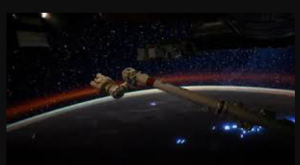
NASA astronaut Jessica Meir has shared a remarkable image of the ongoing Lyrid meteor shower as seen from the International Space Station (ISS). The photograph, taken from the station’s cupola window, offers a rare view of meteors streaking across Earth’s atmosphere from orbit. Her post has drawn attention from skywatchers worldwide as the annual meteor shower reaches its peak.
What is the Lyrid Meteor Shower?
The Lyrid meteor shower is one of the oldest recorded annual meteor showers, observed for more than 2,700 years. It occurs every April when Earth passes through debris left by Comet C/1861 G1 Thatcher. As these particles enter Earth’s atmosphere, they burn up and create bright streaks of light known as shooting stars. The Lyrids are best viewed in the Northern Hemisphere and usually peak between April 21 and 22.
Jessica Meir’s Unique View From ISS
Jessica Meir explained that she was fortunate to photograph some meteors from the ISS cupola, a dome-shaped observation module offering panoramic views of Earth and space. She noted that the image was captured using a three-second exposure. This caused city lights on Earth to appear as bright streaks on one side, while the meteor appeared as a separate streak near the horizon on the left side of the frame.
Encouraging People to Watch the Sky
In her social media post, Meir encouraged people to look up and observe the Lyrids from Earth as well. She advised viewers in the Northern Hemisphere to look towards the constellation Lyra in the eastern sky during the late-night and early morning hours. She also mentioned that observers might be lucky enough to spot the International Space Station passing overhead during their skywatching session.
Important Facts for Exams
- The Lyrid meteor shower occurs annually in April and is linked to Comet C/1861 G1 Thatcher.
- It is one of the oldest known meteor showers, with observations dating back over 2,700 years.
- The ISS cupola is a dome-shaped observation module used for Earth and space viewing.
- Jessica Meir is a NASA astronaut known for scientific missions aboard the International Space Station.
Why This Event Matters
Photographs like these help connect people with astronomy by showing natural celestial events from an extraordinary perspective. Seeing the Lyrids from space reminds us of the thin boundary between Earth and the wider universe. Such images also highlight the role of astronauts in science communication, making space exploration more accessible and inspiring public interest in astronomy and observational science.
| Related | |
|---|---|