India Inducts First Indigenous Hovercraft into Coast Guard
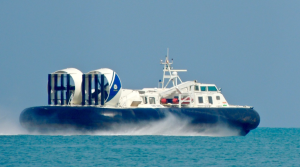
The Indian Coast Guard inducted its first indigenous Air Cushion Vehicle, designated H-561, on 18 June 2026. The hovercraft was built at Chowgule & Company Private Limited’s shipyard in Goa and is the first of six indigenous ACVs under construction for the force.
Air Cushion Vehicle
An Air Cushion Vehicle is a hovercraft that moves on a cushion of air created by fans or lift systems. ACVs can operate over shallow water, mudflats, beaches, marshy terrain, and other low-support surfaces.
Indian Coast Guard use
The Indian Coast Guard uses hovercraft for coastal surveillance, rapid response, search and rescue, and humanitarian assistance. These craft are suitable for littoral zones, where conventional vessels face limits because of depth, sandbanks, and tidal variation.
Indigenous shipbuilding programme
The six ACVs are being built under an indigenous shipbuilding project linked to Aatmanirbhar Bharat. The contract for the acquisition of these hovercraft was signed between the Ministry of Defence and Chowgule & Company Private Limited on 24 October 2026.
Important Facts for Exams
- The Indian Coast Guard was established in 1978 and functions under the Ministry of Defence.
- Hovercraft are also called Air Cushion Vehicles because they travel on a layer of pressurised air.
- Goa has shipbuilding facilities that support naval and coast guard vessel construction.
- Maritime security in India includes coastal surveillance, anti-smuggling operations, and search and rescue missions.
Maritime security context
India has a long coastline of about 7,516.6 kilometres, including island territories. The Indian Coast Guard operates in the Exclusive Economic Zone and along the coastal belt for law enforcement and safety duties.
| Related | |
|---|---|