Cabinet Approves 10 GWh ACC Battery Manufacturing
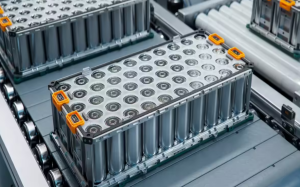
The Ministry of Heavy Industries invited global bids on 15 July 2026 for giga-scale Advanced Chemistry Cell battery manufacturing facilities with a cumulative capacity of 10 GWh in India. The capacity is reserved for Grid-Scale Stationary Storage applications under the National Programme on Advanced Chemistry Cell Battery Storage, which is a Production Linked Incentive scheme for domestic battery manufacturing.
Advanced Chemistry Cell Battery Scheme
The National Programme on Advanced Chemistry Cell Battery Storage was approved by the Union Cabinet in May 2021 with a budgetary outlay of ₹18,100 crore. The scheme targets 50 GWh of ACC manufacturing capacity in India and is designed to support local production of battery cells used in electric mobility and stationary storage.
Bid Process and Capacity Allocation
The tender documents for the 10 GWh round were made available on 15 July 2026. The pre-bid conference is scheduled for 29 July 2026, the deadline for bid submission is 13 October 2026, and technical bids are to be opened on 14 October 2026. Out of the 50 GWh target, 40 GWh had already been awarded in earlier rounds.
Previous Awardees and Capacity Distribution
Previous beneficiaries of the scheme include Reliance New Energy Battery Limited, Ola Electric, and Rajesh Exports. The awarded capacities include 15 GWh for Reliance New Energy Battery Limited, 20 GWh for Ola Electric, and 5 GWh for Rajesh Exports, while Reliance received 10 GWh of this capacity on 17 February 2025.
Important Facts for Exams
- Advanced Chemistry Cell batteries are used in electric vehicles, consumer electronics, and stationary energy storage systems.
- Grid-Scale Stationary Storage refers to large battery systems used to store electricity for power grids.
- Production Linked Incentive schemes are central government incentive programmes linked to manufacturing output.
- The Ministry of Heavy Industries administers the ACC battery manufacturing programme in India.
Scheme Objectives and Industrial Context
The scheme aims to reduce India’s dependence on imported ACCs and to build a domestic battery manufacturing ecosystem. It also seeks to attract large domestic and international firms into high-value manufacturing linked to energy storage and clean energy supply chains.
Implementation Issues
As of February 2026, the scheme had recorded zero disbursals under the battery manufacturing incentive framework. The reported constraints included unavailability of technology, shortage of skilled manpower, and delays in importing critical machinery.
| Related | |
|---|---|