Centre Approves Two Railway Multitracking Projects in Odisha, Jharkhand
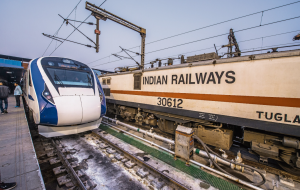
The Cabinet Committee on Economic Affairs approved two Ministry of Railways multi-tracking projects on 15 July 2026 for Odisha and Jharkhand. The projects cover the doubling of the Paradeep–Haridaspur railway line and the construction of a fourth line on the Rajkharsawan–Dangoaposi route.
Project Scope and Cost
The combined estimated cost of the two projects is about ₹3,907 crore. The sanctioned works will add around 145 kilometres to the Indian Railways network across four districts in Odisha and Jharkhand.
Route Details and Completion Timeline
The Paradeep–Haridaspur line is a railway corridor in Odisha, and the Rajkharsawan–Dangoaposi route passes through parts of Odisha and Jharkhand. The projects are targeted for completion by the financial year 2030–31.
Freight Capacity and Network Use
The capacity augmentation is expected to support an additional 44 Million Tonnes Per Annum of freight traffic. The freight basket on these routes includes coal, iron ore, dolomite, limestone, and gypsum, which are major bulk commodities carried by Indian Railways.
Important Facts for Exams
- Cabinet Committee on Economic Affairs is the Union Cabinet body that approves major economic and infrastructure proposals in India.
- Indian Railways uses multi-tracking, doubling, and fourth-line construction to increase line capacity on busy corridors.
- Million Tonnes Per Annum, or MTPA, is a unit used to measure annual freight handling capacity.
- Railway capacity projects often connect mineral-rich regions with ports, industrial areas, and consumption centres.
Connectivity and Environmental Facts
The projects are expected to improve connectivity for about 1,526 villages and 14 lakh people. They also provide access to tourist sites such as the Lalitgiri Buddhist Complex and the Shree Baladevjew Temple.
Railway Infrastructure and Emissions
The projects are linked with lower road dependence for freight movement and reduced fuel use in transport operations. The estimated annual reduction is 6 crore litres of oil imports and 29 crore kilograms of carbon dioxide emissions.
| Related | |
|---|---|