What is Brachybacterium netajii?
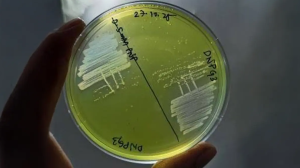
Brachybacterium netajii is a newly identified bacterial species isolated from the Hooghly River in West Bengal, India. The strain was obtained from areas affected by industrial runoff and was proposed as Brachybacterium netajii sp. nov. after polyphasic taxonomic characterisation of strain DNPG3T.
Bioremediation Features
Bioremediation is the use of microorganisms, plants, or enzymes to break down pollutants into less harmful substances. Brachybacterium netajii degrades p-nitrophenol (PNP), a toxic industrial chemical used in dyes and pesticides, into harmless by-products.
Environmental Tolerance
The bacterium tolerates high concentrations of heavy metals, including arsenic, cadmium, lead, and mercury. It is also halotolerant and can survive in salt concentrations of up to 9%, which is relevant for coastal and estuarine waters.
Taxonomy and Cellular Features
The species belongs to the genus Brachybacterium, which is placed in the phylum Actinobacteria. Its cellular profile includes fatty acids such as C11:0 and C10:0 2-OH, and its genome contains genomic islands linked to stress-tolerance enzymes.
Research Institutions
The bacterium was isolated by scientists associated with Netaji Mahavidyalaya, the University of Burdwan, IIT (BHU), and Hiroshima University. The species name honours Netaji Subhas Chandra Bose, whose full name was Subhas Chandra Bose.
Important Facts for Exams
- Brachybacterium netajii was discovered in the Hooghly River, a distributary of the Ganges in West Bengal.
- p-Nitrophenol is used in the manufacture of dyes and pesticides.
- Halotolerant organisms can survive in environments with high salt concentration.
- Actinobacteria is a major bacterial phylum that includes many soil-dwelling species.
Exam-Relevant Context
Industrial runoff often contains dyes, pesticides, and heavy metals that contaminate river systems. Microbial strains with pollutant-degrading and metal-tolerant traits are studied for wastewater treatment and environmental clean-up.
| Related | |
|---|---|