Scientists Discover Fuel-Saving Earth-to-Moon Route
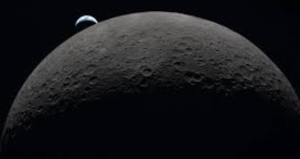
An international team of scientists published research in April 2026 in the journal Astrodynamics on a fuel-saving Earth-to-Moon trajectory. The study involved researchers from the University of São Paulo in Brazil and the University of Coimbra in Portugal. The lead author was Allan Kardec de Almeida Júnior, and Vitor Martins de Oliveira was a co-author.
Earth-Moon Transfer Trajectories
Earth-to-Moon travel uses transfer trajectories that are calculated with orbital mechanics and gravitational fields. A trajectory with lower delta-v requires less propellant for spacecraft manoeuvres. The newly identified route reduces fuel consumption by at least 58.8 metres per second of delta-v compared with previous optimal paths.
Gravity-Assisted Space Navigation
The route uses gravitational effects from Earth and the Moon and follows pathways linked to the Interplanetary Transportation Network. The path approaches the Moon from its far side and uses routes around the L1 Lagrange point, which lies between Earth and the Moon. Low-energy transfers of this type have been used in missions such as the Japanese Hiten probe in 1991 and NASA’s GRAIL mission.
Modelling Method and Mission Features
The researchers used advanced computer modelling and the theory of functional connections to simulate about 30 million routes and to reference 280,000 cases in the study. The route maintains continuous communication with Earth and avoids signal blackouts that occur when a spacecraft passes behind the Moon. The current model considered only the gravitational forces of Earth and the Moon.
Important Facts for Exams
- Delta-v is a measure of the change in velocity needed for a spacecraft manoeuvre.
- The L1 Lagrange point is one of five equilibrium points in the Earth-Moon system.
- The Hiten probe was launched by Japan in 1990 and used low-energy lunar transfer techniques in 1991.
- NASA’s GRAIL mission studied the Moon’s gravity field using twin spacecraft.
Mission Duration and Future Study
The route takes almost 32 days to complete, which makes it suitable for non-urgent cargo missions. Future models may include the Sun’s gravity to search for additional efficient routes for specific launch dates.
| Related | |
|---|---|