Rajasthan Forms Panel for Uniform Civil Code Draft
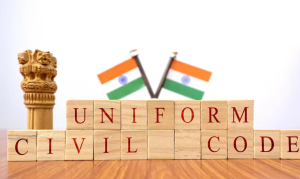
Rajasthan constituted a high-level committee to prepare the draft of The Rajasthan Uniform Civil Code, 2026. The panel was announced on 22 June 2026 after a Cabinet decision taken on 14 April 2026 under the chairmanship of the Chief Minister.
Uniform Civil Code in India
The Uniform Civil Code is a proposed legal framework for common civil laws for all citizens. It covers marriage, divorce, inheritance, adoption, and maintenance. Article 44 of the Constitution of India places the Uniform Civil Code among the Directive Principles of State Policy.
Committee Composition and Mandate
The committee is headed by former Supreme Court judge Justice Ranjana Prakash Desai. Its members include retired IAS officer Shatrughna Singh, Rajasthan High Court Additional Advocate General Basant Singh Chhaba, former Principal of Government Law College, Sri Ganganagar, Ramswaroop Agarwal, and Dr. Shuchi Chauhan. The Additional Chief Secretary (Home) serves as the Member-Secretary of the committee.
Draft Provisions and Consultation Process
The draft framework includes mandatory registration of marriages and divorces. It also includes a complete ban on polygamy, mandatory registration of live-in relationships, and equal rights for sons and daughters in ancestral property. The committee will hold consultations at the divisional level, and citizens will submit suggestions through an online platform.
Important Facts for Exams
- Article 44 of the Constitution of India mentions the Uniform Civil Code under the Directive Principles of State Policy.
- The Supreme Court of India has discussed the Uniform Civil Code in several cases, including Shah Bano Begum v. Mohammed Ahmed Khan, 1985.
- Goa follows a common civil code for many family law matters under the Portuguese Civil Code, 1867.
- Uniform civil law matters in India usually include marriage, divorce, adoption, inheritance, and maintenance.
Tribal Rights and Constitutional Provisions
The Rajasthan government has stated that customs, traditions, and rights of tribal communities will be protected under constitutional provisions within the Uniform Civil Code framework. Scheduled Tribes in India receive constitutional protection under provisions such as the Fifth Schedule and the Sixth Schedule in specified areas.
| Related | |
|---|---|