JSW Infrastructure Wins Kolkata Port Container Terminal Project
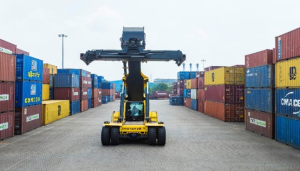
JSW Infrastructure received a Letter of Award on 9 June 2026 from the Syama Prasad Mookerjee Port Authority for the integrated development of the Outer Container Terminal and Berths 1 to 5 at Netaji Subhas Dock in the Kolkata Dock System. The project value is ₹832.25 crore and it will run for 30 years under a Design, Build, Finance, Operate, and Transfer model in a Public-Private Partnership framework.
Project Scope at Netaji Subhas Dock
The project covers two new outer container handling berths and the modernisation of five existing berths at Netaji Subhas Dock. The terminal is part of the Kolkata Dock System, which is one of the dock systems under the Syama Prasad Mookerjee Port Authority.
Capacity and Cargo Handling
The new terminal is expected to add about 0.93 million Twenty-foot Equivalent Units of container and multipurpose cargo capacity. This capacity is equivalent to around 13 million tonnes per annum. JSW Infrastructure had earlier received a Letter of Award for the reconstruction of Berth 8 and mechanisation of Berths 7 and 8 at Netaji Subhas Dock, which adds 0.45 million TEUs.
Modernisation Features
The modernisation plan includes replacement of older mobile harbour cranes with rail-mounted quay cranes at Netaji Subhas Dock. Rail-mounted quay cranes are used in container terminals for ship-to-shore cargo handling and are common in mechanised port operations.
Public-Private Partnership Model
Design, Build, Finance, Operate, and Transfer is a concession model used in infrastructure projects in India. In this model, the private concessionaire finances and operates the asset for a fixed concession period and transfers it to the public authority at the end of the term.
Important Facts for Exams
- Netaji Subhas Dock is part of the Kolkata Dock System under the Syama Prasad Mookerjee Port Authority.
- Twenty-foot Equivalent Unit, or TEU, is the standard unit used to measure container capacity in ports.
- Rail-mounted quay cranes are fixed on rails and are used for high-volume container handling at terminals.
- Public-Private Partnership projects in ports often use concession agreements for long-term operation and maintenance.
| Related | |
|---|---|