ICMR Deploys Drones for TB Diagnosis
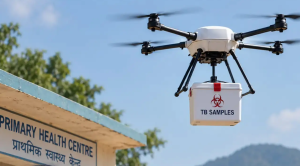
The Indian Council of Medical Research (ICMR) has tested drone-assisted transport of tuberculosis sputum samples under its i-DRONE initiative in Yadadri-Bhuvanagiri district of Telangana. The programme used a hub-and-spoke model to move samples from nearby health facilities to diagnostic centres and reduced the median turnaround time for TB diagnosis from 15 days to 5 days in a study involving 840 participants.
Drone Logistics in Public Health
Drone logistics is the use of unmanned aerial vehicles for transport of medical samples, medicines, and diagnostic materials. In this case, drones carried TB sputum samples from peripheral facilities to laboratories, which reduced dependence on long road travel in remote areas.
i-DRONE Initiative and Health Facility Network
The i-DRONE initiative linked 11 Primary Health Centres, 60 sub-centres, and four TB Units in a single sample-collection and transport network. Patients could submit sputum samples at nearby health facilities, which reduced travel distance for diagnostic access.
Cost and Turnaround Time in TB Diagnosis
The study recorded a fall in mean out-of-pocket expenditure for TB diagnosis from about ₹9,451 in the conventional system to about ₹91 during the drone-enabled phase. The reduction was linked to lower travel costs, reduced wage loss, and closer sample collection points.
Important Facts for Exams
- Tuberculosis is an infectious disease caused by Mycobacterium tuberculosis.
- India follows a National Tuberculosis Elimination Programme for TB control and elimination.
- Primary Health Centres are the first point of contact in the rural public health system in India.
- Out-of-pocket expenditure refers to direct spending by patients on health services.
Public Health Relevance
TB diagnosis depends on timely sample transport, laboratory testing, and clinical confirmation. The ICMR study provides operational data on drone use in geographically difficult areas and on its effect on diagnostic access and patient expenditure.
| Related | |
|---|---|