GPS Trackers on Smuggling Drones and Punjab’s Border Security Challenge
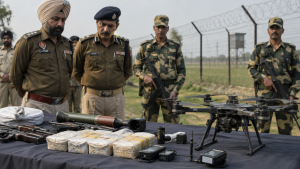
On November 10–11, 2026, Amritsar Rural Police, working with central agencies and the Border Security Force (BSF), dismantled cross-border smuggling networks and arrested seven people, including three minors. Recoveries included 7.904 kg of heroin, firearms, a rocket-propelled grenade launcher, a drone and GPS tracking devices. The operation highlights how Punjab is responding to increasingly sophisticated drone-based smuggling.
What the November 2026 operation reveals
The recoveries point to the range of contraband involved in cross-border operations, from narcotics to weapons. GPS tracking devices were among the items seized, but the details do not establish whether they were fitted to the recovered drone or how they were used. Their presence nevertheless brings attention to the technology associated with these networks. The operation also involved police, central agencies and the BSF, reflecting the need for coordinated enforcement along the border. Investigations into drone smuggling have found that foreign-based handlers, often located in Pakistan, coordinate with local operatives to move illegal goods.
Drone smuggling and evasion methods
Punjab’s 553-km international border with Pakistan is an active corridor for drone-based smuggling. Heroin, weapons and explosives are among the goods trafficked. Security agencies face a growing challenge from advanced, high-capacity drones and the networks that operate them. Reported features of these drones include:
- Satellite communications: Some drones use satellite communications for command and control.
- Autonomous navigation: Navigation systems can allow drones to operate autonomously or with limited direct human intervention.
- Resistance to conventional countermeasures: Such systems can bypass some anti-drone measures that rely on jamming radio frequencies or GPS signals, making interception harder.
Punjab’s layered counter-drone response
Punjab Police and the BSF have established a technology-driven “second line of defence” to detect and counter aerial incursions. Measures combine monitoring, early detection and interception:
- “Hawai Nakas”: Aerial checkpoints intended to detect and counter drone incursions.
- Detection and jamming: Systems identify flying machines and can disrupt their communications or navigation.
- Police surveillance drones: Punjab Police uses its own drones to monitor aerial activity at identified hotspots.
- Portable interception equipment: BSF personnel along the international border have portable devices to intercept drones.
Anti-drone systems and deployments
Punjab has introduced dedicated systems while expanding mobile and border coverage. The systems and deployments include:
- “Baaj Akh” (Hawk’s Eye): Launched in August 2025, the system had three units operating in Amritsar, Tarn Taran and Ferozepur. The initial units cost approximately ₹53 crore and provide early detection and jamming over a vulnerable 210-km stretch.
- “Drone Sense D200 Pro”: In early September 2026, Punjab Police deployed three additional long-endurance mobile platforms at strategic locations in border districts.
- Punjab Police systems: Nine anti-drone systems form the core of the police effort.
- Further installations: Additional systems were expected along the Punjab border following successful trials. They are designed to detect flying machines within a 10-km radius.
- Indrajaal: This AI-powered autonomous defence system is being deployed to protect India’s western border. Its mobile capabilities include drone spoofing and jamming.
Intelligence sharing and drone forensics
Counter-drone operations depend on coordination among security agencies as well as analysis of recovered equipment. In August 2026, senior officials from the Army, BSF and Punjab Police met to strengthen coordination, improve intelligence sharing and implement counter-drone systems. A dedicated drone forensics laboratory in Amritsar examines flight logs, launch points and drop patterns from recovered drones. The analysis helps map smuggling routes and operating patterns. More than 1,200 drones intercepted in Punjab since 2024 have been analysed.
Recoveries and enforcement against smuggling
Recoveries indicate the scale of the challenge and the continuing enforcement effort:
- 2025 to July 27, 2026: Security forces recovered 474 drones and approximately 777 kg of heroin along the Punjab border.
- First seven months of 2026: Authorities recovered 161 drones and around 392 kg of heroin.
- By mid-September 2026: Cumulative drone recoveries stood at 486.
- October 2026: A joint BSF–Punjab Police operation in Ferozepur district recovered nearly 10 kg of heroin dropped by a drone.
- “Yudh Nashiyan Virudh” campaign: Since March 1, 2025, the Punjab Police campaign against drug networks has led to nearly 80,000 arrests.
- Reward policy: Punjab Police offers ₹25,000 for each recovered drone to encourage public participation in counter-smuggling efforts.
- Proposed procurement: Punjab Police has requested ₹175 crore from the central government to acquire 17 additional anti-drone systems in the next fiscal year.
| Related | |
|---|---|