Olympic Host Selection: Key Stages and Criteria
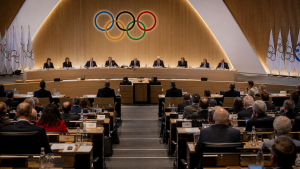
The International Olympic Committee (IOC) selects Olympic hosts through a staged process that assesses each proposal’s feasibility, delivery plans and long-term value. Reforms adopted in 2019 shifted the approach from a traditional bidding race towards dialogue with potential hosts.
The IOC and the Reformed Selection Process
The IOC, founded on June 23, 1894, in Paris, is the international governing body of the Olympic Movement. The first modern Olympic Games were held in Athens in 1896, and the Summer Games take place every four years. Approximately 106 IOC members participate in the vote to elect a host. At its 134th Session on June 24, 2019, the IOC approved a dialogue-based approach to host selection. Rather than requiring cities to compete through a conventional bid race, the process allows the IOC and interested parties to explore whether a proposal is workable and beneficial. The approach places greater emphasis on sustainability, local benefits and alignment with long-term development plans. Potential hosts may be cities, regions or countries, working with their National Olympic Committees (NOCs). Multiple cities, regions or countries may also cooperate on a Games project. The reform removed the former requirement to elect a host a fixed seven years before the Games. Permanent Future Host Commissions for the Summer and Winter Games oversee interest in future editions and advise on potential hosts.
Stages of Host Selection
The process moves from broad, non-committal discussion to detailed evaluation and a final election. The Future Host Commission supports and assesses potential projects, while the IOC Executive Board determines which parties advance.
- Continuous Dialogue: Interested cities, regions or countries engage informally with the IOC, usually alongside their NOC. They can develop a project and explore how the Games might respond to local needs without committing to a specific edition. The IOC provides support, and a feasibility assessment considers the project’s progress. At this stage, parties do not submit a formal candidature file or financial guarantees.
- Strategic Dialogue: Following feasibility assessments, the IOC Executive Board may invite selected interested parties to enter this focused stage. They respond initially to the Future Host Questionnaire and provide core legal and financial guarantees. The IOC offers enhanced technical support, and the Future Host Commission may visit proposed host regions before preparing an assessment report. For the 2036 Games, this stage is scheduled to begin in March 2027 and is expected to run through the end of 2028.
- Targeted Dialogue: The IOC Executive Board selects a limited number of Preferred Hosts for final evaluation. They submit a complete set of guarantees intended to provide legal and financial security. The Future Host Commission prepares a comprehensive report for IOC members. For the 2036 Games, this stage is expected to begin in December 2028.
- Host Election: Preferred Hosts present their projects to IOC members, including a final presentation to the IOC Session. Members then elect the host by secret ballot. The selected host signs the Olympic Host Contract with the IOC. The host for the 2036 Games is planned to be chosen in mid-2029.
For the 2036 edition, the deadline for other national Olympic bodies to enter the process is October 31, 2026. This timetable places feasibility assessment before formal dialogue and allows detailed scrutiny of proposals before the final vote.
Selection Criteria and Public Interest
The Future Host Questionnaire and the required guarantees help the IOC evaluate whether a proposal is credible and deliverable. The assessment covers the proposed Games as well as its effects on the host region.
- Venue masterplan and athlete experience: The suitability of proposed sports venues and facilities, and the quality of the overall experience for athletes.
- Funding strategy: Whether the plan provides a credible basis for covering the costs of organising and staging the Games. Financial accountability is central to assessing the guarantees and delivery plan.
- Political and public support: Evidence of support from authorities at city, regional and national levels, alongside public endorsement.
- Games delivery capability: The proposed host’s capacity and experience in managing a large-scale international event.
- Legacy strategy: How the Games could create lasting social, economic and environmental benefits, and how those aims fit the region’s existing development plans.
- Vision for the Games: The host’s overall proposal and its relationship to the goals of the Olympic Movement.
- Feasibility and sustainability: Geopolitical, socio-economic, human-development and environmental factors are considered. Sustainability is a core principle across Games proposals.
Transparent selection, sound financial planning and integration with urban development are important public-interest considerations in this framework. A host proposal is therefore assessed not only for its ability to stage the event, but also for the feasibility and intended long-term value of its plans.
Key Prelims Takeaways
- The IOC was founded in Paris on June 23, 1894, and is the governing body of the Olympic Movement.
- The first modern Olympic Games were held in Athens in 1896; the Summer Games are held every four years.
- The reformed host-selection process uses Continuous, Strategic and Targeted Dialogue before the election.
- The Future Host Questionnaire and legal and financial guarantees form part of the assessment framework.
- For 2036, the entry deadline is October 31, 2026; Strategic Dialogue is scheduled to begin in March 2027.
- Targeted Dialogue is expected to begin in December 2028, with the host planned to be elected in mid-2029 by secret ballot.
Recent Context
India is among seven countries in discussions with the IOC about hosting the 2036 Summer Olympics; the others are Qatar, South Africa, South Korea, Germany, Hungary and Turkey. India’s proposal centres on Ahmedabad, Gujarat, which has been awarded the 2030 Commonwealth Games. Ahmedabad’s Narendra Modi Stadium has a seating capacity of 132,000.
| Related | |
|---|---|