Important Historical Forts, Tombs and Monuments Revision
India’s forts, tombs and monuments reflect changing political powers and building traditions across ancient, medieval and Mughal periods. For Prelims, the most useful approach is to link each structure with its ruler, region, material, and one distinctive architectural feature.
These sites show the shift from rock-cut and trabeate forms to grand domes, charbagh gardens, sandstone bastions, and decorative inlay work. A quick revision of their location, patronage and special traits covers many static-history questions.
Ancient and Early Medieval Fortifications
- Rajgir Fort, Bihar: Associated with the Haryanka dynasty under Bimbisara and Ajatashatru; known for cyclopean stone walls.
- Kalinjar Fort, Uttar Pradesh: A major Chandela stronghold in Banda district that resisted Mahmud of Ghazni.
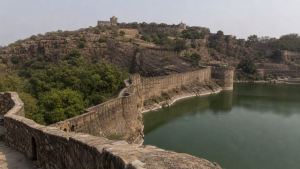
- Chittorgarh Fort, Rajasthan: The largest fort complex in India; originally linked with Chitrangada Mori and later expanded by the Guhila and Sisodia Rajputs.
- Gingee Fort, Tamil Nadu: Originally built by the Cholas and later modified by Vijayanagara rulers and Marathas; it has three citadel hills—Rajagiri, Krishnagiri and Chandrayandurg.
- Warangal Fort, Telangana: Built by the Kakatiya rulers Prola II and Rudradeva; notable for concentric mud and stone ramparts.
- Keerthi Toranas: Four monolithic granite toranas at Warangal, often asked as a distinctive Kakatiya feature.
- Brihadisvara Temple, Thanjavur: Built by Chola emperor Rajaraja I in 1010 CE; known for its massive granitic vimana and fortified outer perimeter walls.
- Kailash Temple, Ellora: Cave 16 in Maharashtra, carved top-down from a single basalt cliff under Rashtrakuta king Krishna I.
Delhi Sultanate Forts and Tombs
- Qila Rai Pithora: Expanded by Prithviraj Chauhan and later associated with the early Delhi Sultanate phase; formed the base around the Qutb Minar complex.
- Qutb Minar Complex: Begun by Qutb-ud-din Aibak and completed further by Iltutmish.
- Tomb of Iltutmish, Delhi (1235 CE): Important for introducing the squinch arch system to support a dome over a square chamber.
- Siri Fort, Delhi (1303 CE): Built by Alauddin Khalji to defend against Mongol invasions.
- Hazar Sutun: The “Palace of a Thousand Pillars” associated with Siri Fort.
- Tughlaqabad Fort, Delhi (1321 CE): Built by Ghiyas-ud-din Tughlaq; known for sloping stone walls or batter.
- Tomb of Ghiyas-ud-din Tughlaq: Noted for red sandstone with inlaid white marble borders and sloping external buttresses.
- Tomb of Sikandar Lodi (1517 CE): The earliest surviving specimen of a double dome in India.
Provincial Sultanate Architecture
- Golconda Fort, Hyderabad: Developed by the Kakatiyas and expanded by the Qutb Shahi dynasty.
- Fateh Darwaza: Famous for the acoustic signaling system at Golconda Fort.
- Mandu, Madhya Pradesh: Developed under the Malwa Sultanate and known for its scenic fortress-palace setting.
- Jahaz Mahal: The “Ship Palace” at Mandu, located between two artificial lakes.
- Hindola Mahal: Another important structure at Mandu.
- Hoshang Shah’s Tomb: A well-known monument of Mandu.
- Bidar Fort and Mahmud Gawan Madrasa, Karnataka: Representative of Persian architectural influence under the Bahmani Sultanate.
- Adina Mosque, Pandua, West Bengal: Built by Sikandar Shah of the Ilyas Shahi dynasty and once among the largest congregational mosques in the subcontinent.
Mughal Forts, Tombs and Imperial Monuments
- Tomb of Babur, Kabul: Located at Bagh-e-Babur; designed as a terraced charbagh garden layout without a covering dome over the grave.
- Tomb of Humayun, Delhi (1558 CE): Commissioned by Empress Bega Begum and designed by Persian architect Mirak Mirza Ghiyas.
- Humayun’s Tomb: The first full-fledged charbagh garden tomb and the earliest grand double-domed structure in Mughal India.
- Sher Shah Suri’s Tomb, Sasaram, Bihar (1545 CE): An octagonal sandstone mausoleum placed in the middle of an artificial square lake.
- Agra Fort: Built by Akbar using red sandstone from Fatehpur Sikri quarries; important features include Jahangiri Mahal and the Delhi and Amar Singh gates.
- Fatehpur Sikri (1571 CE): Founded by Akbar to honour Sheikh Salim Chishti; includes Buland Darwaza, Panch Mahal, Diwan-i-Khas and the Tomb of Salim Chishti.
- Buland Darwaza (1601 CE): Erected to commemorate Akbar’s military conquest of Gujarat.
- Akbar’s Tomb, Sikandra (1613 CE): Completed by Jahangir; a tier-layered square structure without a central dome.
- Tomb of I’timad-ud-Daulah, Agra (1622–1628 CE): Built by Nur Jahan for her father Mirza Ghiyas Beg; the first Mughal building made entirely of white marble and the earliest with extensive Pietra Dura (parchin kari) inlay work.
- Taj Mahal, Agra (1631–1648 CE): Built by Shah Jahan in memory of Mumtaz Mahal and designed primarily by Ustad Ahmad Lahori using white Makrana marble.
- Red Fort, Delhi (1639–1648 CE): Constructed by Shah Jahan; major elements include Diwan-i-Aam, Diwan-i-Khas and the Nahr-e-Bihisht water channel.
- Bibi Ka Maqbara, Chhatrapati Sambhajinagar (Aurangabad) (1668 CE): Built by Prince Azam Shah in memory of Dilras Banu Begum; known as the “Taj of the Deccan.”
- Safdarjung Tomb, Delhi (1754 CE): Considered the last enclosed charbagh garden tomb of the late Mughal era.
Regional Forts and Royal Complexes
- Amer Fort, Jaipur: Constructed by Raja Man Singh I using red sandstone and marble.
- Amer Fort features: Maota Lake, Sheesh Mahal and Ganesh Pol are key points to remember.
- Mehrangarh Fort, Jodhpur (1459 CE): Founded by Rao Jodha atop a perpendicular cliff known as Bhakurcheeria.
- Mehrangarh interiors: Noted for Moti Mahal and Phool Mahal.
Key Prelims Takeaways
- Rock-cut excellence: Kailash Temple at Ellora is the best example of monolithic, top-down carving.
- Early fort walls: Rajgir is remembered for cyclopean stone walls, while Tughlaqabad is known for its batter walls.
- Temple and fort overlap: Brihadisvara Temple shows how fortified perimeter walls could be part of temple architecture.
- Delhi Sultanate marker: The Tomb of Iltutmish is important for the squinch arch system.
- Mughal garden form: Humayun’s Tomb established the full charbagh tomb pattern in India.
- Inlay innovation: I’timad-ud-Daulah is key for white marble and Pietra Dura work.
- Late Mughal reminder: Safdarjung Tomb is the last enclosed charbagh garden tomb.
Current General Studies comprises current-affairs-based, General Studies-rich study material on policies, laws, institutions, economy, science, environment, governance, international relations, and other varied but important topics for UPSC and State PSC Prelims examinations.
Fortnightly PDF compilations: Available here
Originally written on
June 22, 2026
and last modified on
September 6, 2026.
| Related | |
|---|---|