State-Wise Population, Sex Ratio and Literacy Indicators
Introduction
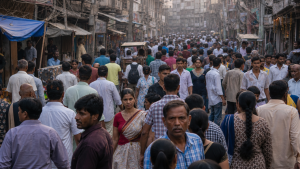
Demographic indicators help measure the size, distribution and social composition of population across states, union territories and districts. In India, these figures are compiled and released through decennial census operations by the Office of the Registrar General and Census Commissioner.
The most useful indicators for Prelims revision are population density, decadal growth rate, sex ratio, child sex ratio and literacy rate. These reveal sharp interstate and inter-district contrasts and are often asked in comparative form.
Population Density: Highest and Lowest
- Bihar has the highest population density among all states at 1,106 persons per sq km.
- West Bengal ranks second among states with 1,028 persons per sq km.
- Kerala stands third with 860 persons per sq km, followed by Uttar Pradesh at 829.
- Arunachal Pradesh has the lowest density among states at 17 persons per sq km.
- Mizoram records 52 persons per sq km, and Sikkim 86, placing them among the least dense states.
- Delhi has the highest density among all states and union territories at 11,320 persons per sq km.
- Chandigarh and Puducherry follow with 9,258 and 2,547 persons per sq km, respectively.
- Andaman and Nicobar Islands has the lowest density among union territories at 46 persons per sq km.
Exam point: North East Delhi is the most densely populated district in India at 36,155 persons per sq km, while Dibang Valley in Arunachal Pradesh has the lowest district density at 1 person per sq km.
Decadal Population Growth Rate
- Meghalaya recorded the highest decadal population growth rate among states at 27.95% during 2001-2011.
- Arunachal Pradesh followed with 26.03%, and Bihar with 25.42%.
- Nagaland is the only state to record a negative decadal growth rate, at -0.58%.
- Kerala had the lowest positive growth among major states at 4.91%.
- Goa recorded 8.23%, while Andhra Pradesh and Tamil Nadu registered 10.98% and 15.61%, respectively.
- Among union territories, Dadra and Nagar Haveli posted the highest growth rate at 55.88%, followed by Daman and Diu at 53.74%.
- Lakshadweep recorded the lowest growth rate among union territories at 6.30%.
- Among districts, Kurung Kumey in Arunachal Pradesh had the highest growth rate at 111.01%, while Longleng in Nagaland recorded the lowest at -58.39%.
Sex Ratio: Overall and Child Sex Ratio
- Kerala has the highest overall sex ratio in India at 1,084 females per 1,000 males.
- Tamil Nadu ranks second among major states with 996, followed by Andhra Pradesh at 993 and Chhattisgarh at 991.
- Haryana has the lowest overall sex ratio among states at 879, followed by Jammu and Kashmir at 889.
- Puducherry records the highest sex ratio among union territories at 1,037.
- Daman and Diu has the lowest sex ratio among all states and union territories at 618.
- Among districts, Mahe in Puducherry has the highest sex ratio at 1,184, while Daman district records the lowest at 534.
- Arunachal Pradesh has the highest child sex ratio among states at 972 girls per 1,000 boys.
- Mizoram and Meghalaya share the second-highest child sex ratio among states at 970 each.
- Haryana has the lowest child sex ratio among states at 834, followed by Punjab at 846.
- Andaman and Nicobar Islands has the highest child sex ratio among union territories at 968.
- Delhi records the lowest child sex ratio among union territories at 871.
- Lahul and Spiti in Himachal Pradesh and Tawang in Arunachal Pradesh share the highest child sex ratio among districts at 1,005.
- Jhajjar district in Haryana has the lowest child sex ratio among all districts at 782.
Literacy Rates and Gender Gaps
- Kerala has the highest literacy rate in India at 94.00%, with male literacy at 96.11% and female literacy at 92.07%.
- Mizoram ranks second among states at 91.33%, followed by Goa at 88.70% and Tripura at 87.22%.
- Bihar has the lowest literacy rate among states at 61.80%, with male literacy at 71.20% and female literacy at 51.50%.
- Arunachal Pradesh ranks second lowest at 65.38%, followed by Rajasthan at 66.11%.
- Lakshadweep has the highest literacy rate among union territories at 91.85%.
- Dadra and Nagar Haveli has the lowest literacy rate among union territories at 76.24%.
- Serchhip district in Mizoram has the highest literacy rate among districts at 97.91%, while Alirajpur district in Madhya Pradesh has the lowest at 36.10%.
Gender Disparities in Literacy
- Rajasthan has the lowest female literacy rate among states at 52.12%.
- The state also shows a wide gap between male and female literacy, making it an important indicator for gender disparity questions.
Key Prelims Takeaways
- Bihar tops state population density, while Arunachal Pradesh is the least dense state.
- Delhi has the highest density among all states and union territories.
- Meghalaya recorded the highest decadal population growth among states during 2001-2011.
- Nagaland is the only state with a negative decadal growth rate.
- Kerala leads in overall sex ratio and literacy rate among states.
- Arunachal Pradesh has the highest child sex ratio among states.
- Bihar has the lowest literacy rate among states, while Rajasthan has the lowest female literacy rate.
Current General Studies comprises current-affairs-based, General Studies-rich study material on policies, laws, institutions, economy, science, environment, governance, international relations, and other varied but important topics for UPSC and State PSC Prelims examinations.
Fortnightly PDF compilations: Available here
Originally written on
June 22, 2026
and last modified on
September 6, 2026.
| Related | |
|---|---|