Asian Development Bank: Mandate, Structure, Membership, and Functions
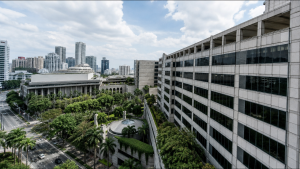
The Asian Development Bank (ADB) is a regional multilateral development bank focused on promoting economic growth, social development, and poverty reduction in Asia and the Pacific. Established in 1966 and headquartered in Manila, it supports member countries through loans, grants, technical assistance, and private sector financing.
Mandate and Strategic Vision
ADB works for a prosperous, inclusive, resilient, and sustainable Asia and the Pacific, while continuing efforts to eradicate extreme poverty. Its mandate reflects both development financing and long-term regional stability.
- Poverty reduction and inclusive growth: Supports access to public services, income opportunities, and broader economic participation.
- Environmental sustainability: Finances clean energy, climate adaptation, flood control, and disaster mitigation projects.
- Regional cooperation and integration: Promotes cross-border connectivity, trade facilitation, customs modernization, and regional power links.
- Private sector investment: Mobilizes private capital through loans, co-financing, equity investments, and risk guarantees.
Establishment and Headquarters
ADB was established on 19 December 1966 under the recommendations of the United Nations Economic Commission for Asia and the Far East. It was modelled on the World Bank and created to channel official development assistance, technical assistance, private investment, and equity capital to developing member countries.
ADB headquarters: Mandaluyong City, Metro Manila, Philippines.
Membership and Shareholding Structure
Membership in ADB is open to regional members and associate members of UN ESCAP, as well as non-regional developed countries that belong to the United Nations or its specialized agencies. The bank currently has 68 member countries.
- Regional members: 49 countries from the Asia-Pacific region.
- Non-regional members: 19 countries from Europe and North America.
- Ownership rule: Regional members must hold at least 60% of the total subscribed capital stock.
- Voting power: Weighted by capital subscriptions, combining basic votes and proportional votes.
- Capital backing: Developed members hold a large share of capital stock, supporting ADB’s borrowing capacity and credit ratings.
| Major shareholders | Subscribed capital share (%) | Total voting power (%) | Classification |
| Japan | ~15.57% | ~12.75% | Regional |
| United States | ~15.57% | ~12.75% | Non-regional |
| People’s Republic of China | ~6.43% | ~5.44% | Regional |
| India | ~6.32% | ~5.35% | Regional |
| Australia | ~5.77% | ~4.91% | Regional |
Governance and Operational Structure
ADB follows a multi-tier governance system led by member state representatives. Its statutory authority is divided between the Board of Governors, the Board of Directors, and the President.
- Board of Governors: The highest decision-making body; each member appoints one Governor and one Alternate Governor.
- Annual meeting: The Board meets yearly to decide on broad policy, admission of new members, and changes in capital stock.
- Board of Directors: Comprises 12 members, with 8 representing regional members and 4 representing non-regional members.
- Full-time role: The Board of Directors functions at the Manila headquarters and approves financial packages.
- President: Serves as chief executive officer and chairperson of the Board of Directors for a five-year term.
- Informal convention: The President of ADB is always a Japanese national.
Financial Resources and Instruments
ADB raises funds through global bond markets and donor contributions. It uses different financing windows to serve countries with varied income levels and development needs.
- Ordinary Capital Resources (OCR): Funded through market borrowings, paid-in capital, and retained earnings; provides market-based loans to middle-income developing countries.
- Asian Development Fund (ADF): The concessional window supported by donor contributions; offers grants and low-interest loans to the poorest and most debt-vulnerable countries.
- Technical Assistance Special Fund (TASF): Provides non-reimbursable grants for feasibility studies, policy advice, capacity building, and institutional reform.
- Co-financing facilities: Works with bilateral agencies, commercial banks, and climate funds to expand total investment.
India and the Asian Development Bank
India is a founding member of ADB and one of its major shareholders. It has remained an important client and operational partner of the bank for infrastructure and development financing.
- Founding status: India is a founding member and the fourth-largest shareholder.
- Borrowing history: India did not borrow from ADB in its initial two decades to preserve concessional funds for poorer nations.
- OCR borrowing: India began borrowing market-based OCR funds in 1986.
- Priority sectors: Urban infrastructure, renewable energy, industrial corridors, state roads, power transmission, and skill development.
- Resident Mission: The ADB India Resident Mission (INRM) is in New Delhi and coordinates with the Ministry of Finance and state governments.
Key Prelims Takeaways
- Established: 19 December 1966.
- Headquarters: Mandaluyong City, Metro Manila, Philippines.
- Total members: 68.
- Regional vs non-regional: 49 regional and 19 non-regional members.
- Capital rule: Regional members must retain at least 60% of subscribed capital stock.
- Key financing windows: OCR, ADF, TASF, and co-financing facilities.
- Governance: Board of Governors is the top authority; 12-member Board of Directors handles daily approvals.
| Related | |
|---|---|