Key Transport, Housing and Urban Affairs Institutions
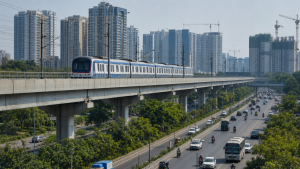
Urban governance, housing, and transport in India are shaped by a mix of constitutional provisions, central laws, and specialized institutions. For Prelims revision, the key focus is on the powers of urban local bodies, major regulatory laws, flagship schemes, and the agencies that implement housing, planning, roads, metro rail, and road safety policies.
Constitutional Basis for Urban Governance
- 74th Constitutional Amendment Act, 1992: Inserted Part IXA (Articles 243P to 243ZG) and the Twelfth Schedule into the Constitution.
- Urban Local Bodies (ULBs): Given constitutional recognition and classified into Nagar Panchayats, Municipal Councils, and Municipal Corporations.
- Twelfth Schedule: Lists 18 functional items entrusted to municipalities, including urban planning, roads and bridges, and water supply.
- Ward Committees: Constitution of Ward Committees is mandated for greater local participation in municipal governance.
- State Finance Commissions: Required to review the financial position of municipalities and recommend fiscal devolution.
- District Planning Committees: Provide a mechanism for consolidating plans prepared by panchayats and municipalities at the district level.
Key Urban and Housing Laws
- Real Estate (Regulation and Development) Act, 2016 (RERA): Established the Real Estate Regulatory Authority in every state to regulate residential and commercial real estate transactions.
- Project registration under RERA: Mandatory for commercial and residential projects where the land area exceeds 500 square meters or where there are more than 8 apartments.
- Escrow requirement: Promoters must deposit 70% of the amounts realised from allottees into a separate scheduled bank account for construction and land costs.
- Carpet area norm: Properties must be sold on the basis of carpet area, not super built-up area.
- Defect liability: Promoters are liable to rectify structural defects without charge for five years from the date of handing over possession.
- Motor Vehicles (Amendment) Act, 2019: Amended the Motor Vehicles Act, 1988 to introduce stricter penalties for traffic violations.
- National Road Safety Board: Created under the 2019 amendment to advise on road safety matters.
- Good Samaritans: The Act provides statutory protection to persons who help road accident victims in emergency medical or non-medical situations.
- Defective motor vehicles: The Act provides for mandatory recall of defective vehicles that may harm the environment, drivers, or other road users.
- Motor Vehicle Accident Fund: Envisaged to provide compulsory insurance cover to road users for Golden Hour treatment of accident victims.
- Metro Railways Acts: The Metro Railways (Construction of Works) Act, 1978 and the Metro Railways (Operation and Maintenance) Act, 2002 provide the legal framework for metro projects in Indian cities.
- Commissioner of Metro Railway Safety: Appointed by the Central Government to inspect tracks, rolling stock, and signalling before public opening.
Major Urban Development and Housing Institutions
- Ministry of Housing and Urban Affairs (MoHUA): Primary nodal ministry for urban planning, housing, public transport, and urban services.
- Housing and Urban Development Corporation (HUDCO) — 1970, New Delhi: Provides techno-financial assistance for social housing and urban infrastructure.
- National Housing Bank (NHB) — 1988, New Delhi: Apex financial institution regulating and refinancing Housing Finance Companies (HFCs).
- Town and Country Planning Organisation (TCPO) — 1962, New Delhi: Technical advisory arm of MoHUA on spatial planning and regional development policies.
- National Institute of Urban Affairs (NIUA) — 1976, New Delhi: Urban research and policy think tank involved in advocacy and municipal capacity building.
- Central Public Works Department (CPWD) — 1854, New Delhi: Apex public construction organisation managing central government buildings and public infrastructure.
- Delhi Development Authority (DDA) — 1957, New Delhi: Statutory planning body created under the Delhi Development Act, 1957 for planned spatial growth.
- Building Materials and Technology Promotion Council (BMTPC) — 1990, New Delhi: Promotes cost-effective, disaster-resistant, and sustainable construction technologies.
Major Transport and Highway Institutions
- Ministry of Road Transport and Highways: Primary nodal ministry for road transport policy, highways, and road safety administration.
- National Highways Authority of India (NHAI) — 1988, New Delhi: Statutory body for development, maintenance, and management of National Highways.
- National Highways and Infrastructure Development Corporation (NHIDCL) — 2014, New Delhi: Builds strategic highways and bridges in border regions and hilly terrain.
- Indian Road Congress (IRC) — 1934, New Delhi: Apex technical body of highway engineers that publishes national technical design standards.
- Central Road Research Institute (CRRI) — 1952, New Delhi: CSIR laboratory engaged in road design, road safety, and pavement materials research.
- National Road Safety Board (NRSB) — 2021, New Delhi: Advises Central and State governments on road safety integration and traffic management.
- National Capital Region Transport Corporation (NCRTC) — 2013, New Delhi: Joint venture company executing Regional Rapid Transit System (RRTS) projects across the NCR.
Urban Infrastructure Flagship Missions
- Pradhan Mantri Awas Yojana – Urban (PMAY-U): Provides pucca houses to eligible urban households, including slum dwellers.
- PMAY-U verticals: In-situ Slum Redevelopment (ISSR), Credit Linked Subsidy Scheme (CLSS), Affordable Housing in Partnership (AHP), and Beneficiary-led individual house construction (BLC).
- Female ownership norm: Houses are registered in the name of the female head of the household or in joint ownership with the spouse.
- Atal Mission for Rejuvenation and Urban Transformation (AMRUT): Focuses on basic urban infrastructure in selected cities.
- AMRUT sectors: Universal water supply tap connections, sewerage networks, storm water drainage, urban transport, and green spaces.
- Smart Cities Mission: Centrally sponsored mission to develop 100 cities with core infrastructure, clean environments, and smart solutions.
- Implementation model: Executed through a city-level Special Purpose Vehicle (SPV) registered under the Companies Act, 2013.
- Integrated Command and Control: Used as part of the smart city framework for better urban management and service delivery.
Key Prelims Takeaways
- Constitutional anchor: The 74th Amendment is the main constitutional foundation for urban local bodies in India.
- Municipal functions: The Twelfth Schedule contains 18 subjects, making it essential for urban governance questions.
- RERA core idea: It regulates real estate projects and protects homebuyers through registration, escrow, and defect-liability norms.
- Road safety law: The Motor Vehicles (Amendment) Act, 2019 strengthened penalties and institutionalised road safety oversight.
- Metro legal framework: Metro projects are governed by two specific Acts of 1978 and 2002, not by general railway law.
- Housing institutions: HUDCO, NHB, TCPO, NIUA, CPWD, DDA, and BMTPC are all important bodies linked to urban development.
- Transport institutions: NHAI, NHIDCL, IRC, CRRI, NRSB, and NCRTC are key names for highways, safety, and metro-region transport.
Current General Studies comprises current-affairs-based, General Studies-rich study material on policies, laws, institutions, economy, science, environment, governance, international relations, and other varied but important topics for UPSC and State PSC Prelims examinations.
Fortnightly PDF compilations: Available here
Originally written on
June 28, 2026
and last modified on
September 6, 2026.
| Related | |
|---|---|