Major Minerals and Mineral-Rich States of India
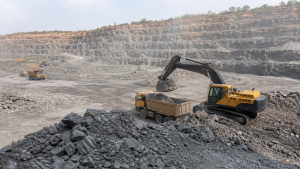
India possesses a vast and diverse geological framework housing over 95 recorded minerals, including 4 fuel minerals, 10 metallic minerals, 23 non-metallic minerals, 3 atomic minerals, and 55 minor minerals. The country’s mineral wealth is heavily concentrated in the ancient crystalline and metamorphic rock systems of the peninsular plateau. These resources serve as essential raw materials for core manufacturing industries, power generation, and infrastructure development. The distribution of mineral reserves remains geographically uneven, structured along distinct regional geological belts.

Regulatory Framework and Classification of Minerals

Major versus Minor Minerals

Under the Mines and Minerals (Development and Regulation) Act, 1957 (MMDR Act), minerals in India are broadly classified into major minerals and minor minerals. The Central Government holds regulatory jurisdiction over major minerals, which include metallic ores like iron, copper, bauxite, and gold, as well as fuel minerals like coal and lignite. State governments exercise full administrative power over minor minerals, such as building stone, gravel, ordinary clay, and sand, including the authority to frame rules, set royalty rates, and grant concessions.

MMDR Amendment Act 2023 Reforms

The MMDR Amendment Act 2023 introduced structural changes to India’s mining regime by creating a dedicated category of 24 Critical and Strategic Minerals listed under Part D of Schedule I. The amendment removed six minerals, including lithium, titanium, beryllium, niobium, tantalum, and zirconium, from the restricted atomic minerals list, opening them to private sector exploration and mining. The Central Government holds exclusive authority to auction mining leases and composite licenses for these 24 critical minerals, while auction revenues continue to flow to the respective state governments. The amendment also introduced Exploration Licenses (EL) for 29 deep-seated and critical minerals to encourage private exploration agencies.

Primary Mineral Belts of India

North-Eastern Peninsular Belt

The North-Eastern Peninsular Belt covers the Chota Nagpur Plateau across Jharkhand, Odisha, West Bengal, and Chhattisgarh. This belt is the richest mineral region in India, containing large reserves of iron ore, coal, manganese, bauxite, mica, and chromite. Major industrial centers such as Jamshedpur, Bokaro, Rourkela, and Bhilai draw raw materials directly from this region.

Central Belt

The Central Belt spans Chhattisgarh, Madhya Pradesh, Maharashtra, and parts of Andhra Pradesh. It contains extensive deposits of bauxite, manganese, limestone, coal, dolomite, and marble. The Balaghat region in Madhya Pradesh and the Katni-Jabalpur tract form vital nodes within this belt.

Southern Belt

The Southern Belt extends across the Karnataka Plateau and Tamil Nadu. It is characterized by high-grade ferrous metals and gold deposits, alongside bauxite, chromite, and lignite. The Dharwar rock formations in Karnataka anchor the mineral wealth of this zone.

South-Western Belt

The South-Western Belt covers southern Karnataka and Goa. This region contains rich reserves of iron ore, clay, and manganese. Goa’s iron ore deposits in the Bicholim and Ponda regions historically supported a major export market via Marmagao Port.

North-Western Belt

The North-Western Belt runs along the Aravalli range in Rajasthan and extends into Gujarat. This belt is dominated by non-ferrous metals like lead, zinc, and copper, along with non-metallic minerals such as marble, gypsum, sandstone, phosphorite, and petroleum reserves in the Thar desert and Gulf of Khambhat.

Major Mineral Resources and State Distribution

Metallic Minerals

Metallic minerals are grouped into ferrous minerals, which contain iron, and non-ferrous minerals, which lack iron content.

Mineral Major Producing States Key Mining Districts / Reserves Primary Uses
Iron Ore Odisha, Chhattisgarh, Karnataka, Jharkhand Keonjhar, Mayurbhanj, Sundargarh (Odisha); Bailadila (Chhattisgarh); Bellary-Hospet (Karnataka); Singhbhum (Jharkhand) Steel manufacturing, sponge iron, infrastructure construction
Bauxite Odisha, Gujarat, Jharkhand, Madhya Pradesh Kalahandi, Koraput, Rayagada (Odisha); Jamnagar, Kutch (Gujarat); Lohardaga (Jharkhand) Primary raw material for aluminum smelting
Manganese Madhya Pradesh, Maharashtra, Odisha, Karnataka Balaghat, Chhindwara (MP); Nagpur, Bhandara (Maharashtra); Sundargarh (Odisha) Steel alloy production, dry cell batteries, chemical manufacturing
Copper Madhya Pradesh, Rajasthan, Jharkhand Malanjkhand (MP); Khetri Belt (Rajasthan); Singhbhum (Jharkhand) Electrical wiring, electronics, power generation equipment
Chromite Odisha Sukinda valley in Jajpur district (Odisha holds over 95% of national reserves) Stainless steel manufacturing, refractories, chemical industry
Lead and Zinc Rajasthan Rampura-Agucha in Bhilwara, Zawar mines in Udaipur (Rajasthan holds near monopoly) Galvanizing steel, batteries, alloys, defense applications
Gold Karnataka, Andhra Pradesh Hutti mines in Raichur, Kolar Gold Fields (Karnataka); Ramagiri (Andhra Pradesh) Currency reserves, electronics, jewelry manufacturing
Non-Metallic and Fuel Minerals
  • Coal: India’s coal deposits belong to two main geological ages: Gondwana coal (over 200 million years old) and Tertiary coal (55 million years old). Gondwana coal constitutes 98% of total reserves, concentrated in the Damodar, Mahanadi, Son, and Godavari river valleys across Jharkhand (Jharia, Bokaro), Odisha (Talcher), Chhattisgarh (Korba), and West Bengal (Raniganj).
  • Petroleum and Natural Gas: Major onshore crude oil fields are located in Assam (Digboi, Naharkatiya), Gujarat (Ankleshwar, Kalol), and Rajasthan (Barmer basin). Major offshore fields include Mumbai High and Bassein in the Arabian Sea, alongside the Krishna-Godavari (KG) basin in the Bay of Bengal.
  • Limestone: Essential for the cement and steel industries, limestone is widely distributed across Madhya Pradesh (Rewa, Satna), Rajasthan (Jaisalmer, Nagaur), Andhra Pradesh, Telangana, and Karnataka.
  • Mica: India was historically the leading producer of sheet mica. Primary deposits are found in the mica belt of Jharkhand (Koderma, Giridih), Andhra Pradesh (Nellore), and Rajasthan (Bhilwara).
  • Atomic Minerals: Uranium is mined from Jaduguda and Narwapahar in Singhbhum district of Jharkhand and Tummalapalle in Andhra Pradesh. Thorium is extracted from monazite beach sands found along the coasts of Kerala, Tamil Nadu, Odisha, and Andhra Pradesh.

Statewise Profile of Top Mineral Producers

Odisha

Odisha ranks as India’s leading mineral-producing state by value. It holds the largest national reserves of bauxite, chromite, nickel ore, and iron ore. The state accounts for nearly the entire domestic production of chromite and over half of India’s total bauxite and iron ore outputs.

Jharkhand

Jharkhand possesses rich mineral wealth centered around the Chota Nagpur Plateau. It holds the largest reserves of prime coking coal in India, primarily within the Jharia coalfield. The state is also a major producer of iron ore (Singhbhum), copper (Ghatshila), uranium (Jaduguda), and kyanite.

Chhattisgarh

Chhattisgarh contains substantial reserves of high-grade hematite iron ore in the Bailadila range of Dantewada district. It is the only state in India producing tin ore, extracted from the Dantewada region. The state also holds large reserves of power-grade coal in Korba and Hasdeo-Arand.

Madhya Pradesh

Madhya Pradesh leads domestic production of manganese, copper ore, and diamonds. The Malanjkhand belt in Balaghat represents the country’s single largest open-cast copper mine, while the Majhgawan mine in Panna remains India’s only operational diamond-producing facility.

Rajasthan

Rajasthan leads non-metallic mineral output and possesses a near-monopoly in lead-zinc, selenite, and wollastonite production. It holds the largest reserves of copper ore, marble, gypsum, rock phosphate, and building stone, while its Barmer basin produces significant quantities of crude oil.

Karnataka

Karnataka is the leading producer of gold in India, driven by operational mines at Hutti in Raichur district. The state holds extensive high-grade iron ore reserves in the Bellary-Hospet belt and Bababudan hills, alongside chromite, manganese, and high-quality granite.

Important Facts for Quick Revision

  • Odisha holds more than 95% of India’s total chromite ore reserves, concentrated in the Sukinda valley of Jajpur district.
  • The MMDR Amendment Act 2023 introduced a list of 24 critical and strategic minerals to secure supply chains for green technology and advanced manufacturing.
  • Rampura-Agucha in Bhilwara district, Rajasthan, is the world’s largest deposit of zinc and lead.
  • Malanjkhand in Balaghat district of Madhya Pradesh is the largest open-cast copper mine in India.
  • Dantewada district in Chhattisgarh is the sole producer of tin ore (cassiterite) in India.
  • Panna in Madhya Pradesh is the only active diamond-mining region in India.
  • Jaduguda in East Singhbhum district of Jharkhand was the first uranium mine commissioned in India in 1967.
  • Kerala’s Chavara and Neendakara coastal beach sands contain world-class deposits of monazite, the primary source of thorium.
  • The Chota Nagpur Plateau is known as the “Rhur of India” due to its high concentration of coal, iron, and industrial minerals.
  • Hutti Gold Mines in Raichur, Karnataka, is currently the primary operational gold-producing mine in India.
Originally written on November 13, 2015 and last modified on August 11, 2026.

Leave a Reply

Your email address will not be published. Required fields are marked *