Strategic Naval Bases, Ports and Chokepoints
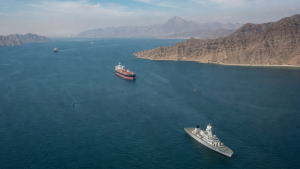
Maritime chokepoints and strategic naval bases shape global trade, energy security and naval reach. A handful of narrow straits, canals and ports carry a disproportionate share of world commerce and have direct implications for India’s maritime strategy.
Geography of Maritime Chokepoints
- Strait of Hormuz: It connects the Persian Gulf with the Gulf of Oman and is among the most sensitive energy routes in the world. A large share of global petroleum traffic passes through it, making the strait central to oil security and regional geopolitics.
- Bab-el-Mandeb: This passage links the Red Sea with the Gulf of Aden and is bounded by Djibouti, Eritrea and Yemen. It is a critical gateway between the Indian Ocean and the Suez route, and any disruption can affect shipping between Asia, Europe and West Asia.
- Suez Canal: This artificial sea-level waterway in Egypt connects the Mediterranean Sea and the Red Sea. It shortens the Europe-Asia route significantly and remains one of the world’s most important maritime shortcuts.
- Strait of Malacca: Bounded by Indonesia, Malaysia and Singapore, it is the main shipping channel between the Indian Ocean and the South China Sea. It handles over 60,000 vessels annually and carries more than one-third of global trade.
India’s Strategic Port Footprints
- Chabahar Port: Located in southeastern Iran on the Gulf of Oman, this port is central to India’s connectivity plans towards Afghanistan and Central Asia. India’s operations at the Shahid Beheshti Terminal have faced hurdles after the U.S. sanctions waiver expired, prompting interim arrangements to protect the project from secondary sanctions.
- Sabang Port: Situated on Weh Island in Indonesia, Sabang lies close to the western gateway of the Strait of Malacca. It is strategically useful for maritime connectivity and domain awareness in the Indo-Pacific.
- Great Nicobar Island: Positioned near the western entrance of the Malacca Strait, this location is important for India’s maritime strategy. The proposed development at Galathea Bay includes a dual-use airport and a transshipment terminal, making it relevant for both civilian and security purposes.
- Duqm Port: Located on the southeastern coast of Oman, Duqm provides the Indian Navy logistical reach into the Western Indian Ocean. It supports maintenance, docking and operational access under bilateral maritime cooperation.
Geopolitical Developments at Vital Bases
- Ream Naval Base: Located on the Gulf of Thailand in Cambodia, this Chinese-renovated facility has drawn attention because of visits and military diplomacy by different powers. It reflects the wider strategic competition in Southeast Asia.
- Great Coco Island: This Myanmar-controlled island lies just north of India’s Andaman and Nicobar chain. Its runway expansion, hangars and radar installations make it an important security concern for India’s maritime surveillance.
- Djibouti: Situated at the western edge of the Bab-el-Mandeb Strait, Djibouti hosts multiple foreign military bases. These include installations of the United States, France, Japan and China, underlining its importance as a geopolitical anchor in the Horn of Africa.
- Hambantota Port: Located in southern Sri Lanka, this deep-water port was leased to a Chinese state-run enterprise for 99 years. It is frequently cited in debates on debt-trap diplomacy and dual-use naval potential in the central Indian Ocean.
Why These Sites Matter for India
- Energy Security: The Strait of Hormuz and Bab-el-Mandeb are essential to the movement of crude oil and refined products, making them vital for India’s import security.
- Sea Lane Protection: The Suez Canal and Strait of Malacca are major trade arteries for Indian exports, imports and shipping routes linking the Indian Ocean with Europe and East Asia.
- Naval Reach: Ports such as Duqm and strategic locations like Great Nicobar improve India’s ability to sustain naval operations and monitor traffic across the Indian Ocean Region.
- Connectivity Strategy: Chabahar and Sabang are important for expanding India’s access to continental and maritime routes beyond Pakistan and through the Malacca corridor.
- Maritime Domain Awareness: The concentration of bases and facilities around chokepoints makes surveillance, intelligence and logistics support crucial for India’s security planning.
Key Prelims Takeaways
- Strait of Hormuz: Connects the Persian Gulf and the Gulf of Oman; it is one of the world’s most critical energy chokepoints.
- Bab-el-Mandeb: Links the Red Sea and the Gulf of Aden and is vital for traffic moving towards the Suez Canal.
- Suez Canal: An artificial sea-level canal in Egypt that drastically reduces travel time between Europe and Asia.
- Strait of Malacca: The key maritime passage between the Indian Ocean and the South China Sea, carrying a very large share of global trade.
- Chabahar Port: India’s important strategic port in Iran, located on the Gulf of Oman.
- Great Nicobar Island: A strategically important Indian territory near the western entrance of the Malacca Strait.
- Djibouti and Hambantota: Both are important exam locations because of their proximity to major sea lanes and foreign naval interest.
Current General Studies comprises current-affairs-based, General Studies-rich study material on policies, laws, institutions, economy, science, environment, governance, international relations, and other varied but important topics for UPSC and State PSC Prelims examinations.
Fortnightly PDF compilations: Available here
Originally written on
February 24, 2026
and last modified on
September 5, 2026.
| Related | |
|---|---|