National Tuberculosis Elimination Programme: Components and Targets
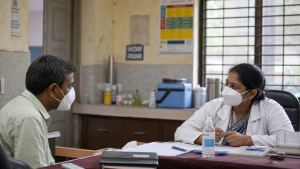
The National Tuberculosis Elimination Programme (NTEP) is India’s flagship public health initiative to eliminate tuberculosis through early detection, standardized treatment, and patient support. It works under the National Health Mission and is guided by a national strategy that combines clinical, community, and system-level interventions.
Institutional Framework
The NTEP is a centrally sponsored scheme under the National Health Mission (NHM). The Central TB Division (CTD) in the Ministry of Health and Family Welfare is the national managing authority. It coordinates with State TB Cells, District TB Centres, and Tuberculosis Units to ensure free diagnostic services, treatment, and support across states and Union Territories.
The programme’s delivery structure is designed to take services closer to patients. It also uses the Ni-kshay portal as the national web-enabled patient tracking system for reporting, monitoring, and follow-up.
National Strategic Plan 2017–2025
The NTEP operates under the National Strategic Plan (NSP) 2017–2025. The plan is built around four core pillars that guide TB elimination efforts:
- Detect: Early identification of drug-sensitive and drug-resistant TB cases, especially among high-risk and vulnerable groups.
- Treat: Prompt and complete treatment with standardized daily drug regimens and quality care.
- Prevent: Preventing TB in household contacts and vulnerable populations through preventive therapy and airborne infection control.
- Build: Strengthening the health system, encouraging multi-sectoral collaboration, and ensuring adequate financial resources.
Community Participation and PMTBMBA
The Pradhan Mantri TB Mukt Bharat Abhiyaan (PMTBMBA), launched in September 2022, is a national campaign to mobilize public participation in TB elimination. It promotes a “Jan Andolan” approach by linking citizens, organisations, and institutions with TB care and support.
A key feature of the campaign is the Ni-kshay Mitra initiative, which allows individuals, cooperative societies, companies, NGOs, and other entities to adopt TB patients. These supporters provide nutritional, diagnostic, and vocational assistance to help patients complete treatment.
- Ni-kshay Mitra: Community and institutional adoption of registered TB patients.
- Support provided: Nutritional kits, diagnostic help, and vocational assistance.
- Purpose: Reduce the social and economic burden of TB and improve treatment adherence.
- Scale: Over 6.77 lakh Ni-kshay Mitras have enrolled to distribute more than 45 lakh food baskets.
Ni-kshay Poshan Yojana
Undernutrition weakens immunity and worsens TB outcomes. To address this, the government runs the Ni-kshay Poshan Yojana (NPY), a Direct Benefit Transfer (DBT) scheme launched in April 2018. It provides financial support to TB patients for nutritional needs during treatment.
Effective November 1, 2024, the monthly assistance under NPY was doubled from ₹500 to ₹1,000 per patient for the full duration of treatment. Since its launch, the scheme has disbursed over ₹4,406 crore to support more than 1.37 crore TB patients.
Exam fact: Ni-kshay Poshan Yojana provides monthly DBT support of ₹1,000 per TB patient from November 1, 2024.
Clinical Improvements and Diagnostic Support
The NTEP has also strengthened clinical management through newer drug regimens and better diagnostic tools. In September 2024, the Union Health Ministry approved the nationwide introduction of the BPaLM regimen under the programme.
BPaLM is a four-drug combination consisting of Bedaquiline, Pretomanid, Linezolid, and Moxifloxacin. It reduces the treatment duration for drug-resistant tuberculosis (DR-TB) from about 20 months to six months.
- BPaLM regimen: Bedaquiline, Pretomanid, Linezolid, and Moxifloxacin.
- Use: Nationwide introduction under NTEP for drug-resistant TB.
- Benefit: Shortens treatment from 20 months to six months.
- Pretomanid: Licensed for use in India by CDSCO.
- Diagnostics: Portable chest X-rays, AI-enabled diagnostics, and localized micro-plans support early detection.
Focused Implementation Areas
To improve case finding and treatment adherence, the programme uses special campaigns and targeted interventions in high-burden settings. These include the 100-Day TB Mukt Bharat Abhiyaan and the TB Mukt Urban Ward Initiative.
Such efforts are especially relevant in tribal, migrant, and urban poor pockets where active screening and treatment follow-up are more difficult. The NTEP also relies on coordinated field planning to improve access in underserved areas.
- 100-Day TB Mukt Bharat Abhiyaan: Drives active case finding and treatment support in priority areas.
- TB Mukt Urban Ward Initiative: Focuses on urban wards with high TB burden.
- High-burden populations: Tribal communities, migrants, and urban poor.
- Field tools: Micro-plans, portable chest X-rays, and AI-based screening support.
Key Prelims Takeaways
- Nodal authority: Central TB Division (CTD), Ministry of Health and Family Welfare.
- Scheme type: Centrally sponsored scheme under the National Health Mission (NHM).
- Strategic framework: National Strategic Plan 2017–2025.
- Four pillars: Detect, Treat, Prevent, and Build.
- Community campaign: Pradhan Mantri TB Mukt Bharat Abhiyaan (PMTBMBA), launched in September 2022.
- Patient support: Ni-kshay Mitra initiative and Ni-kshay Poshan Yojana.
- Nutrition DBT: Increased from ₹500 to ₹1,000 per month from November 1, 2024.
- New DR-TB regimen: BPaLM consists of Bedaquiline, Pretomanid, Linezolid, and Moxifloxacin.
- Treatment duration: BPaLM reduces DR-TB treatment from 20 months to six months.
- Tracking system: Ni-kshay portal.
| Related | |
|---|---|