National Programme for NCD Prevention and Control
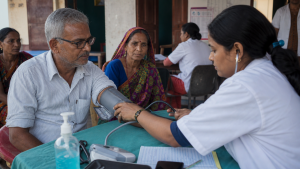
The National Programme for Prevention and Control of Non-Communicable Diseases (NP-NCD) is India’s main public health initiative for preventing, screening and managing chronic diseases. It works under the National Health Mission and focuses on early detection, referral and long-term care at primary, secondary and tertiary levels.
Administrative Framework
- Earlier name: The programme was launched in 2010 as the National Programme for Prevention and Control of Cancer, Diabetes, Cardiovascular Diseases and Stroke (NPCDCS).
- Renaming: It was renamed NP-NCD in May 2023 to reflect a wider coverage of non-communicable diseases.
- Scheme type: It functions as a Centrally Sponsored Scheme under the National Health Mission (NHM).
- State planning: States and Union Territories include NCD requirements in their annual NHM Programme Implementation Plans.
- NCD Flexi-Pool: Funding for NCD activities is routed through the NCD Flexi-Pool, which gives states flexibility in planning and local allocation.
- Funding pattern: The usual sharing ratio is 60:40 between the Centre and states; 90:10 for North-Eastern and Hilly States; and 100% central assistance for Union Territories without a legislature.
Diseases Covered and Screening Approach
- Priority diseases: The programme covers Diabetes, Hypertension, Oral Cancer, Breast Cancer, Cervical Cancer, Chronic Kidney Disease (CKD), Chronic Obstructive Pulmonary Disease (COPD), Stroke, ST-segment Elevation Myocardial Infarction (STEMI) and Non-Alcoholic Fatty Liver Disease (NAFLD).
- Age group: Population-based screening is targeted at all persons aged 30 years and above.
- Frontline screening: Accredited Social Health Activists (ASHAs) and Auxiliary Nurse Midwives (ANMs) conduct screening at the primary care level.
- Referral pathway: Screened persons requiring further care are referred to Community Health Centres and District Hospitals.
- Risk assessment: The Community Based Assessment Checklist (CBAC) is used to assess risk factors such as age, family history, tobacco use, alcohol consumption, waist circumference and physical activity.
Service Delivery and Digital Monitoring
- Network of facilities: The programme operates through District NCD Clinics, Day Care Cancer Centres, Cardiac Care Units and NCD clinics at Community Health Centres.
- District management: At the district level, implementation is overseen by a District Nodal Officer or District Programme Officer.
- National NCD Portal: Patient registration, tracking and monitoring are done through the National NCD Portal.
- ABHA linkage: The portal is integrated with Ayushman Bharat Health Accounts (ABHA) to link screening data, diagnostic reports and treatment records.
- Continuity of care: The digital system helps follow patients from screening to treatment and follow-up.
75/25 Initiative and Screening Progress
- Launch: The 75/25 Initiative was launched in May 2023.
- Goal: It aimed to place 75 million persons with hypertension and diabetes on standardised care by December 2025.
- Progress: By March 2025, the initiative had achieved 89.7% of its target.
- Hypertension care: About 42.01 million persons were brought under standard care for hypertension.
- Diabetes care: About 25.27 million persons were brought under standard care for diabetes.
- Screening volume: By March 2026, cumulative screening crossed 40.87 crore for hypertension and 40.68 crore for diabetes.
- Treatment coverage: By March 2026, 5.57 crore hypertension patients and 3.39 crore diabetes patients were on active treatment.
| Disease category | Cumulative screening | Patients on standard treatment |
| Hypertension | Over 40.87 crore | 5.57 crore |
| Diabetes | Over 40.68 crore | 3.39 crore |
Key Prelims Takeaways
- Current name: NP-NCD is the renamed version of NPCDCS.
- Launch year: The programme was first launched in 2010.
- Administrative base: It is implemented under the National Health Mission as a Centrally Sponsored Scheme.
- Funding route: NCD activities are financed through the NCD Flexi-Pool.
- Screening age: The target group for population-based screening is 30 years and above.
- Risk tool: CBAC is used for community-level risk assessment.
- Digital platform: The National NCD Portal, linked with ABHA, is used for patient tracking and monitoring.
Current General Studies comprises current-affairs-based, General Studies-rich study material on policies, laws, institutions, economy, science, environment, governance, international relations, and other varied but important topics for UPSC and State PSC Prelims examinations.
Fortnightly PDF compilations: Available here
Originally written on
March 15, 2026
and last modified on
September 5, 2026.
| Related | |
|---|---|