Colour Symbolism in Indian Culture and Festivals
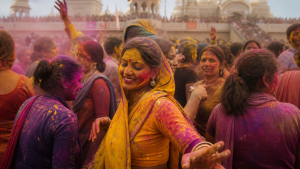
Colours in Indian culture are not merely decorative. They carry scriptural, ritual, social, and political meanings, shaping how festivals, deities, seasons, and public symbols are understood across regions. Ancient Indian texts link colours with nature, emotions, and cosmic principles, making colour an important revision theme for Prelims.
Philosophical and Scriptural Foundations
Indian thought treats colour as a way of expressing cosmic balance, mental states, and artistic expression. The Samkhya tradition and the Natyashastra provide some of the earliest structured associations between colours and human experience.
- Sattva is linked with white, symbolising purity, harmony, truth, and illumination.
- Rajas is linked with red, representing energy, passion, desire, movement, and change.
- Tamas is linked with black, indicating inertia, darkness, rest, decay, and destruction.
- Shringara (love) is associated with light green in the dramatic colour scheme of the Natyashastra.
- Hasya (humour) is linked with white, reflecting lightness and joy.
- Raudra (fury) is linked with red, and Bhayanaka (fear) with black.
- Adbhuta (wonder) is associated with yellow, while Shanta (peace) is linked with jasmine white.
Religious Meanings of Major Colours
Colours in temples, rituals, and devotional life are often chosen to invoke specific divine qualities. Their use is deeply embedded in tradition and social practice.
- Saffron / Ochre (Bhagwa / Kesariya): Symbolises fire, sacrifice, renunciation, and the search for spiritual light.
- Saffron / Ochre: Worn by Hindu ascetics, Buddhist monks, and Sikh saints; also seen on holy flags and temple pennants.
- Red (Rakta / Lal): Signifies fertility, prosperity, marital bliss, vitality, and the power of Shakti.
- Red: Closely associated with Durga, Lakshmi, and Kali; used in bridal attire, sindoor, kumkum, and alta.
- Yellow (Pita / Haldi): Linked with learning, auspiciousness, harvest, and purification.
- Yellow: Associated with Vishnu as Pitambara; turmeric is central to wedding and domestic rituals.
- Blue (Neela): Represents infinity, cosmic depth, and the vast sky and ocean.
- Blue: Used for depictions of Krishna, Rama, and Shiva as Neelakantha.
- Green (Hari / Harita): Symbolises nature, fertility, agriculture, renewal, and peace.
- Green: Also has sacred value in Islam, where it denotes peace and paradise; it appears in bangles and harvest-related observances.
- White (Shweta): Represents purity, detachment, truth, and simplicity.
- White: Associated with Saraswati and Shwetambara Jainism; in Hindu society it is also tied to mourning and widowhood.
| Colour | Key association | Ritual / social use |
| Saffron | Fire, renunciation, sacrifice | Monastic robes, temple flags, sacred emblems |
| Red | Shakti, vitality, marriage | Bridal dress, sindoor, kumkum, alta |
| Yellow | Learning, auspiciousness, purification | Turmeric rituals, Vasant Panchami offerings |
| Blue | Infinity, cosmic order | Temple iconography, divine imagery |
| Green | Harvest, renewal, peace | Festive bangles, seasonal celebrations |
| White | Purity, truth, knowledge | Scholarship, ascetic robes, mourning attire |
Festival Colours Across India
Indian festivals often use colours drawn from seasonal changes, natural materials, and symbolic devotion. Many of these associations remain useful for exam questions on regional culture and traditional practices.
- Holi: Celebrates the victory of good over evil and the arrival of spring.
- Holi colours: Traditional gulal was made from dried Palash (Tesu) flowers, turmeric, henna, and beetroot.
- Vasant Panchami: Marks spring and the worship of Goddess Saraswati.
- Vasant Panchami: Bright yellow clothes, saffron-tinted sweet rice, and yellow marigolds are commonly used.
- Navratri: A nine-night festival dedicated to the Nine Forms of Durga or Navadurga.
- Navratri: Each day is linked with a specific colour in popular practice.
- Diwali: Highlights oil lamps, gold ornaments, red cloth for Lakshmi worship, and colourful floor designs.
- Rangoli / Kolam / Alpana: These decorative patterns use geometric and floral colour arrangements during Diwali.
- Onam: Kerala’s harvest festival features Pookkalam, floral carpets made in concentric rings.
- Pookkalam: Fresh native flowers create layered colour patterns on the floor.
- Hola Mohalla: Sikh martial festival celebrated at Anandpur Sahib.
- Hola Mohalla: Nihang Sikhs are known for electric blue robes and saffron turbans during warrior displays.
Colour Symbolism in the Indian National Flag
The National Flag of India, or Tiranga, was adopted by the Constituent Assembly on July 22, 1947. Its three bands and the Ashoka Chakra reflect civic, moral, and spiritual ideals rather than any narrow communal identity.
- Top band: Saffron stands for courage, sacrifice, selflessness, and valour.
- Middle band: White represents truth, peace, and purity.
- Bottom band: Green symbolises prosperity, fertility, and growth.
- Ashoka Chakra in navy blue at the centre signifies dharma and continuous movement.
- Tiranga: The flag uses colour symbolism as a constitutional and national ideal, not merely as decoration.
Social and Regional Uses of Colour
- Bridal attire: Red dominates in many regions of North and East India as a sign of auspiciousness and marriage.
- Women’s bangles: Green glass bangles are common in western and southern India during festivals and seasonal observances.
- Temple and shrine traditions: Saffron flags, white offerings, and coloured powders are used to mark sanctity and devotion.
- Monastic traditions: Saffron and white are especially prominent in ascetic and devotional communities.
- Seasonal symbolism: Yellow connects with mustard blooms and spring; green with monsoon growth and harvest.
- Classical performance: Red alta and colour-based costume choices continue in dance and ceremonial settings.
Key Prelims Takeaways
- Sattva, Rajas, Tamas are the three Gunas of Samkhya philosophy and are linked with white, red, and black respectively.
- Natyashastra connects colours with emotional rasas, such as red for Raudra and black for Bhayanaka.
- Saffron stands for renunciation and sacrifice, and is widely used in ascetic and temple traditions.
- Red is the colour of fertility, marital auspiciousness, and Shakti worship; it is central to sindoor and bridal wear.
- Yellow is associated with Vishnu, turmeric rituals, learning, and spring festivals like Vasant Panchami.
- Blue symbolises infinity and cosmic depth, and is used in depictions of Krishna, Rama, and Shiva as Neelakantha.
- National Flag colours: saffron for courage and sacrifice, white for truth and peace, and green for prosperity.
| Related | |
|---|---|