Types and Uses of Unmanned Aerial Systems
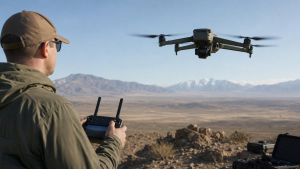
Unmanned Aerial Systems (UAS) are aircraft operated without a pilot on board. They combine an aerial vehicle with control and communication systems, and may be remotely piloted or fly autonomously. Their designs and payloads support a wide range of civilian, commercial and military tasks.
What Are Unmanned Aerial Systems?
A UAS comprises an unmanned aerial vehicle (UAV), a ground-based controller and a communication system linking them. “Drone” commonly refers to the UAV itself, while UAS describes the complete operating system. Depending on its design, a UAV may be controlled remotely by a human operator or follow a programmed flight plan, using onboard systems to navigate and stabilise flight.
- Unmanned Aerial Vehicle: The flying component, carrying the systems and payload needed for its task.
- Ground Control Station: The equipment through which an operator monitors and controls the UAV.
- Communication link: Transmits commands to the UAV and returns flight information and collected data.
Classification of UAS
UAS are classified by characteristics such as weight, range, endurance and wing design. These categories help indicate the aircraft’s capabilities and likely operational roles; classification schemes may vary according to purpose.
- Micro drones: Up to 250 grams.
- Mini drones: 250 grams to 2 kilograms.
- Small drones: 2 kilograms to 25 kilograms.
- Medium drones: 25 kilograms to 150 kilograms.
- Large drones: Above 150 kilograms.
- Close-range: Typically operate over a few kilometres and have short endurance.
- Short-range: May operate up to 150 kilometres, generally for a few hours.
- Medium-range: May cover up to 650 kilometres and remain airborne for several hours.
- HALE and MALE: High Altitude Long Endurance aircraft operate above 60,000 feet; Medium Altitude Long Endurance aircraft typically operate between 10,000 and 45,000 feet. Global Hawk is an example of HALE, while Predator and Reaper are examples of MALE systems.
- Fixed-wing: These aircraft rely on forward motion for lift and generally offer greater speed and endurance.
- Rotary-wing: Multi-rotors, such as quadcopters and hexacopters, and single-rotor helicopters can hover and take off or land vertically (VTOL).
- Hybrid: Combines features such as VTOL with fixed-wing flight, balancing operational flexibility and efficiency.
Key Components and Technologies
UAS combine flight-control, propulsion, communication and mission equipment. The selected components depend on the aircraft’s size and purpose, from close-range imaging to extended surveillance.
- Flight control: Autopilots, an Inertial Measurement Unit (IMU), GPS, altimeters and other sensors support navigation, stabilisation and flight management.
- Propulsion: Smaller drones commonly use electric motors; larger UAVs may use internal combustion engines or jet engines.
- Imaging payloads: RGB, multispectral and hyperspectral cameras collect visual data for observation and analysis.
- Specialised sensors: Thermal imagers detect heat signatures; LiDAR (Light Detection and Ranging) supports 3D mapping; and Synthetic Aperture Radar (SAR) enables imaging in different weather conditions.
- Mission equipment: Depending on the application, payloads can include communication relays, electronic warfare systems or weapons.
- Communications: Data links transmit control commands and collected information. Satellite communication can support Beyond Visual Line of Sight (BVLOS) operations.
Uses of UAS
UAS are used in military operations and across civilian and commercial sectors. Their ability to collect information or reach difficult locations can support surveillance, inspection, mapping and delivery. Their growing use also raises important issues for drone regulation, border security and the management of emerging technologies.
- Military and defence: Intelligence, Surveillance and Reconnaissance (ISR), target acquisition, precision strikes and battle-damage assessment.
- Security operations: Border patrol, maritime surveillance, electronic warfare and decoy missions.
- Military logistics: Delivery of supplies to hazardous or difficult-to-reach areas.
- Agriculture: Crop-health monitoring, precision spraying and irrigation management.
- Infrastructure inspection: Monitoring bridges, pipelines, power lines, wind turbines and mobile-phone towers.
- Mapping and surveying: Topographic mapping, construction-progress monitoring and 3D modelling.
- Disaster management: Search and rescue, damage assessment, and wildfire detection and monitoring.
- Logistics: Last-mile delivery of goods, including medical supplies.
- Environment: Wildlife tracking, anti-poaching operations, pollution detection and atmospheric research.
- Public services and media: Law enforcement uses include crowd monitoring and accident or crime-scene documentation; media uses include aerial photography and videography.
Regulatory Framework in India
The Drone Rules, 2021, issued under the Ministry of Civil Aviation, provide the primary framework for drone operations in India. They replaced the earlier UAS Rules, 2021, and simplified the regulatory regime. Requirements vary by aircraft and operation, so operators must follow applicable permissions and airspace restrictions.
- Digital Sky Platform: The online platform for drone-related registration, permits and operational permissions.
- Weight-based classification: Drones are categorised by weight for regulatory purposes.
- No-Permission-No-Takeoff: The system requires digital permission before a drone operates where permission is required.
- Airspace zones: Green, yellow and red zones indicate different permission requirements; green zones generally allow operations without prior permission, subject to applicable rules.
- Remote Pilot Certificate: Required for remote pilots in applicable cases, with training provided through DGCA-approved drone schools.
- Drone ports: Designated areas for drone arrival and departure are included in the framework.
- 2022 amendment: The Drone (Amendment) Rules, 2022, further streamlined provisions, including operations up to 100 feet above private land without specific permission.
- Drone Shakti: Announced in the Union Budget 2022–23, the initiative promotes drone startups and the use of drones across sectors.
Key Prelims Takeaways
- A UAS includes a UAV, ground control station and communication link.
- Weight classes range from micro drones to large drones.
- HALE and MALE refer to high- and medium-altitude long-endurance aircraft.
- Fixed-wing designs favour endurance; rotary-wing designs enable hovering and VTOL.
- Common payloads include cameras, thermal imagers, LiDAR and SAR.
- India’s principal framework is the Drone Rules, 2021; Digital Sky supports drone-related processes.
Recent Context
On October 20–21, 2026, NATO announced additional maritime patrol aircraft, surveillance drones and radar systems for the Black Sea after drone strikes targeted commercial cargo vessels near Romania and Bulgaria. A US Navy P-8 Poseidon began reconnaissance patrols following an urgent request from Sofia.
| Related | |
|---|---|