Acid Mine Drainage (AMD)
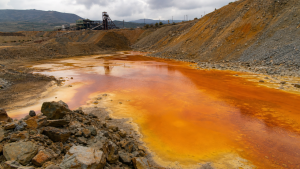
Acid mine drainage (AMD) is acidic, metal-rich water produced when sulfide minerals exposed by mining react with oxygen and water. It can contaminate surface water, groundwater and soils, harm ecosystems and pose risks to human health. Prevention limits this exposure; treatment removes acidity and dissolved contaminants.
Formation of Acid Mine Drainage
AMD develops when mining exposes sulfide-bearing rocks to air and water. The resulting oxidation reactions generate acidity and mobilise metals; microbial activity can accelerate the process.
- Sulfide minerals: Pyrite (FeS₂) is the most common contributor. Chalcopyrite (CuFeS₂), covellite (CuS), galena (PbS) and sphalerite (ZnS) can also generate AMD, particularly in metal mines.
- Oxidation: Contact with oxygen and water oxidises sulfide minerals, releasing ferrous iron (Fe²⁺) and sulfate while producing hydrogen ions (H⁺). The increase in hydrogen ions lowers water pH.
- Microbial acceleration and sources: Acidophilic bacteria and archaea, including Acidithiobacillus ferrooxidans, catalyse oxidation and the production of sulfuric acid. AMD may emerge from active or abandoned mines, waste-rock piles, tailings ponds, open pits and underground tunnels.
Characteristics and Composition
AMD’s low pH and dissolved contaminants distinguish it from ordinary mine water. Its appearance can also provide a visible warning of iron-rich drainage.
- Acidity: pH is typically 2–6, but extreme cases can fall below 0, with values as low as −3.6.
- Dissolved substances: Acidic water can dissolve iron, aluminium, manganese, copper, lead, zinc, arsenic, mercury and cadmium from surrounding rocks. Elevated sulfate (SO₄²⁻) is also characteristic.
- “Yellow boy”: Reddish-orange deposits form when dissolved ferrous iron oxidises to ferric iron and precipitates as ferric hydroxide, typically as pH rises above 3. The deposits can smother aquatic habitats.
Environmental and Health Impacts
AMD can affect water, land, infrastructure and people. The severity depends on exposure to acidity and metal contaminants, including through the food chain.
- Water and aquatic life: AMD contaminates rivers, streams, lakes and aquifers, potentially making water unsuitable for drinking, irrigation and recreation. Low pH and dissolved metals can cause fish kills, disrupt reproduction and survival, damage habitats and reduce biodiversity.
- Soils and food chains: Acidic water can reduce soil fertility and plant uptake of water and nutrients; heavy metals can impair soil enzymes and microbial communities. Metals may accumulate in plants and aquatic organisms and move up the food chain, exposing higher-level consumers.
- Human health: Direct contact can cause skin irritation, redness and itching. Drinking contaminated water may cause gastrointestinal problems, nausea and vomiting; prolonged exposure to metals such as lead, cadmium, arsenic and mercury can cause kidney damage, neurological disease and cancer. Contaminated fish or crops can also expose people to metals.
- Infrastructure: Corrosive runoff can damage bridges, pipelines and other structures, increasing repair and maintenance costs.
Prevention and Treatment
Management combines source control—reducing contact between sulfide-bearing material, air and water—with treatment of contaminated drainage. Active systems require ongoing inputs and maintenance; passive systems rely more on natural processes.
- Preventing exposure: Covering waste-rock piles with impermeable layers, flooding abandoned mines to create an anoxic environment, or sealing mine openings can limit contact with oxygen and water.
- Engineering and material controls: Waste segregation, impermeable liners and diversion channels reduce water–rock interaction. Blending or co-disposing acid-generating material with alkaline substances can neutralise acidity and inhibit bacterial activity.
- Active neutralisation: Lime (calcium hydroxide), hydrated lime, soda ash, caustic soda (sodium hydroxide) or ammonia can raise pH. Dissolved metals then precipitate as hydroxides and settle as sludge. Aeration may help oxidise ferrous iron to ferric iron and promote precipitation; the metal-rich sludge requires careful disposal.
- Other active methods: Reverse osmosis, electrochemical treatment and adsorption, including with activated carbon, can be used for high contaminant concentrations or particular contaminants.
- Passive systems: Constructed wetlands use plants and microbial communities to filter metals, neutralise acidity and promote sulfate reduction. Anoxic limestone drains (ALDs) add alkalinity in oxygen-free conditions, limiting iron oxidation and armouring; open limestone channels provide a gravity-fed option for smaller flows. Permeable reactive barriers treat groundwater as it passes through reactive material, while sulfate-reducing bioreactors use organic substrates to produce bicarbonate alkalinity and precipitate metal sulfides.
Indian Regulatory Framework
Mine-water quality and discharge in India are addressed through environmental rules, pollution-control standards and mine-safety requirements.
- MoEFCC and CPCB: The Ministry of Environment, Forest and Climate Change prescribes effluent quality limits under the Environment (Protection) Rules, 1986, and the Water (Prevention and Control of Pollution) Act, 1974. The Central Pollution Control Board sets standards for parameters including pH, BOD, COD and TSS; the stated pH range is 5.5–9.0.
- DGMS: Regulation 131 of the Coal Mines Regulations, 2017, requires mine water to be treated and settled before discharge.
- Monitoring and coal mines: Six parameters—pH, TSS, TDS, COD, BOD, and oil and grease—are monitored fortnightly, while 33 parameters are monitored annually. Indian coal is generally less associated with pyrite, so AMD is less common, though exceptions occur. Mine water in Indian coal mines is often suitable for domestic and irrigation use after minor treatment.
Key Prelims Takeaways
- AMD forms when exposed sulfide minerals, especially pyrite, oxidise in the presence of water and oxygen.
- Acidophilic microbes such as Acidithiobacillus ferrooxidans accelerate mineral oxidation.
- AMD is typically highly acidic and rich in sulfate and dissolved metals; “yellow boy” is ferric hydroxide precipitate.
- Impacts include water and soil pollution, aquatic ecosystem damage, metal exposure through food chains and infrastructure corrosion.
- Source control limits air and water contact; active treatment commonly uses alkaline chemicals and may produce metal-rich sludge.
- Passive options include constructed wetlands and ALDs. In India, MoEFCC, CPCB and DGMS have roles in mine-water standards, monitoring and discharge requirements.
| Related | |
|---|---|