Strategic Sectors in India’s International Economic Partnerships
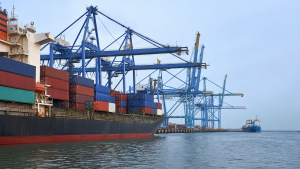
India’s international economic partnerships support trade growth, technology cooperation and more resilient supply chains. Collaboration in strategic sectors also advances energy security, domestic manufacturing and India’s integration into global value chains.
Trade and Economic Cooperation
International economic partnerships include trade, investment and the exchange of technology and expertise. Bilateral trade is the exchange of goods and services between two countries. Merchandise trade covers physical goods, while services trade includes activities such as information technology, financial services and consultancy. A trade balance is the difference between exports and imports; a surplus occurs when exports exceed imports. India’s financial year runs from 1 April to 31 March. Cooperation can reduce trade barriers, promote mutual investment and improve access to technology. These arrangements are guided by national policies that seek to boost exports and connect Indian firms with global value chains. For India, stronger partnerships can also help diversify sources of essential inputs and reduce exposure to supply disruptions.
Strategic Sectors for Partnership
India and the United States have identified semiconductors, critical minerals, energy, defence, advanced technologies and superintelligence as areas for economic cooperation. These sectors matter to national security, economic stability and technological advancement.
- Semiconductors: The India Semiconductor Mission (ISM) seeks to build a domestic ecosystem for semiconductor manufacturing and design. It operates as a specialised division within the Digital India Corporation and had an outlay of ₹76,000 crore for its first phase. The government approved 12 manufacturing units under the mission, three of which have commenced commercial production. In July 2026, the Union Cabinet approved Semicon 2.0 with an outlay of ₹1,27,500 crore.
- Critical minerals: Lithium, cobalt and nickel are important for advanced technologies, renewable energy and defence manufacturing, but India remains largely import-dependent. The government has identified 30 critical minerals and launched the National Critical Mineral Mission (NCMM) in January 2025. The mission runs for seven years, from 2024–25 to 2030–31; a critical mineral stockpile policy is also being finalised.
- Energy: Cooperation focuses on clean energy, green hydrogen, renewable energy projects and battery storage. Diversifying oil and gas imports also supports energy security.
- Defence: Make in India promotes indigenous production, technology transfer and co-development with international partners. Defence corridors have been established in Uttar Pradesh and Tamil Nadu. Up to 74% foreign direct investment (FDI) is permitted through the automatic route. India’s stated ambition is to rank among the five largest global producers in aerospace and defence manufacturing, with an annual defence export target of USD 5 billion by 2025.
- Advanced technologies: Cooperation includes artificial intelligence (AI), quantum computing, biotechnology, space technology and digital infrastructure. Digital India supports the adoption and development of digital technologies.
- Superintelligence: This emerging area concerns cooperation in advanced AI research and development, with the aim of building resilient and innovative AI ecosystems.
Trade Agreements and Cooperation Frameworks
India uses trade agreements and other frameworks to structure economic partnerships. Their scope ranges from tariff preferences to broader cooperation on investment, technology and development.
- Free Trade Agreements (FTAs): These seek to eliminate or substantially reduce tariffs, quotas and other barriers on most goods traded between partners. India has 17 trade agreements in force covering 35 partner countries.
- Comprehensive Economic Partnership Agreements (CEPAs): Broader than FTAs, CEPAs may cover goods, services, investment, customs cooperation, intellectual property and wider economic cooperation.
- Preferential Trade Agreements (PTAs): These reduce tariffs on a limited number of agreed products, generally specified through a positive list.
- Indian Development and Economic Assistance Scheme (IDEAS): The scheme provides development assistance through concessional Lines of Credit (LOCs) extended via the Exim Bank of India to developing countries. More than 260 LOCs worth over USD 26 billion have been extended to nearly 62 countries.
- iCET and TRUST: Launched in 2023, the Initiative on Critical and Emerging Technologies (iCET) focused on semiconductors, AI, quantum computing and wireless communication. In February 2025, it evolved into the Transforming the Relationship Utilizing Strategic Technology (TRUST) initiative, extending cooperation to critical mineral supply chains, biotechnology, energy and space technologies.
- Pax Silica: India joined this US-led initiative in February 2026. It aims to strengthen cooperation among democratic allies on semiconductor design, fabrication, research and supply-chain resilience.
Government Support and Institutions
Government policies and institutions help implement trade and investment priorities. They support domestic manufacturing while facilitating economic diplomacy and international investment.
- Economic diplomacy: The Department of Commerce and the Ministry of External Affairs lead India’s trade and economic diplomacy.
- Production Linked Incentive (PLI) schemes: These encourage domestic manufacturing in sectors including electronics, pharmaceuticals and automotive components.
- Invest India: The national investment promotion agency facilitates foreign direct investment into the country.
- Bilateral Investment Treaties (BITs): These are established to protect cross-border investments.
- Foreign Trade Policy and Make in India: The Foreign Trade Policy guides export promotion and integration into global value chains, while Make in India promotes domestic manufacturing and reduced import reliance.
Key Prelims Takeaways
- India’s financial year runs from 1 April to 31 March.
- ISM is housed within the Digital India Corporation; the first-phase outlay was ₹76,000 crore.
- NCMM covers 30 identified critical minerals and runs from 2024–25 to 2030–31.
- Defence manufacturing permits up to 74% FDI through the automatic route.
- FTAs, CEPAs and PTAs differ in the scope and extent of trade liberalisation.
- TRUST evolved from iCET in February 2025; Pax Silica is a US-led semiconductor cooperation initiative joined by India in February 2026.
Recent Context
On 20–21 October 2026, Ambassador Sergio Gor set a three-year trade target above USD 500 billion; the bilateral record exceeds USD 240 billion. FY2025–26 exports and imports were USD 87.31 billion and USD 53.45 billion, leaving India a USD 33.86 billion surplus. Leaders reaffirmed ties; officials said a distinct deal was “pretty close”. February’s framework covers four sectors.
| Related | |
|---|---|