Important Indicators of Women’s Economic Participation
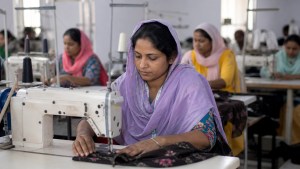
Women’s economic participation is a key indicator of gender equality and inclusive growth. It captures how women engage in paid work, entrepreneurship, and control over assets, and it reflects wider issues such as access to skills, wages, mobility, and decision-making power.
For Prelims revision, the topic is important because it combines measurable indicators, global indices, constitutional provisions, and government schemes that together shape women’s economic inclusion.
Measuring Women’s Economic Participation
Several indicators are used to assess the extent and quality of women’s participation in the economy. These measures help identify labour market gaps, income disparities, and barriers to upward mobility.
- Labour Force Participation Rate (LFPR): The share of women who are employed or actively seeking work in the total female population of a given age group.
- Workforce Participation Rate (WPR): The proportion of women who are currently employed in any economic activity.
- Unemployment Rate (UR): The share of women in the labour force who are jobless but actively searching for employment.
- Gender Wage Gap: The difference in median earnings between men and women. It reflects pay inequality, occupational segregation, and undervaluation of women’s work.
- Share in Managerial and Professional Positions: Tracks women’s presence in senior, technical, and leadership roles, indicating access to higher economic decision-making.
- Women’s Entrepreneurship Rate: Measures the proportion of women who own or manage enterprises, formal or informal, and reflects access to finance, markets, and business support.
- Asset Ownership and Control: Assesses women’s rights over land, property, savings, and other productive resources.
Why These Indicators Matter
These indicators do not just show whether women are working; they reveal how women are working and whether they are able to benefit from economic activity. A high LFPR with low wages, poor working conditions, or limited ownership rights still indicates weak economic empowerment.
- Economic inclusion: Women’s participation broadens the workforce and supports household incomes.
- Productivity gains: Greater access to paid work and enterprise improves overall economic output.
- Human development: Income, skills, and asset ownership improve education, health, and decision-making within families.
- Labour market equality: Wage, employment, and leadership indicators show whether women have fair opportunities.
- Intergenerational impact: Women’s earnings and control over resources positively affect children’s nutrition, schooling, and well-being.
Global Indices and Reports
Global indices provide a comparative picture of gender gaps across countries and help locate India’s progress in an international context.
- Global Gender Gap Index (GGGI): Published annually by the World Economic Forum (WEF), it measures gender parity across four dimensions: Economic Participation and Opportunity, Educational Attainment, Health and Survival, and Political Empowerment.
- Economic Participation and Opportunity: This dimension captures gaps in labour force participation, wage equality for similar work, estimated earned income, and the share of women in senior official, managerial, professional, and technical roles.
- Comparable indicators: The index uses standardised indicators, making it useful for cross-country comparison of women’s economic position.
- Gender Inequality Index (GII): Developed by the UNDP and included in the Human Development Report, it measures inequality in reproductive health, empowerment, and labour market participation.
- ILO reports: The International Labour Organization regularly publishes data on women’s employment, wages, labour trends, and working conditions.
Constitutional and Legal Framework in India
India’s constitutional framework supports equality in employment and economic life, while specific laws address wages, maternity protection, workplace safety, and inheritance rights.
- Article 14: Guarantees equality before the law and equal protection of the laws.
- Article 15: Prohibits discrimination on grounds including sex; Article 15(3) allows special provisions for women and children.
- Article 16: Ensures equality of opportunity in public employment.
- Article 39(a): Directs the State to ensure equal right to an adequate means of livelihood for men and women.
- Article 39(d): Directs the State to ensure equal pay for equal work for men and women.
- Equal Remuneration Act, 1976: Provides equal remuneration for men and women for the same work or work of a similar nature and prohibits sex-based discrimination in employment.
- Maternity Benefit Act, 1961: Regulates employment of women before and after childbirth and provides maternity benefits. The 2017 amendment increased paid maternity leave to 26 weeks.
- Sexual Harassment of Women at Workplace Act, 2013: Provides protection against workplace harassment and a mechanism for complaint redressal.
- Hindu Succession Act, 1956: As amended in 2005, it grants Hindu daughters equal inheritance rights in ancestral and self-acquired property.
Government Schemes and Initiatives
India has launched several schemes to improve women’s employability, entrepreneurship, mobility, and access to markets and credit. These measures are central to improving women’s labour market participation.
- Pradhan Mantri Kaushal Vikas Yojana (PMKVY): A flagship skill development scheme that provides industry-relevant training to youth, including women.
- Stand-Up India Scheme: Provides bank loans between ₹10 lakh and ₹1 crore to at least one woman borrower per bank branch for setting up greenfield enterprises.
- Deendayal Antyodaya Yojana-National Rural Livelihoods Mission (DAY-NRLM): Focuses on poverty reduction by enabling women to access self-employment and wage opportunities, mainly through Self Help Groups (SHGs).
- Mahila E-Haat: An online platform that supports women entrepreneurs, SHGs, and NGOs to showcase and sell products made by women.
- Prime Minister’s Employment Generation Programme (PMEGP): A credit-linked subsidy scheme for setting up micro-enterprises in the non-farm sector, with special provisions for women.
- Working Women Hostels: Provide safe and affordable accommodation for working women, especially those migrating for employment.
Key Prelims Takeaways
- GGGI: Published annually by the World Economic Forum.
- Four dimensions of GGGI: Economic Participation and Opportunity, Educational Attainment, Health and Survival, and Political Empowerment.
- Economic Participation and Opportunity: Includes labour force participation, wage equality, estimated earned income, and women in senior and technical roles.
- India’s weakest GGGI dimension: Economic Participation and Opportunity.
- Article 39(d): Mandates equal pay for equal work for men and women.
- Equal Remuneration Act, 1976: Ensures equal pay for similar work.
- Maternity Benefit Act, 1961: Provides 26 weeks of paid maternity leave after the 2017 amendment.
- Stand-Up India: Supports entrepreneurship among women and SC/ST borrowers.
- DAY-NRLM: Empowers women through SHGs and livelihood support.
Recent Context
The World Economic Forum released the Global Gender Gap Index 2026 on 16 September 2026. India ranked 131st among 145 countries with an overall gender parity score of 64.5%, below the global average of 69.2%. Economic Participation and Opportunity remained India’s weakest dimension, with 41.2% parity.
| Related | |
|---|---|