Major Asian Sports Events and Related Diplomacy
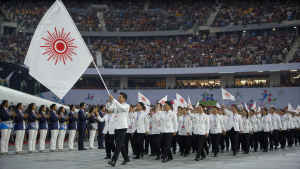
Major Asian sporting events are more than competitions; they are also platforms for regional interaction, cultural exchange, and diplomatic signalling. From the Asian Games to continental football and cricket tournaments, these events help countries project soft power, build goodwill, and deepen cooperation across Asia.
The Asian Games: Asia’s Flagship Multi-Sport Event
The Asian Games, or Asiad, is a continental multi-sport event held every four years among athletes from Asia. Recognised by the IOC, it is the second-largest multi-sport event after the Olympic Games and remains the most visible sporting platform in Asia.
- Founding: The Games were inaugurated in 1951 in New Delhi, India.
- Governance: They are organised by the Olympic Council of Asia (OCA), which has been the governing body since 1982.
- Headquarters: The OCA is based in Kuwait City, Kuwait.
- Origin: The idea of an “Oriental Olympic Games” dates back to 1913 and later evolved through the Far Eastern Championship Games.
- Frequency: The Games are held every four years, generally two years before the Winter Olympics and two years after the Summer Olympics.
- Recent and upcoming editions: The latest completed Games were the 2022 edition, held in 2023 in Hangzhou, China. The next scheduled Games are the 2026 Asian Games in Aichi-Nagoya, Japan.
- Motto and symbol: The motto is “Ever Onward”, and the symbol is a bright sun with 16 rays and a white circle at the centre.
The Asian Games began in 1951 in New Delhi and are governed by the Olympic Council of Asia from Kuwait City.
Other Major Asian Sporting Events
Along with the Asian Games, several other events shape Asia’s sporting identity and often carry diplomatic value. Their scale, frequency, and regional reach make them important for both sports administration and public diplomacy.
- AFC Asian Cup: Organised by the Asian Football Confederation (AFC), headquartered in Kuala Lumpur, Malaysia.
- Inauguration and significance: The tournament began in 1956 and is the second oldest continental football championship in the world.
- Frequency: It is held every four years.
- Dominant teams: Japan, Saudi Arabia, Iran, and South Korea have historically been among the strongest sides.
- SEA Games: The Southeast Asian Games involve the countries of Southeast Asia and are held every two years.
- History of SEA Games: They were inaugurated in 1959 as the Southeast Asian Peninsular Games (SEAP Games).
- Governing body: The Southeast Asian Games Federation (SEAGF) oversees the event.
- South Asian Games: This multi-sport event brings together South Asian countries and was inaugurated in 1984 in Kathmandu, Nepal.
- Participating nations: India, Pakistan, Bangladesh, Sri Lanka, Nepal, Maldives, Bhutan, and Afghanistan.
- Scheduling: The Games are intended to be held every two years, though delays are common.
- Asia Cup (cricket): Organised by the Asian Cricket Council (ACC), headquartered in Dubai, UAE.
- Format and frequency: It is usually held every two years in ODI or T20I format.
- Importance: It is the premier cricket tournament in Asia and features the full member nations of the ACC.
- Record: India holds the record for the most Asia Cup titles.
Why Sports Diplomacy Matters
Sports diplomacy uses sporting platforms to influence international relations, strengthen cooperation, and project national image. In Asia, where political differences often coexist with deep people-to-people linkages, sports can provide a neutral and high-visibility space for engagement.
- Soft power projection: Hosting major events allows a country to display organisational capacity, modern infrastructure, and cultural depth.
- Public diplomacy: Since sporting events are widely broadcast, they help shape international perceptions of a country.
- Informal engagement: Competitions create opportunities for leaders, officials, and diplomats to interact on the sidelines.
- Cultural exchange: Athletes and spectators from different countries interact directly, reducing stereotypes and building familiarity.
- Goodwill building: Joint bids, exchange programmes, and sports collaborations can improve trust between countries.
- Economic benefits: Hosting events can boost tourism, attract investment, and support infrastructure creation.
- Regional connectivity: Regular sporting contact strengthens cross-border linkages and contributes to wider regional cooperation.
Key Institutions That Shape Asian Sport
Several regional bodies regulate and promote sport in Asia. Their role is not limited to tournament management; they also influence cooperation, governance, and long-term development in their respective sports.
- Olympic Council of Asia (OCA): Organises and oversees the Asian Games and other continental multi-sport events.
- OCA membership: It has 45 National Olympic Committees recognised by the IOC.
- OCA objective: It promotes the Olympic movement in Asia and fosters goodwill among member countries.
- Asian Football Confederation (AFC): It is the governing body for association football in Asia and Australia.
- AFC membership: The confederation has 47 member associations.
- AFC responsibilities: It conducts major competitions such as the AFC Asian Cup and FIFA World Cup qualifiers.
- Asian Cricket Council (ACC): It organises cricket tournaments in Asia and supports the growth of the game in the region.
- ACC role: It also works on cricket development, infrastructure, and talent growth across Asia.
Asian Sport and International Branding
Asian sporting events are increasingly linked to a country’s international branding strategy. Successful hosting or strong sporting partnerships help project competence, stability, and openness, while also allowing states to connect sports with broader diplomacy and regional outreach.
- Institutional credibility: Successful event management reinforces a country’s administrative reputation.
- Identity building: Large sporting spectacles help nations present a modern and confident national image.
- Regional solidarity: Shared sporting platforms support the idea of Asia as a connected political and cultural space.
- Long-term influence: Repeated engagement through sport can complement trade, education, and cultural diplomacy.
- Policy relevance: Sport can support wider foreign policy goals without the tensions often associated with formal negotiations.
Key Prelims Takeaways
- Asian Games: First held in 1951 in New Delhi; governed by the Olympic Council of Asia.
- OCA headquarters: Kuwait City, Kuwait.
- Asian Games symbol: A bright sun with 16 rays and a white circle in the centre.
- AFC Asian Cup: Began in 1956 and is the second oldest continental football championship.
- SEA Games: A biennial multi-sport event for Southeast Asian countries.
- South Asian Games: Inaugurated in 1984 in Kathmandu, Nepal, and involves eight South Asian countries.
- Asia Cup: Organised by the ACC; India has won the most titles.
- Sports diplomacy: Uses sport for soft power, cultural exchange, and international engagement.
Recent Context
India and Japan will observe 2027 as the India-Japan Year of Shared Horizons, marking 75 years of diplomatic relations established in 1952. The anniversary plans include India-Japan Week, youth-oriented events, and sports exchanges, including a friendship cricket match linked to the Aichi-Nagoya Asian Games 2026 and the SPORT-75 initiative.
| Related | |
|---|---|