
Electricity Act, 2003: Key Provisions and Amendments
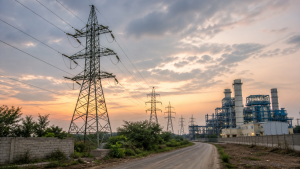
The Electricity Act, 2003 is the core law governing India’s power sector. It replaced several earlier statutes and created a unified framework for generation, transmission, distribution, trading and consumer protection.
The Act is important for Prelims because it explains sector reforms such as de-licensing of generation, open access, regulatory commissions, load despatch centres and the gradual move toward competition in power markets.
Constitutional and Legal Basis
- Concurrent List entry: Electricity is included in Entry 38 of List III of the Seventh Schedule.
- Shared law-making power: Both Parliament and state legislatures can make laws on electricity.
- Conflict rule: If there is any inconsistency, Central law prevails under Article 254.
- Replacement of earlier laws: The Act consolidated and replaced the Indian Electricity Act, 1910, the Electricity (Supply) Act, 1948 and the Electricity Regulatory Commissions Act, 1998.
Generation, Transmission and Grid Framework
- De-licensed generation: Thermal, solar, wind and other conventional generation generally do not require a licence.
- Hydropower approval: Hydroelectric projects above specified capital expenditure thresholds require technical concurrence from the Central Electricity Authority (CEA).
- Captive power plants: Industrial units may set up captive plants for self-use without licensing restrictions.
- Transmission licence: Transmission of electricity requires a statutory licence issued by the regulatory authority.
- CTU and STUs: The Central Transmission Utility (CTU) and State Transmission Utilities (STUs) are designated to plan and develop grid infrastructure.
- No trading conflict: CTU and STUs are barred from trading in electricity.
- Load Despatch Centres: The Act established the NLDC, RLDCs and SLDCs for real-time grid operation, dispatch scheduling and system security.
- Grid safety: Grid frequency is monitored strictly within 49.90 Hz to 50.05 Hz.
Important exam fact: The National Electricity Plan is prepared every five years by the CEA under Section 3 of the Act.
Distribution, Open Access and Consumer Protection
- Unbundling of SEBs: The Act encouraged restructuring of integrated State Electricity Boards into separate generation, transmission and distribution entities.
- Open access: Non-discriminatory open access was introduced in transmission and distribution networks.
- Choice of supplier: Large consumers, usually above 1 MW capacity, may buy power directly from generators or traders.
- Cross-subsidy reduction: The Act provided for gradual reduction of cross-subsidies between industrial/commercial users and agricultural/domestic consumers.
- Consumer rights: The framework seeks timely connections, better billing and lower aggregate technical and commercial losses.
- Section 11: The State Government may direct generating companies to operate and maintain stations during natural disasters or emergencies.
- Electricity trading: Trading is recognised as a distinct commercial activity requiring a specific regulatory licence.
Regulatory Architecture and Statutory Bodies
- CERC: The Central Electricity Regulatory Commission regulates inter-state transmission tariffs, multi-state generation units and inter-state trading licences.
- SERCs: State Electricity Regulatory Commissions determine retail tariffs, issue distribution licences and regulate intra-state transmission.
- APTEL: The Appellate Tribunal for Electricity hears appeals against orders of CERC, SERCs and adjudicating officers. It was created under Section 110.
- CEA: The Central Electricity Authority is a technical body that prepares the National Electricity Plan, sets safety and grid-connectivity standards and clears hydro projects.
- Grid-India: The Grid Controller of India manages real-time operation of the national grid through the NLDC and five RLDCs.
- CERC composition: It consists of a Chairperson, three other members and the Chairperson of the CEA as an ex-officio member.
| Body | Nature | Main function |
| CEA | Technical statutory body | National Electricity Plan, standards, hydro project concurrence |
| CERC | Independent quasi-judicial body | Inter-state tariffs, inter-state generation and trading regulation |
| SERC | State quasi-judicial body | Retail tariffs, distribution licensing, intra-state regulation |
| APTEL | Specialized tribunal | Appeals against regulatory orders |
| Grid-India | National system operator | Real-time grid operation through NLDC and RLDCs |
Important Amendments and Rules
- Electricity (Amendment) Bill, 2022: Proposed multiple distribution licensees in the same supply area using shared network infrastructure.
- Open access for discoms: Existing distribution licensees must provide non-discriminatory open access to their network for other discoms on payment of wheeling charges.
- Cross-Subsidy Balancing Fund: A state-managed fund was proposed to manage surpluses and deficits across multiple discoms in the same area.
- Payment security: Load Despatch Centres may be barred from dispatching power if discoms do not provide adequate payment security to generators.
- Minimum RPO: The Central Government may prescribe a minimum mandatory Renewable Purchase Obligation, with penalties for non-compliance.
- Rights of Consumers Rules, 2020: These rules set service timelines for new connections and temporary supply.
- Prosumers: Consumers who also generate electricity, such as through rooftop solar, are formally recognised and may use net-metering or gross-metering.
- Metering: Smart or pre-paid meters are mandated for new connections to improve billing and reduce losses.
- Late Payment Surcharge Rules, 2022: These rules provide a framework for discoms to clear arrears to generation companies through instalments.
- Market discipline: Defaulting discoms face restrictions on short-term power purchase access on power exchanges.
Key Prelims Takeaways
- Entry in Constitution: Electricity is under Entry 38, List III of the Seventh Schedule.
- National Electricity Plan: Prepared every five years by the CEA under Section 3.
- Generation licence: Generation is largely de-licensed, but hydro projects need CEA concurrence above specified thresholds.
- Trading: Electricity trading is a separate activity requiring a regulatory licence.
- APTEL: Set up under Section 110 to hear appeals in power-sector disputes.
- Consumer rights: The 2020 rules recognise prosumers and mandate better metering.
- Grid operation: NLDC, RLDCs and SLDCs are key institutions for real-time grid stability and dispatch.
Current General Studies comprises current-affairs-based, General Studies-rich study material on policies, laws, institutions, economy, science, environment, governance, international relations, and other varied but important topics for UPSC and State PSC Prelims examinations.
Fortnightly PDF compilations: Available here
Originally written on
May 7, 2026
and last modified on
September 6, 2026.
| Related | |
|---|---|


asd
July 28, 2017 at 11:03 amjharkhand has become the first Indian state to join the Centre’s UDAY.