Supreme Court Sets Up Four Special Benches for Oldest Cases
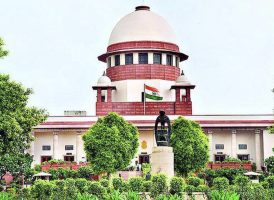
The Supreme Court of India constituted four special division benches on 13 July 2026 to hear its oldest pending civil and criminal cases. Chief Justice of India Surya Kant issued a new roster notification effective from 13 July 2026 for this purpose.
Special Benches in the Supreme Court
The Supreme Court functions through division benches and larger benches under its roster system. A division bench generally consists of two judges, and the Chief Justice of India allocates judicial work through roster notifications.
- Two division benches, headed by Justices P.K. Mishra and S.V.N. Bhatti, will hear the oldest civil matters.
- Two division benches, headed by Justices Manoj Misra and Ujjal Bhuyan, will hear the oldest criminal matters.
- The benches will sit on Tuesdays, Wednesdays, and Thursdays, which are treated as non-miscellaneous days in the Supreme Court.
- The arrangement is limited to the oldest pending civil and criminal cases identified for expedited disposal.
Pending Case Load in the Supreme Court
As of 13 July 2026, the Supreme Court had 96,045 pending cases. The pendency included 74,244 civil cases and 21,801 criminal cases. About 800 of the oldest civil and criminal cases were identified for priority hearing, with each of the four benches initially assigned around 200 matters.
Oldest Pending Civil and Criminal Matters
Some of the listed cases have remained pending for more than 30 years. The oldest civil case dates back to 1986, and the oldest criminal case was registered in 1991.
Important Facts for Exams
- The Supreme Court of India is the apex judicial body under Article 124 of the Constitution of India.
- The Chief Justice of India prepares the roster for allocation of cases among benches.
- A division bench in the Supreme Court usually consists of two judges.
- Non-miscellaneous days are used for regular hearing of listed matters in the Supreme Court.
Case Pendency and Judicial Administration
Case pendency in Indian courts is measured by the number of unresolved matters at a given time. The Supreme Court’s special benches are part of its internal case-management process for old civil and criminal disputes.
| Related | |
|---|---|