Pokhran Nuclear Tests and Operation Smiling Buddha
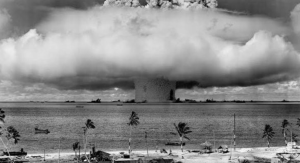
India conducted its first successful nuclear test, codenamed Smiling Buddha, on 18 May 1974 at Pokhran in Rajasthan during the tenure of Prime Minister Indira Gandhi. The test was officially described as a Peaceful Nuclear Explosion and made India a nuclear-capable nation.
Smiling Buddha and Pokhran Test Site
Pokhran is a nuclear test site in the Thar Desert of Rajasthan. The 1974 test used plutonium and was carried out underground. India became the sixth nation to conduct a nuclear test after the United States, the Soviet Union, the United Kingdom, France and China.
Pokhran-II and Operation Shakti
India conducted the Pokhran-II nuclear tests in May 1998 under Operation Shakti. The tests involved five nuclear explosions and were led by scientists including A.P.J. Abdul Kalam, R. Chidambaram and Anil Kakodkar. India declared itself a nuclear weapons state after the 1998 tests.
National Technology Day and Civil Nuclear Sector
India observes National Technology Day on 11 May to mark the 1998 Pokhran-II tests. The day was first observed in 1999 and is linked with scientific and technological achievements in India. A United States delegation of senior executives from the American nuclear industry is visiting India from 18 to 21 May 2026 to explore cooperation in the civil nuclear sector after the enactment of the SHANTI Act.
Important Facts for Exams
- India’s first nuclear test in 1974 was called Smiling Buddha.
- Pokhran-II in 1998 was also known as Operation Shakti.
- National Technology Day is observed on 11 May in India.
- The Prototype Fast Breeder Reactor at Kalpakkam achieved first criticality on 6 April 2026.
India’s Nuclear Power Programme
India’s nuclear power capacity is nearly 9 GW in 2026, and the target is 100 GW by 2047. The Prototype Fast Breeder Reactor at Kalpakkam in Tamil Nadu achieved first criticality on 6 April 2026 and entered the second stage of India’s nuclear power programme. India has also set a net-zero carbon emissions target for 2070.
| Related | |
|---|---|