Supreme Court Judge Strength Raised to 37
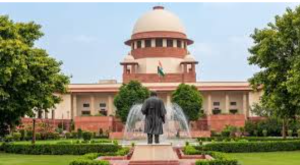
The Supreme Court of India’s sanctioned strength of judges, excluding the Chief Justice of India, has been increased from 33 to 37 through the Supreme Court (Number of Judges) Amendment Ordinance, 2026. The total strength of the Supreme Court, including the Chief Justice of India, has therefore risen from 34 to 38.
Constitutional Basis of Ordinance-making
Article 123 of the Constitution empowers the President of India to promulgate ordinances when Parliament is not in session. President Droupadi Murmu promulgated the Supreme Court (Number of Judges) Amendment Ordinance, 2026, on 16 May 2026, and the ordinance was notified in the Gazette of India on the same date.
Supreme Court Strength and Statutory Change
Section 2 of the Supreme Court (Number of Judges) Act, 1956, earlier used the expression “thirty-three” for the sanctioned strength of judges excluding the Chief Justice of India. The 2026 ordinance substitutes “thirty-three” with “thirty-seven” in that section.
Case Pendency and Judicial Capacity
The Supreme Court has a pendency of over 93,000 cases. The Union Cabinet, chaired by Prime Minister Narendra Modi, approved the proposal to increase the judge strength on 5 May 2026.
Important Facts for Exams
- The Supreme Court of India was established under Part V, Chapter IV of the Constitution.
- The Supreme Court originally started with one Chief Justice and seven puisne judges under the Constitution of India, 1950.
- The last increase in Supreme Court judge strength took place in 2019, when the sanctioned strength rose from 30 to 33, excluding the Chief Justice of India.
- An ordinance must later be replaced by an Act of Parliament within six weeks of reassembly, subject to constitutional procedure.
Legislative Process After Ordinance
The ordinance is expected to be replaced by an amendment Bill that must be passed by both Houses of Parliament. The change affects the statutory sanctioned strength of the Supreme Court under the Supreme Court (Number of Judges) Act, 1956.
| Related | |
|---|---|