NASA Detects Methane on Interstellar Comet 3I/ATLAS
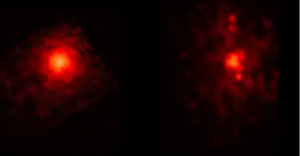
NASA and the European Space Agency announced methane detection on the interstellar comet 3I/ATLAS using the James Webb Space Telescope. The observation provides the first direct detection of methane in an interstellar object and the first mid-infrared chemical fingerprint of such a body.
James Webb Space Telescope
The James Webb Space Telescope is a space observatory launched by NASA with participation from the European Space Agency and the Canadian Space Agency. Its Mid-Infrared Instrument, or MIRI, records infrared wavelengths that are useful for studying cold dust, gases, and icy bodies in space.
Interstellar Objects
An interstellar object is a natural body that originates outside the Solar System and passes through it on a hyperbolic trajectory. 3I/ATLAS is the third confirmed interstellar object after 1I/ʻOumuamua and 2I/Borisov.
Methane and Cometary Chemistry
Methane is a hydrocarbon molecule with the chemical formula CH4. In comet studies, methane, carbon dioxide, and water are used to compare volatile composition across objects formed in different temperature zones of protoplanetary systems.
Important Facts for Exams
- 3I/ATLAS was discovered on 1 July 2025 by the NASA-funded ATLAS survey telescope in Chile.
- The methane observations were made by JWST during 15-16 December 2025 and 27 December 2025.
- The findings were published in The Astrophysical Journal Letters on 8 April 2026.
- 3I/ATLAS was about 329 million kilometres to 379 million kilometres from the Sun during the December 2025 observations.
Comet 3I/ATLAS
3I/ATLAS is the third confirmed interstellar object to pass through the Solar System. The comet showed unusually high carbon dioxide levels and a methane-to-water ratio that differs from many Solar System comets.
| Related | |
|---|---|