Archaeopteryx Fossil Sheds Light on Bird Evolution
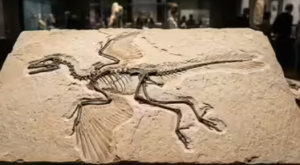
Archaeopteryx is a genus of feathered dinosaur from the Late Jurassic period, and its fossils are among the most studied specimens in vertebrate palaeontology. A 150-million-year-old Archaeopteryx fossil provides evidence for the transition between non-avian dinosaurs and birds.
Archaeopteryx and the Jurassic Period
Archaeopteryx lived about 150 million years ago during the Late Jurassic period. The genus is known from limestone deposits in southern Germany, especially the Solnhofen region, which has yielded several exceptionally preserved fossils.
Key Anatomical Features
Archaeopteryx had feathers, wings, teeth, a long bony tail, and clawed fingers. These features place it close to both theropod dinosaurs and early birds in evolutionary classification.
Fossil Evidence in Evolutionary Studies
Fossils of Archaeopteryx are used to study the origin of flight and the evolution of avian traits. The specimen combines reptile-like skeletal features with bird-like feather structures, which makes it important in comparative anatomy.
Important Facts for Exams
- Archaeopteryx is often described as a transitional fossil between dinosaurs and birds.
- The first Archaeopteryx fossil was discovered in 1861 in Germany.
- Archaeopteryx belongs to the Late Jurassic, which lasted from about 163.5 million to 145 million years ago.
- Solnhofen limestone is famous for preserving fine details of fossils, including feathers and soft tissues.
Classification and Scientific Importance
Archaeopteryx is placed within the broader group of theropod dinosaurs in many evolutionary studies. Its fossils remain important for understanding the development of feathers, wings, and early avian flight.
| Related | |
|---|---|