Timor Green Pigeon Faces Extinction Risk
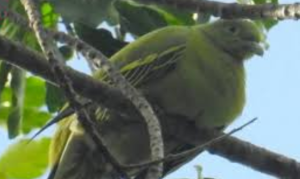
The Timor Green Pigeon (Treron psittaceus) is an endemic bird species of Timor Island and nearby islands such as Rote, Semau, Atauro and Jaco. A study published in Oryx in May 2026 assessed the species using fieldwork conducted over 1,400 days between 2002 and 2025.
Species Profile and Distribution
The Timor Green Pigeon belongs to the genus Treron, which includes green pigeons found in parts of Asia and the Indo-Pacific region. The species is recorded mainly in Timor-Leste, with most sightings concentrated in Lautem District and Nino Konis Santana National Park. In Indonesia, the species is regarded as functionally extinct, with no sightings in West Timor since 2005.
Population Status and Threats
The study estimated the global population at about 100 to 500 individuals, compared with earlier estimates of up to 2,000. Hunting for meat is the main threat to the species, along with habitat loss caused by deforestation and land conversion. The bird has also been recorded only in small numbers on Rote Island over the past two decades.
Conservation Status and Red List Classification
The Timor Green Pigeon is currently listed as Endangered on the IUCN Red List. Researchers from Charles Darwin University and BirdLife International have proposed its reclassification to Critically Endangered, a category used by the IUCN for species facing an extremely high risk of extinction in the wild.
Important Facts for Exams
- The Timor Green Pigeon is endemic to Timor Island and a few adjacent islands in the Lesser Sunda region.
- The species name is Treron psittaceus.
- The IUCN Red List has three threatened categories above Vulnerable: Endangered, Critically Endangered and Extinct in the Wild.
- Nino Konis Santana National Park is located in Lautem District in Timor-Leste.
Fieldwork and Research Background
The assessment was based on long-term field observations from 2002 to 2025, which included repeated surveys across Timor and nearby islands. Dr. Colin Trainor of Charles Darwin University led the study, and Alex Berryman of BirdLife International was among the researchers involved.
| Related | |
|---|---|