Supreme Court Sets Minimum ICU Standards for Hospitals
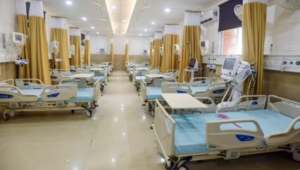
The Supreme Court-appointed expert committee has framed minimum standards for Intensive Care Units (ICUs) across hospitals in India, creating a uniform benchmark for infrastructure, staffing and patient care. The move aims to ensure that hospitals claiming to have ICU facilities meet essential clinical and safety requirements, especially for critically ill patients.
The guidelines were endorsed by the Supreme Court as “practical, implementable and necessary” and are expected to improve intensive care delivery across both urban and rural healthcare systems.
Mandatory ICU Infrastructure Defined
The framework requires every ICU to have a dedicated space with easy access to emergency services, operation theatres and laboratory facilities. Hospitals must ensure uninterrupted power backup, sanitation systems and a proper internal layout to support emergency care.
Each ICU bed must be equipped with oxygen supply, suction facilities and electrical points. Essential equipment listed includes multiparameter monitors, ventilators, defibrillators, crash carts, infusion pumps, syringe pumps, glucometers and ECG machines.
These measures aim to standardise the minimum functional capacity of ICUs across all hospitals.
Round-the-Clock Staffing Made Essential
Staffing has been placed at the centre of the new norms. Every ICU must be led by trained doctors and staffed continuously throughout the day and night. The guidelines specify higher nurse-to-patient ratios than normal wards.
The ratio ranges from 1:2 to 1:3 for standard ICU patients and up to 1:1 for critically ill or ventilated patients. Allied healthcare professionals must also be available to support intensive care services.
Continuous monitoring, life-support systems and strict infection control protocols have also been made mandatory.
ICUs Classified into Different Levels
The report, titled “Guidelines for the Organisation and Delivery of Intensive Care Services”, was prepared by a three-member committee and later vetted by medical experts. It introduces classification of ICUs into levels, ensuring that even entry-level units meet clearly defined standards.
The committee included AIIMS doctor Nitish Naik, Additional Solicitor General Aishwarya Bhati and advocate Karan Bharioke. The panel stated that while standards are fixed, clinical judgment should guide decisions regarding the level of care needed for each patient.
Important Facts for Exams
- The Supreme Court bench included Justices Ahsanuddin Amanullah and R Mahadevan.
- AIIMS stands for All India Institute of Medical Sciences, India’s premier public medical institution.
- e-ICU and tele-ICU systems help smaller hospitals connect with higher medical centres remotely.
- Nurse-to-patient ratio in critical care can be as high as 1:1 for ventilated patients.
States Asked to Submit Action Plans
The Supreme Court has directed all states and Union Territories to submit action plans by May 18, identifying existing gaps and strategies for implementation.
Experts noted that the guidelines also recognise practical challenges in rural and remote regions. Interim staffing norms and support through tele-ICU and e-ICU systems have been suggested for smaller centres where specialist availability remains limited.
The new framework is expected to strengthen critical care infrastructure and reduce disparities in ICU standards across India’s healthcare system.
| Related | |
|---|---|