SEBI Plans Bond ETF for Retail Investors
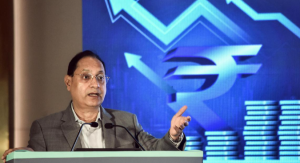
The Securities and Exchange Board of India is developing bond exchange-traded funds and derivatives on corporate bond indices to expand retail participation in India’s debt market. SEBI Chairman Tuhin Kanta Pandey announced the initiative at the CareEdge Debt Market Summit in Mumbai on 26 May 2026.
Bond Exchange-Traded Funds
Bond ETFs are exchange-traded funds that invest in debt instruments such as government securities, corporate bonds, or a mix of fixed-income securities. They trade on stock exchanges like shares and can be bought in small units by retail investors. SEBI has linked the proposed bond ETFs with three market objectives: higher liquidity, smaller ticket-size access for retail investors, and hedging tools for institutions against interest-rate risk. Retail participation in India’s corporate bond market remains below 1% of outstanding corporate bonds.
Corporate Bond Market in India
India’s corporate bond market has expanded from about ₹17.5 lakh crore in FY15 to more than ₹59 lakh crore at present. Debt market fundraising in FY26 reached nearly ₹9 lakh crore, which was almost double the amount raised through the equity market. The corporate bond market in India remains concentrated among highly-rated issuers, and its secondary market liquidity is shallow. Institutional investors continue to dominate bond holdings and trading in the segment.
Regulatory and Market Reforms
SEBI is examining a separate regulatory classification for debt brokers to reduce costs and entry barriers in the debt market. The regulator is also working with the Reserve Bank of India and the Ministry of Finance on a market-making framework announced in the Union Budget. Market makers are intermediaries that provide buy and sell quotes in securities markets. In bond markets, market-making frameworks are used to support trading activity and price discovery. SEBI is also considering pilot projects on the tokenisation of corporate bonds within six to nine months. Tokenisation uses digital tokens to represent ownership of an asset on a distributed ledger or similar digital system.
Project Jagrook and Investor Awareness
SEBI plans to run bond-focused awareness campaigns across India under Project Jagrook. The campaign is intended to familiarise investors with fixed-income products, credit risk, interest-rate risk, and liquidity risk in debt instruments.
Important Facts for Exams
- Exchange-traded funds are listed and traded on stock exchanges during market hours.
- Corporate bonds are debt securities issued by companies to raise funds from investors.
- Interest-rate risk affects bond prices because bond values move inversely with market interest rates.
- Tokenisation is used in financial markets for digital representation of assets and ownership records.
| Related | |
|---|---|