India Releases First Satellite-Tagged Ganges Soft-Shell Turtle
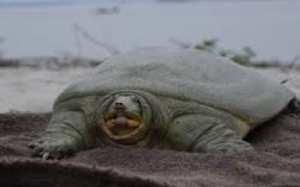
India released its first satellite-tagged Ganges soft-shell turtle in Kaziranga National Park and Tiger Reserve in Assam on 15 May 2026. The release took place on Endangered Species Day, which is observed on 15 May each year. The species is Nilssonia gangetica, a freshwater turtle found in river systems of the Indian subcontinent.
Ganges Soft-Shell Turtle
The Ganges soft-shell turtle belongs to the family Trionychidae, which includes soft-shelled freshwater turtles. It is listed as Endangered on the International Union for Conservation of Nature Red List. The species occurs in rivers, floodplains, and large freshwater wetlands in South Asia.
Satellite Tagging and Monitoring
Satellite tagging uses a transmitter fitted to an animal to record movement data and location patterns. In this case, the transmitter was fitted under veterinary supervision before release into the northern bank of the Brahmaputra River. Such tagging helps track habitat use, movement routes, and seasonal behaviour of individual animals.
Kaziranga National Park and Tiger Reserve
Kaziranga National Park and Tiger Reserve covers 1,302 sq. km in Assam. The protected area is known for grasslands, wetlands, and riverine habitats. It is a UNESCO World Heritage Site and a major habitat for the one-horned rhinoceros, Asian elephant, swamp deer, and Bengal tiger.
Important Facts for Exams
- The Ganges soft-shell turtle is protected under Part II of Schedule I of the Wildlife (Protection) Act, 1972.
- Schedule I of the Wildlife (Protection) Act, 1972 provides the highest level of legal protection for listed species in India.
- Kaziranga National Park lies along the Brahmaputra floodplain in Assam.
- Endangered Species Day is observed on 15 May and is used for awareness on threatened species.
Conservation Context
Freshwater turtles face threats from habitat loss, river pollution, fishing nets, and illegal trade. Scientific monitoring of tagged individuals is used in wildlife studies to support species management and conservation planning.
| Related | |
|---|---|