RBI Strengthens MSME Credit Framework
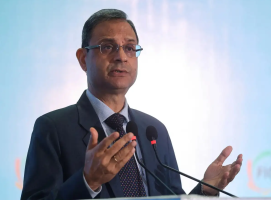
The Reserve Bank of India (RBI) has linked Micro, Small and Medium Enterprises (MSMEs) with entrepreneurship growth in India. In June 2026, RBI Governor Sanjay Malhotra described MSMEs as India’s “entrepreneurship nursery” and referred to improved credit flow and formalisation as policy priorities. The RBI also observed a dedicated awareness week in June 2026 for MSME schemes and regulatory initiatives.
MSME Registration and Formalisation
MSMEs in India register through the Udyam and Udyam Assist platforms. As of March 2026, more than 7.9 crore MSMEs and informal micro-enterprises had registered on these platforms. Udyam is the official registration portal for MSMEs, while Udyam Assist supports informal micro-enterprises in entering the formal system.
Economic Profile of the MSME Sector
Government data for 2026 placed the MSME sector’s contribution at 31.1% of India’s Gross Domestic Product. The sector accounted for 48.58% of exports and 35.4% of manufacturing output. It also supported approximately 32.8 crore people through enterprise activity and employment generation.
RBI Lending Directions and Credit Access
In February 2026, the RBI issued the Lending to Micro, Small and Medium Enterprises (MSME) Sector (Amendment) Directions, 2026. The amendment prohibited banks from taking collateral security for loans up to ₹20 lakh granted to Micro and Small Enterprises. It also allowed collateral-free loans up to ₹25 lakh for MSE units with a good track record and financial position, subject to bank policies.
Trade Receivables and Priority Sector Lending
In April 2026, the RBI proposed to remove due diligence requirements for MSMEs while onboarding them on Trade Receivables Discounting System (TReDS) platforms. TReDS is an electronic platform for discounting invoices of MSMEs against receivables from buyers. The RBI also continued Priority Sector Lending support for MSMEs in 2026, with emphasis on micro enterprises, women-owned businesses, exporters, and green or sustainable enterprises.
Important Facts for Exams
- MSMEs are classified in India under the Micro, Small and Medium Enterprises Development Act, 2006.
- Udyam registration replaced the earlier Udyog Aadhaar system for MSME registration.
- TReDS was created to improve liquidity for MSMEs through invoice discounting.
- Priority Sector Lending includes sectors such as agriculture, education, housing, and MSMEs.
Recent RBI Measures for MSMEs
The RBI framework for MSME loans in 2026 included collateral-free lending criteria and measures linked to restructured non-performing asset provisioning. The framework aimed at financial inclusion, digital transparency, and access to formal credit for small enterprises.
| Related | |
|---|---|