South Korea Introduces First Humanoid Robot Monk Gabi
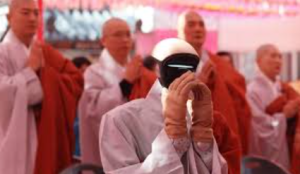
South Korea introduced its first humanoid robot monk, Gabi, at a Buddhist ceremony at Jogyesa Temple in Seoul on 6 May 2026. The robot was presented by the Jogye Order of Korean Buddhism ahead of Buddha’s Birthday on 24 May 2026.
Humanoid Robots in Religious Settings
A humanoid robot is a machine designed with a human-like body structure, including a head, torso, arms, and legs. Gabi stands 130 centimetres tall and was dressed in grey-and-brown Buddhist robes during the ceremony.
Buddhist Rituals and Monastic Terms
During the precept ceremony, Gabi bowed to senior monks, pledged devotion to Buddhism, and received the Dharma name Gabi. The name combines Siddhartha, the birth name of the Buddha, and jabi, the Korean word for mercy. The Jogye Order created five modified Buddhist precepts for Gabi. These precepts included respecting life, not damaging other robots or objects, obeying humans, refraining from deceptive speech, and saving energy by not overcharging.
Ritual Objects and Festival Context
Gabi received a 108-bead rosary and a Lotus Lantern Festival sticker on its arm. The traditional yeonbi practice involves receiving incense burns, which was replaced in this ceremony. The Lotus Lantern Festival is a major Buddhist festival in South Korea and is linked with Buddha’s Birthday celebrations. Buddha’s Birthday is observed on the eighth day of the fourth month of the lunar calendar in many East Asian Buddhist traditions.
Important Facts for Exams
- The Jogye Order is the largest Buddhist order in South Korea.
- Jogyesa Temple is a major temple of Korean Buddhism in central Seoul.
- Unitree Robotics is a Chinese robotics company that developed the Unitree G1 platform.
- Gabi is expected to join lantern parades with other Buddhist robots named Seokja, Mohee, and Nisa.
Robotics and Artificial Intelligence
The Unitree G1 platform is a humanoid robot platform developed by Unitree Robotics. Humanoid robots are used in research, service tasks, and public demonstrations in several countries.
| Related | |
|---|---|