Nigeria Green Tax Pushes Shift Towards Cleaner Vehicles
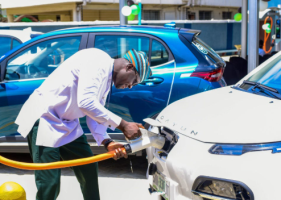
Nigeria has introduced a green tax surcharge on high-emission vehicles as part of its 2026 fiscal policy reforms, signalling a major shift towards fuel-efficient and electric mobility. The policy, signed by Finance Minister Wale Edun on April 1, 2026, will come into effect from July 1. It aims to discourage the import of fuel-guzzling vehicles and promote cleaner transport options such as electric vehicles (EVs), mass transit buses, and locally manufactured automobiles.
How the New Green Tax Will Work
The green tax will apply to vehicles with engine capacities of 2,000 cc and above. Vehicles between 2,000 cc and 3,999 cc will face an additional 2 per cent tax, while those with engines of 4,000 cc and above will attract a 4 per cent surcharge. Small vehicles below 2,000 cc are exempt from this levy. Exemptions also apply to mass transit buses, electric vehicles, and locally manufactured vehicles, encouraging cleaner and more affordable mobility choices.
Import Tariff Changes and Fuel Surcharge
Nigeria has also reduced import tariffs on fully built passenger vehicles from 70 per cent to 40 per cent under the ECOWAS Common External Tariff framework. This has been done through revised Import Adjustment Taxes while retaining the base 20 per cent tariff structure. Additionally, since January 1, 2026, a 5 per cent fuel surcharge has been imposed on petrol and diesel. Together, these measures aim to make smaller and fuel-efficient vehicles more attractive while penalising large SUVs, luxury cars, and heavy trucks.
Why Nigeria Needs This Policy Shift
Nearly 90 per cent of vehicles imported into Nigeria are second-hand vehicles, commonly known as ‘Tokunbos’. Many of these are older, high-emission models that worsen urban air pollution and fuel consumption. According to the National Bureau of Statistics, passenger car imports reached Naira 1.58 trillion in 2025. By discouraging polluting second-hand imports, the government seeks to reduce emissions, improve air quality, and strengthen domestic automotive production.
Important Facts for Exams
- ECOWAS stands for Economic Community of West African States and manages a common external tariff system.
- Nigeria has set a net-zero emissions target for 2060 under its climate commitments.
- Transport sector mitigation potential in Nigeria is estimated at 44.3 Mt CO2 equivalent under NDC 3.0.
- ‘Tokunbos’ is the local Nigerian term for imported second-hand vehicles.
Climate Goals and the Road Ahead
Nigeria’s Third Nationally Determined Contribution (NDC 3.0) targets a 29 per cent reduction in greenhouse gas emissions by 2030 and 32 per cent by 2035 compared to 2018 levels, with net zero planned by 2060. The transport sector plays a major role in this strategy. The country has already removed fuel subsidies, promoted compressed natural gas (CNG), enforced stricter import certification rules, and restricted polluting two-stroke engines. The green tax further strengthens this transition by encouraging electric vehicles and supporting sustainable transport infrastructure for long-term energy security and climate resilience.
| Related | |
|---|---|