Major Types of Vaccines and How They Work
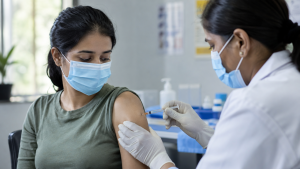
Vaccines train the immune system to recognise a pathogen or one of its components before a person encounters the infection. Different platforms present antigens or genetic instructions in different ways, but they aim to produce immune protection and memory without causing the target disease.
How Vaccines Build Immunity
Vaccination uses the immune system’s ability to recognise foreign antigens and remember them. An antigen is a molecule that can provoke an immune response. Depending on the vaccine platform, it may be supplied directly or produced by the body’s cells after vaccination.
- Recognition: Immune cells identify the antigen as foreign and initiate a response.
- Antibodies: B-lymphocytes produce proteins that target and may neutralise the pathogen or its toxins.
- Cellular response: T-lymphocytes help coordinate immunity and can respond to infected cells.
- Immunological memory: Memory B and T cells support a faster, stronger response after later exposure to the pathogen.
The balance and strength of antibody and cellular responses vary across vaccine types. Some vaccines provide strong protection with one or two doses, while others require a series of doses or boosters to build and maintain protection.
Live-Attenuated and Inactivated Vaccines
Live-attenuated vaccines contain weakened viruses or bacteria that can replicate slowly in the body without causing disease in most recipients. Because they closely mimic natural infection, they can stimulate both antibody production and cellular immunity, often with one or two doses.
- Examples: Measles, mumps and rubella (MMR), varicella, rotavirus and yellow fever vaccines.
- Precaution: They are generally not recommended for people with weakened immune systems or for pregnant individuals.
Inactivated vaccines contain pathogens that have been killed or rendered inactive, so they cannot replicate. Heat or chemical agents, including formaldehyde or beta-propiolactone, may be used for inactivation while preserving antigens for immune recognition. These vaccines primarily elicit an antibody-mediated response.
- Doses: Multiple doses and booster shots are often needed to build and maintain protection.
- Examples and safety: Hepatitis A, influenza, injectable polio and rabies vaccines are inactivated vaccines. They contain no live pathogen and are considered safe for immunocompromised individuals.
Subunit, Recombinant, Polysaccharide, Conjugate and Toxoid Vaccines
Subunit vaccines use selected, purified parts of a pathogen, such as proteins or peptides, rather than the whole organism. Recombinant DNA technology can produce pathogen subunits for use as antigens. These vaccines do not contain a live pathogen and cannot cause the disease they target.
- Polysaccharide vaccines: Use sugar chains from bacterial surfaces to stimulate an immune response.
- Conjugate vaccines: Link bacterial polysaccharides to carrier proteins to enhance the immune response, including in young children.
- Examples: Hepatitis B, human papillomavirus (HPV), acellular pertussis, pneumococcal disease and shingles vaccines use subunit or related approaches. Booster doses may be required; these vaccines are generally safe for immunocompromised people.
Toxoid vaccines target the harmful toxin produced by certain bacteria rather than the bacteria itself. A toxin is treated, commonly with formaldehyde, to reduce its toxicity while retaining its ability to provoke an immune response. The resulting vaccine induces neutralising antibodies against the active toxin.
- Examples: Diphtheria and tetanus vaccines.
- Doses: A series of doses and subsequent boosters may be needed for sustained protection.
Viral Vector and mRNA Vaccines
These platforms deliver genetic instructions that enable human cells to produce an antigen. The immune system then recognises the resulting protein and mounts a response that can include antibodies and T cells.
- Viral vector vaccines: Use a modified virus as a carrier to deliver instructions for making an antigen from the target pathogen. The vector is genetically altered so it cannot cause infection with either the target pathogen or the vector virus. This approach can stimulate innate immunity and potent T-cell responses; some COVID-19 vaccines use viral vectors.
- mRNA vaccines: Carry synthetic messenger RNA, typically enclosed in lipid nanoparticles. Ribosomes translate the mRNA into a target protein, such as the SARS-CoV-2 spike protein, which is then presented to the immune system.
- DNA and degradation: mRNA vaccines do not interact with or alter host DNA. The mRNA is naturally degraded after performing its function.
- Development and examples: The platform can support rapid development and production. COVID-19 and RSV vaccines include mRNA vaccines.
Key Prelims Takeaways
- Shared objective: Vaccine platforms aim to generate protection and immunological memory.
- Live-attenuated: Weakened pathogens replicate slowly and can stimulate antibody and cellular immunity; examples include MMR and yellow fever.
- Inactivated: Killed pathogens cannot replicate; examples include hepatitis A and injectable polio vaccines.
- Subunit and conjugate: These use selected pathogen components; conjugates link polysaccharides to carrier proteins.
- Toxoid: Immunity is directed against a bacterial toxin, as in diphtheria and tetanus vaccines.
- Genetic platforms: Viral vectors deliver genetic instructions using a modified virus, while mRNA vaccines deliver instructions in lipid nanoparticles.
Recent Context
The WHO warned on October 31, 2026, of PJ.2.1’s increasing global spread; it was first identified in Ontario on May 2. Ontario data showed 25.2% of sequenced samples were PJ.2.1 during September 20–October 17. Severity remains unestablished, and WHO vaccine advisers are reviewing it for a December composition decision.
| Related | |
|---|---|