Research Designs and Standards Organisation
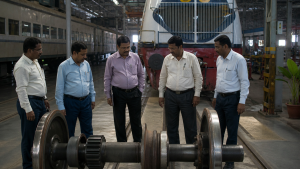
The Research Designs and Standards Organisation (RDSO) is the technical arm of the Ministry of Railways, responsible for research, design, standardization, testing, and advisory support for Indian Railways and related organizations. Headquartered in Lucknow, it plays a key role in improving railway safety, efficiency, and modernization.
Historical Evolution
The standardization of railways in India began during the British era, and RDSO evolved through several institutional stages.
Early Initiatives (Pre-Independence)
- Indian Railway Conference Association (IRCA): Created in 1903 to ensure standardization and coordination across company-managed railway networks.
- Central Standards Office (CSO): Established in Shimla in 1930 to prepare designs, standards, and technical specifications. Before Independence, India largely depended on foreign consultants for such work.
Post-Independence Integration
- Railway Testing and Research Centre (RTRC): Set up in Lucknow in 1952 for applied research and testing of track materials and rolling stock.
- The 1957 Merger: The Ministry of Railways merged the CSO and RTRC to form the Research Designs and Standards Organisation, with headquarters at Manak Nagar, Lucknow.
- Change in Administrative Status: On 1 January 2003, RDSO was upgraded from an Attached Office of the Railway Board to a Zonal Railway, giving it greater administrative autonomy.
Organizational Setup
RDSO is headed by a Director-General, whose rank is equivalent to that of a General Manager of a Zonal Railway. The Director-General is assisted by an Additional Director-General and several Principal Executive Directors.
The organization works through seven vertical directorates:
- Administration: Personnel, finance, and general management.
- Rolling Stock: Design and evaluation of carriages, wagons, and locomotives.
- Infrastructure: Track design, bridges, and geotechnical engineering.
- Traction and Power Supply: Overhead equipment, electric locomotives, and power systems.
- Signalling and Telecommunication: Communication networks and signalling protocols.
- Resource and Testing: Test tracks, laboratories, and resource utilization.
- Traffic and Psycho-Technical Directorate: Cognitive and psychometric testing for railway operators.
Although the main office is in Lucknow, specialized Design Cells also function in Bangalore, Bhopal, Mumbai, Kolkata, Jaipur, Hyderabad, and New Delhi.
Technical and Advisory Functions
- Technology Adoption: Acquires, adapts, and assimilates modern railway technologies from around the world.
- Design Development: Prepares standard drawings and designs for tracks, locomotives, and signalling equipment.
- Material Testing: Tests raw materials and components to ensure quality and safety standards.
- Accident Investigation: Conducts technical inquiries into major railway accidents to identify root causes of mechanical failures.
- Vendor Approval: Assesses and registers suppliers of critical safety equipment for railways.
Standard Developing Organization (SDO) Status
In May 2021, RDSO became the first institution in India to be recognized as a Standard Developing Organization (SDO) under the Bureau of Indian Standards (BIS) One Nation One Standard mission.
- Global Alignment: Its standard-making process was aligned with the WTO-TBT Code of Good Practice.
- Collaborative Process: The process now includes academia, MSMEs, technology developers, and private manufacturers.
- Efficiency: It reduces the time gap between standard development and field implementation.
- Unified National Standards: Supports the goal of one cohesive national standard for each subject.
Key Projects and Technical Work
- Kavach (Automatic Train Protection): Designed and tested by RDSO; it helps prevent collisions by applying brakes automatically if a driver misses a signal.
- Vande Bharat Express (Train 18): RDSO completed speed, safety, and oscillation trials for India’s indigenous semi-high-speed trainsets.
- LHB Coaches: It supported the shift from conventional ICF coaches to German-designed Linke Hofmann Busch (LHB) coaches, improving safety and passenger comfort.
- Heavy Freight Corridors: Designed track structures and bridges for axle loads of up to 32.5 tonnes on Dedicated Freight Corridors.
Fast Facts
| Parameter | Details |
| Establishment Year | 1957 |
| Headquarters | Lucknow, Uttar Pradesh |
| Parent Ministry | Ministry of Railways, Government of India |
| Predecessor Bodies | Central Standards Office (CSO) and Railway Testing & Research Centre (RTRC) |
| Legal Classification | Zonal Railway status since 2003 |
| SDO Recognition | First Indian body designated as an SDO by BIS in May 2021 |
| Key Research Focus | Signalling, tracks, rolling stock, and traction systems |
Rare Facts for Prelims
- Manak Nagar Connection: RDSO’s headquarters in Lucknow is located at Manak Nagar.
- Shimla Origin: The Central Standards Office was first established in Shimla, not Lucknow.
- 1952 Foundation: RTRC was created five years before RDSO was formally formed.
- General Manager Rank: The Director-General of RDSO has a status equivalent to a Zonal Railway General Manager.
- Design Cells: RDSO’s work is supported by design cells in multiple metro and regional cities across India.
- WTO-TBT Link: RDSO’s SDO recognition brought its standards process closer to international good-practice norms.
| Related | |
|---|---|