National Disaster Management Institutions and Alert Mechanisms
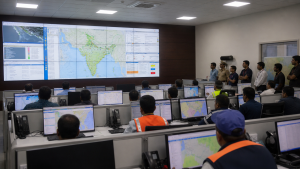
India’s disaster management system is built on a layered framework that links national, state and district institutions with specialized response forces and scientific warning agencies. The aim is to ensure coordinated action for mitigation, preparedness, response and recovery during disasters.
Legislative and Institutional Framework
The framework rests primarily on the Disaster Management Act, 2005, enacted in December 2005 to provide for effective disaster management and connected matters. The Act creates a mandatory institutional structure and gives the Union government powers to issue binding directions, allocate dedicated funds and deploy specialized response forces.
- National level: The apex body is the National Disaster Management Authority (NDMA), which lays down policies, plans and guidelines for disaster management.
- State level: Each state has a State Disaster Management Authority (SDMA), headed by the Chief Minister, for preparing state policies and plans.
- District level: The District Disaster Management Authority (DDMA), headed by the District Collector or District Magistrate, functions as the planning, coordinating and implementing body at the local level.
The NDMA is chaired by the Prime Minister of India and has a vice-chairperson along with up to nine members. It approves the National Disaster Management Plan and coordinates implementation across ministries and departments.
Operational Response System
Field-level response during disasters is handled through specialized forces and local support structures. These institutions are meant to provide rapid search, rescue and relief operations.
- National Disaster Response Force (NDRF): Formed under the Disaster Management Act, 2005 for specialized response to threatening disaster situations or disasters.
- Administrative control: The NDRF functions under the Ministry of Home Affairs.
- Deployment: It comprises multiple battalions stationed at strategic locations across the country.
- Training areas: Personnel are trained in CBRN (Chemical, Biological, Radiological and Nuclear) defence, water rescue and structural collapse extrication.
- State Disaster Response Forces: These complement the NDRF by providing immediate localized search and rescue capability.
- Local support: Civil defence volunteers, home guards and community task forces assist district administrations in evacuation and relief distribution.
Early Warning and Scientific Alert Mechanisms
Disaster preparedness depends heavily on scientific institutions that monitor hazards and issue timely warnings. These agencies provide forecasts and alerts for weather, ocean, river and geological risks.
- India Meteorological Department (IMD): The nodal agency for tracking cyclones, heavy rainfall and thunderstorms, and for issuing weather forecasts and severe weather warnings.
- Indian National Centre for Ocean Information Services (INCOIS): Monitors oceanographic parameters and provides tsunami early warnings and high-wave alerts for coastal regions.
- Central Water Commission (CWC): Tracks river basins, flood situations and reservoir storage levels to issue flood forecasts.
- Geological Survey of India (GSI): Conducts hazard zonation mapping and assesses landslide susceptibility in mountainous regions.
- Alert dissemination: A Common Alerting Protocol-based integrated alert system sends geographically targeted emergency messages directly to mobile devices.
- Communication network: Dedicated channels connect national emergency operation centres with state and district disaster management cells.
Funds, Capacity Building and Recognition
Financial and institutional support for disaster management is provided through dedicated funds and training institutions. These strengthen preparedness, response and rehabilitation at different levels.
- National Disaster Response Fund: Established under Section 46 of the Disaster Management Act to meet expenses for emergency response, relief and rehabilitation.
- State Disaster Response Funds: Maintained by state governments, with the central government contributing the major share of the corpus.
- National Institute of Disaster Management (NIDM): Focuses on capacity building, training, research and documentation for disaster management stakeholders.
- Disaster management awards: The Aapda Prabandhan Puraskar is instituted by the central government to recognise excellence in disaster management.
Important Institutions at a Glance
| Institution | Legislation / Authority | Primary mandate | Nodal ministry |
| NDMA | Disaster Management Act, 2005 | Apex policy formulation and national guideline creation | Ministry of Home Affairs |
| NDRF | Disaster Management Act, 2005 | Specialized physical search and rescue operations | Ministry of Home Affairs |
| IMD | Government Resolution | Meteorological forecasting and severe weather tracking | Ministry of Earth Sciences |
| INCOIS | Society Registration Act / Autonomous Body | Tsunami and oceanographic early warning advisories | Ministry of Earth Sciences |
Key Prelims Takeaways
- Disaster Management Act, 2005: It is the legal foundation of India’s disaster management system.
- NDMA: The apex statutory body for policies, plans and guidelines.
- Chairperson of NDMA: The Prime Minister of India.
- DDMA: Headed by the District Collector or District Magistrate.
- NDRF: The specialized national search and rescue force under the Ministry of Home Affairs.
- IMD, INCOIS and CWC: Key agencies for weather, tsunami/ocean and flood warnings respectively.
- Section 46: Creates the National Disaster Response Fund for emergency response, relief and rehabilitation.
| Related | |
|---|---|