One Rank One Pension: History, Objectives, Implementation
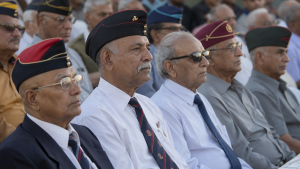
One Rank One Pension (OROP) is a uniform pension principle for Indian defence personnel. It seeks to ensure that retirees of the same rank and same length of service receive the same pension, regardless of when they retired.
The scheme was meant to remove the long-standing gap between older pensioners and newer retirees created by periodic pay commission changes. It is closely linked to the special service conditions of the armed forces, where personnel retire earlier than civilian employees.
Historical Background
- Pre-1973 system: Defence pensions were linked to last drawn pay and gave a relatively higher replacement rate than civilian pensions.
- Third Central Pay Commission (1973): Defence pensions were reduced from up to 70% of last drawn pay to 50%, bringing them closer to civilian pension norms.
- Reason for demand: Military personnel retire at a younger age and face stricter service conditions, so veterans argued that pension parity was necessary to maintain fairness.
- Koshiyari Committee (2011): A 10-member parliamentary committee headed by Bhagat Singh Koshiyari examined the demand and strongly recommended full implementation of OROP.
- Definition given by the committee: Uniform pension for defence personnel retiring in the same rank with the same length of service, irrespective of date of retirement.
- Government notification (2015): The Union Government accepted the principle of OROP on November 7, 2015, with effect from July 1, 2014.
Objectives and Core Features
- Financial parity: To ensure equal pension for equal rank and equal length of service across generations of defence retirees.
- Correction of historical imbalance: To bridge the pension gap between earlier retirees and later retirees caused by pay commission revisions.
- Coverage: Applicable to personnel of the Army, Navy and Air Force.
- Base-year formula: Past pensioners are re-fixed on the basis of the average of the minimum and maximum pension drawn by personnel retiring in the base year.
- Protection of higher pensions: Pensioners already receiving a higher pension than the revised average continue to draw the higher amount.
- Periodic revision: Pension amounts are re-fixed every five years under the implementation framework.
- Excluded category: Personnel opting for voluntary discharge or premature retirement under military rules are not covered under the scheme.
Implementation of OROP
- Phase 1 (2014): Implemented from July 1, 2014, using calendar year 2013 as the benchmark.
- Arrears payment: Arrears were paid in four equal half-yearly installments.
- Special categories: Family pensioners and gallantry award winners received arrears in a single installment.
- Administrative task: The scheme required large-scale recalculation of pensions for lakhs of defence pensioners and widows.
- OROP-2: On December 23, 2022, the Union Cabinet approved revision of OROP with retrospective effect from July 1, 2019.
- 2019 benchmark: The revised base rates were derived from the average of minimum and maximum pensions drawn by personnel retiring in calendar year 2019.
- Beneficiaries: The revision benefited over 25 lakh defence pensioners, including family pensioners.
Controversies and Legal Debate
- Five-year revision gap: Veterans argued that annual equalization was needed and that a five-year cycle diluted the meaning of OROP.
- Voluntary retirement issue: The exclusion of personnel opting for premature retirement drew criticism because many servicemen leave early due to limited promotional avenues.
- Supreme Court verdict (2022): In March 2022, the Supreme Court upheld the government’s 2015 notification and held that OROP is a policy decision.
- Article 14 challenge: The Court ruled that the five-year revision period did not violate Article 14 of the Constitution.
- Fiscal burden: The rising defence pension bill has been seen as a strain on the exchequer and a possible constraint on capital spending for modernisation.
| Parameter | Pre-OROP | Post-OROP |
| Pension base | Linked to the Pay Commission applicable at the time of retirement | Linked to the average pension of the same rank in the base year |
| Revision frequency | Revised mainly during new Pay Commissions | Re-fixed every five years |
| Parity | Older retirees often received less than newer retirees of similar rank | Equal pension for equal rank and equal length of service |
| Coverage | Based on retirement date and pension revision cycle | Uniform scheme for defence personnel, with exclusion of voluntary retirees after notification |
Key Prelims Takeaways
- OROP meaning: Equal pension for the same rank and same length of service, irrespective of retirement date.
- Key committee: The Koshiyari Committee examined the demand and recommended full implementation.
- Government acceptance: OROP was formally notified on November 7, 2015.
- Effective date: The scheme was made effective from July 1, 2014.
- Major revision: OROP-2 was approved on December 23, 2022, with effect from July 1, 2019.
- Coverage: The scheme applies to Army, Navy and Air Force pensioners.
- Important exclusion: Voluntary retirement and premature retirement cases are excluded from OROP benefits.
Current General Studies comprises current-affairs-based, General Studies-rich study material on policies, laws, institutions, economy, science, environment, governance, international relations, and other varied but important topics for UPSC and State PSC Prelims examinations.
Fortnightly PDF compilations: Available here
Originally written on
May 27, 2026
and last modified on
September 6, 2026.
| Related | |
|---|---|