Major International Youth Leadership and Fellowship Programmes
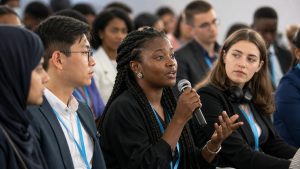
Major international youth leadership and fellowship programmes help young changemakers gain global exposure, policy skills, and cross-cultural experience. They connect emerging leaders with mentors, institutions, and peer networks that support action on development, peacebuilding, and governance.
Prominent Global Leadership and Fellowship Initiatives
- One Young World Summit and Scholarships: Brings together young changemakers from more than 190 countries each year to discuss issues such as climate change, poverty, and conflict resolution.
- One Young World funding support: Offers fully funded scholarships that may cover travel, accommodation, and summit access through partnerships with global corporations, foundations, and governments.
- Mentorship network: Connects delegates with political, business, and humanitarian leaders who often serve as long-term mentors.
- UNITAR Youth Leaders Training Programme: Conducted by the United Nations Institute for Training and Research as a multi-week e-learning and interactive programme.
- UNITAR focus areas: Covers conference diplomacy, the architecture of the United Nations system, and practical implementation of the Sustainable Development Goals (SDGs).
- Certification: Awards official certification on completion, helping build institutional capacity among young professionals entering international affairs.
- Luce Scholars Program: Administered by The Asia Foundation and established by the Henry Luce Foundation for leadership development and immersive professional experience.
- Luce Scholars eligibility: Targets young professionals from the United States with no prior extensive Asian experience and places them in customized working environments across Asian countries.
- Luce Scholars emphasis: Focuses on long-term professional relationship building and cross-cultural understanding.
- UNESCO MGIEP Youth Fellowship: Promotes youth-led action for peacebuilding, sustainable development, and digital social innovation.
- UNESCO MGIEP training model: Brings together cohorts from the Asia-Pacific region for workshops on emotional literacy, empathy, and global citizenship.
Core Objectives and Programme Structure
| Programme | Sponsoring body / entity | Primary focus | Typical duration |
| One Young World | Independent foundation / corporate partners | Global social impact and networking | Annual 4-day summit + lifelong community |
| UNITAR Youth Leaders | United Nations Institute for Training and Research (UNITAR) | Multilateral diplomacy and UN SDGs | 4 weeks (online) |
| Luce Scholars Program | Henry Luce Foundation / The Asia Foundation | Professional immersion and leadership in Asia | One year |
| UNESCO MGIEP Fellowship | UNESCO Mahatma Gandhi Institute | Peace education and sustainable societies | Intensive modular training |
Selection Parameters and Eligibility Frameworks
- Age criteria: Most international youth fellowships restrict applicants to the 18-30 age group, though some mid-career diplomatic exchanges may extend to 40 years.
- Demonstrated impact: Selection committees often look for grassroots leadership, community engagement, or entrepreneurial track records rather than academic credentials alone.
- Geographic diversity: Programmes try to include participants from varied socio-economic, gender, and regional backgrounds, including the Global South.
- Language proficiency: High professional or working proficiency in English or the host country language is usually required for policy dialogue and training.
- Competitive selection: These programmes generally use merit-based screening, interviews, and evidence of leadership potential.
- Professional fit: Many fellowships prefer applicants whose goals align with diplomacy, development, public service, or social innovation.
Why These Programmes Matter
- SDG linkage: They contribute to the United Nations Sustainable Development Goals by mobilizing decentralized community projects and policy action.
- Institutional exposure: Participants gain familiarity with global institutions, international negotiations, and governance processes.
- Alumni networks: Alumni often move into advisory roles in national governments, international tribunals, and global non-governmental organizations.
- Public-private funding: Many initiatives rely on a mix of philanthropic endowments, corporate social responsibility grants, and public-private partnerships.
- Digital access: Virtual learning modules have expanded access for candidates facing travel or financial constraints.
Key Prelims Takeaways
- One Young World: Annual global summit for young leaders from more than 190 countries.
- UNITAR Youth Leaders Programme: Online training on conference diplomacy and the UN system.
- Luce Scholars Program: A one-year immersion programme for young professionals from the United States in Asia.
- UNESCO MGIEP Fellowship: Focuses on peace education, sustainability, and digital social innovation.
- Common eligibility: Leadership record, diversity of background, and language proficiency matter strongly.
- Exam angle: These programmes are linked to global governance, SDGs, and cross-cultural diplomacy.
Current General Studies comprises current-affairs-based, General Studies-rich study material on policies, laws, institutions, economy, science, environment, governance, international relations, and other varied but important topics for UPSC and State PSC Prelims examinations.
Fortnightly PDF compilations: Available here
Originally written on
May 27, 2026
and last modified on
September 6, 2026.
| Related | |
|---|---|