
Rulers and Administration of Major Rajput States
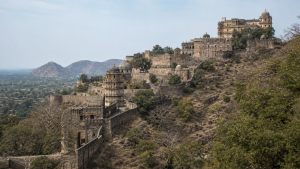
Major Rajput Kingdoms and Dynastic Lines
The political history of Rajasthan from the early medieval to the modern era was shaped by the principalities of Mewar, Marwar, Amber and other regional states. These kingdoms developed distinctive systems of land revenue, clan governance and military organization, while also adapting to regional conflict and Mughal suzerainty.
Through hereditary chieftaincies, strategic alliances and specialized land-tenure frameworks, the Rajput ruling houses maintained separate political identities and influenced the wider administrative history of northern India.
Mewar: Guhilas and Sisodias
The Guhila dynasty was established by Guhaditya in the 6th century in the southern Aravalli region. Bappa Rawal expanded the kingdom in the 8th century by capturing Chittorgarh from the Mori Rajputs and making Nagda his capital.
- Rana Hammira (1326): After the sack of Chittorgarh by Alauddin Khalji in 1303, he established the Sisodia line from the village of Sisoda and took the title Maharana.
- Rana Kumbha (1433–1468): Constructed 32 of Mewar’s 84 forts, including Kumbhalgarh, and erected the Vijay Stambha at Chittorgarh to commemorate victory over the combined armies of Malwa and Gujarat.
- Rana Kumbha: He also authored musicology texts such as Sangeeta Raja.
- Rana Sanga (1508–1527): Unified various Rajput clans and defeated Ibrahim Lodi at the Battles of Khatoli and Bari, before his defeat by Babur at Khanwa in 1527.
- Maharana Pratap (1572–1597): Resisted Mughal expansion at the Battle of Haldighati in 1576 against the imperial army led by Man Singh I and continued guerrilla warfare from Chavand.
Marwar and Bikaner: Rathore Power
The Rathore clan traces its lineage to Rao Siha in the 13th century. Their rise in western Rajasthan was marked by the consolidation of Mandore, the founding of Jodhpur and the establishment of Bikaner as a separate principality.
- Rao Chunda: Consolidated Rathore power by acquiring Mandore as a dowry gift from the Inda Rajputs in 1395.
- Rao Jodha: Founded Jodhpur in 1459 and constructed Mehrangarh Fort as the capital of Marwar.
- Rao Bika: Son of Rao Jodha, established the independent state of Bikaner in the Jangladesh region in 1488.
- Rao Maldeo (1531–1562): Expanded Marwar into a dominant military power in western India and fought Sher Shah Suri at the Battle of Giri-Sumel in 1544.
- Chandrasen Rathore: Opposed Mughal forces under Akbar and conducted guerrilla operations from the Bhadrajun and Siwana hills.
Dhundhar: Kachwahas of Amber and Jaipur
The Kachwahas established their kingdom in the Dhundhar region during the 11th century under Dulha Rai, replacing local Meena and Bargujar chiefs. Their state later became closely linked with Mughal imperial service and urban planning.
- Raja Bharmal: Became the first Rajput ruler to form a direct political and matrimonial alliance with Akbar in 1562 at Sambhar.
- Raja Man Singh I: Served as a leading Mughal general and expanded imperial influence in Bengal, Bihar and Kabul.
- Raja Man Singh I: He also expanded Amber Fort.
- Sawai Jai Singh II (1699–1743): Founded the planned city of Jaipur in 1727 with input from Bengali architect Vidyadhar Bhattacharya.
- Sawai Jai Singh II: Built five Jantar Mantar observatories at Delhi, Jaipur, Ujjain, Varanasi and Mathura.
Other Regional Kingdoms
- Hada Chauhans of Hadoti: Governed the Hadoti region and later branched into the principalities of Bundi and Kota.
- Bhatis of Jaisalmer: Maharawal Jaisal founded Jaisalmer in 1156 atop Trikuta Hill.
- Trade control: Jaisalmer levied customs duties on cross-border caravan routes.
- Regional administration: The Bhatis collected Sayar (customs) and Rahdari (transit) duties on trade.
- Bundi and Kota: The Hada Chauhans administered the fertile eastern plains and developed miniature painting schools.
Administrative Structure and Governance Practices
Rajput governance rested on a clan-based feudal structure rooted in hereditary rights, kin loyalty and land distribution. The ruler held political authority, but his power was moderated by clan relations, service obligations and customary land rights.
- Monarch: The Raja or Maharana held supreme executive, military and judicial authority.
- Bhaibhand system: Kingship was moderated by the clan brotherhood, and the kingdom was treated as a collective inheritance of the ruler and his kinsmen.
- Mewar tradition: Lord Eklingji (a form of Shiva) was recognized as the official sovereign, while the Maharana governed as the Diwan of the deity.
- Khalsa land: Crown domain administered directly by the central finance department; revenues funded the royal household and standing army.
- Jagirdari land: Hereditary nobles or Jagirdars held estates and maintained cavalry contingents in return for an annual tribute called Reekh.
- Bhumia land: Tax-exempt lands assigned to local landholders for guarding borders, tracking criminals and protecting trade caravans.
- Sasan / Dharmada land: Rent-free grants given to Brahmins, temples, scholars, Charans and Bhats.
- Pradhan: Chief Minister assisting the king in executive affairs.
- Diwan: Head of the revenue and finance department overseeing Khalsa lands.
- Bakshi: Military administrator responsible for troop rosters, payroll and inspection of noble contingents.
- Hakim: Regional administrator of a Pargana, responsible for local tax collection and dispute resolution.
- Customs and market taxes: Revenue was collected through Sayar, Rahdari and Mapa (sales tax in market towns).
Key Prelims Takeaways
- Mewar: The Guhilas began in the 6th century; the Sisodias emerged after 1303 and linked sovereignty with Eklingji.
- Rana Kumbha: Built Kumbhalgarh and the Vijay Stambha; he is also associated with Sangeeta Raja.
- Rana Sanga and Maharana Pratap: Important names for Rajput resistance against Sultanate and Mughal expansion.
- Marwar: Rao Jodha founded Jodhpur in 1459; Rao Maldeo expanded Rathore power significantly.
- Bikaner: Founded by Rao Bika in 1488 in the Jangladesh region.
- Amber/Jaipur: Raja Bharmal allied with Akbar; Sawai Jai Singh II founded Jaipur in 1727 and built five Jantar Mantars.
- Revenue terms: Important administrative terms include Khalsa, Jagirdari, Bhumia, Sayar, Rahdari and Mapa.
| Related | |
|---|---|


