National Immunisation Programme: Vaccines and Schedules
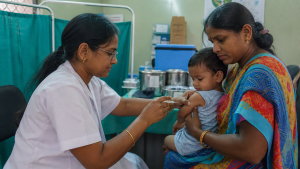
India’s Universal Immunisation Programme (UIP) is one of the world’s largest public health interventions, providing free vaccines to pregnant women and children. It aims to prevent vaccine-preventable diseases through a fixed schedule, strong cold-chain systems, and digital tracking of beneficiaries.
Evolution of the Programme
The structured immunisation drive in India began as the Expanded Programme on Immunisation (EPI) in 1978 under the Ministry of Health and Family Welfare. It was renamed and expanded as the Universal Immunisation Programme (UIP) in 1985.
UIP later became part of larger national health initiatives, including the Child Survival and Safe Motherhood Programme in 1992 and the National Rural Health Mission (NRHM) in 2005. Over time, the programme expanded from basic childhood vaccination to a nationwide system covering infants, young children and pregnant women.
Major Milestones
- 1978: EPI launched in India with a focus on basic childhood vaccines.
- 1985: EPI renamed as UIP and expanded nationally.
- 1990: Programme coverage extended beyond urban centres to all districts.
- March 27, 2014: India certified polio-free by the World Health Organization.
- August 2015: Maternal and Neonatal Tetanus elimination validated in India.
- December 25, 2014: Mission Indradhanush launched to improve immunisation coverage.
Diseases Covered Under UIP
The Universal Immunisation Programme provides protection against 12 vaccine-preventable diseases. Of these, nine vaccines are administered nationally, while three are used regionally in specific high-risk or endemic districts.
Nationally administered vaccines
- Tuberculosis: Prevented through the BCG vaccine at birth.
- Diphtheria, Pertussis and Tetanus: Covered through the Pentavalent vaccine, DPT boosters and Td shots.
- Hepatitis B: Prevented through a birth dose within 24 hours and Pentavalent primary doses.
- Poliomyelitis: Prevented through bOPV and Fractional Inactivated Polio Vaccine (fIPV).
- Measles and Rubella: Prevented through two doses of the MR vaccine.
- Haemophilus Influenzae Type B (Hib): Covered through the five-in-one Pentavalent vaccine.
- Rotavirus diarrhoea: Prevented through the oral Rotavirus Vaccine (RVV).
- Pneumococcal diseases: Prevented through the Pneumococcal Conjugate Vaccine (PCV).
Regionally administered vaccines
- Japanese Encephalitis (JE): Administered in endemic districts of affected states.
- Meningococcal meningitis and cholera: Deployed during outbreaks or specific epidemiological emergencies.
National Immunisation Schedule
The national schedule prescribes the age, dose, route and beneficiary group for each vaccine. It covers pregnant women, infants, young children and adolescents.
| Target group | Age / timing | Vaccines given | Dose and route |
| Pregnant women | Early in pregnancy | Td-1 | 0.5 ml, intramuscular |
| Pregnant women | 4 weeks after Td-1 | Td-2 / Td-Booster | 0.5 ml, intramuscular |
| Infants | At birth | BCG, Hepatitis B birth dose, bOPV-0 | 0.1 ml intradermal, 0.5 ml IM, 2 drops oral |
| Infants | 6 weeks | Pentavalent-1, bOPV-1, fIPV-1, RVV-1, PCV-1 | Primary doses across intramuscular, oral and intradermal routes |
| Infants | 10 weeks | Pentavalent-2, bOPV-2, RVV-2 | Primary second doses |
| Infants | 14 weeks | Pentavalent-3, bOPV-3, fIPV-2, RVV-3, PCV-2 | Primary third doses |
| Infants | 9–12 months | MR-1, JE-1, PCV-Booster, Vitamin A (1st) | Subcutaneous, intramuscular, oral |
| Children | 16–24 months | MR-2, JE-2, DPT Booster-1, bOPV Booster, Vitamin A | Subcutaneous, intramuscular, oral |
| Children | 5–6 years | DPT Booster-2 | 0.5 ml, intramuscular |
| Adolescents | 10 and 16 years | Td | 0.5 ml, intramuscular |
Mission Indradhanush and Digital Initiatives
- Mission Indradhanush: Launched on December 25, 2014, to reach unvaccinated and partially vaccinated children and pregnant women.
- Target areas: Focuses on urban slums, migratory settlements and remote tribal areas with low coverage.
- Intensified Mission Indradhanush (IMI): Expanded coverage through repeated rounds in identified high-priority districts.
- U-WIN: Digital platform for registering pregnant women and children, generating immunisation records and sending SMS reminders.
- ABHA linkage: U-WIN connects with the Ayushman Bharat Health Account ecosystem.
- eVIN: The Electronic Vaccine Intelligence Network provides real-time information on vaccine stocks and storage temperatures.
- Cold-chain support: Helps prevent vaccine spoilage and stock-outs at remote primary health centres.
Important Exam Facts
- Pentavalent vaccine: Protects against five diseases — Diphtheria, Pertussis, Tetanus, Hepatitis B and Hib.
- Td vaccine: Replaced TT in the national schedule for dual protection.
- Hepatitis B birth dose: Must be given within 24 hours of birth.
- fIPV: Administered intradermally at 0.1 ml.
- Polio-free status: India received WHO certification on March 27, 2014.
- MNT elimination: Validated in India in August 2015.
Key Prelims Takeaways
- UIP origin: Began as EPI in 1978 and became UIP in 1985.
- Coverage: UIP protects against 12 vaccine-preventable diseases.
- Free vaccination: Provided to pregnant women and children under the national schedule.
- Birth doses: BCG, Hepatitis B and bOPV-0 are given at birth.
- Key platforms: U-WIN is the digital registry; eVIN tracks vaccine stocks and temperatures.
- Special drive: Mission Indradhanush was launched on December 25, 2014.
- Core validation dates: Polio-free certification came in March 2014; MNT elimination in August 2015.
| Related | |
|---|---|