India’s Financial Market Regulators: SEBI, RBI, PFRDA
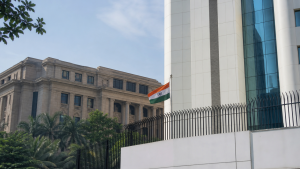
India’s financial market architecture is supervised by three specialised regulators that cover capital markets, banking, and pension regulation. Together, SEBI, RBI, and PFRDA help maintain market integrity, investor protection, financial stability, and orderly development of their respective sectors.
Securities and Exchange Board of India (SEBI)
The Securities and Exchange Board of India is the statutory regulator for India’s capital markets. It was established in 1988 as a non-statutory body and later received statutory powers under the SEBI Act, 1992. SEBI functions as a quasi-legislative, quasi-judicial, and quasi-executive body.
- Core role: Regulates the securities market, protects investors, and promotes fair market practices.
- Statutory basis: SEBI Act, 1992.
- Nature of powers: Quasi-legislative, quasi-judicial, and quasi-executive.
- Board composition: The board includes a Chairman, two members from the Union Ministries of Finance and Corporate Affairs, one member from the RBI, and five other members appointed by the Union Government.
- Current leadership: Tuhin Kanta Pandey is the 11th Chairman, who took charge on March 1, 2025, for a three-year term.
- Succeeding Chairman: He succeeded Madhabi Puri Buch.
- Retail algorithmic trading: Rules implemented on April 1, 2026, require users to place orders through registered App IDs mapped to whitelisted static IP addresses.
- Trading safeguards: These rules require daily two-factor authentication, a limit of 10 orders per second, and routing of market orders as Market Price Protection (MPP) orders.
- Mutual fund transparency: An April 2026 framework introduced the Base Expense Ratio (BER), revised Total Expense Ratio (TER) disclosure norms, capped expense ratios, and allowed performance-linked fees for fund managers.
- Futures and options reforms: Updated rules raised contract sizes to ₹15–20 lakh in notional value and capped weekly expiries at one per index per exchange.
- F&O market safeguards: Upfront premium collection was made mandatory, and a Closing Auction Session (CAS) for eligible F&O stocks took effect on August 3, 2026.
- Financial advertising rules: From March 2025, registered intermediaries must verify their identity through the SEBI SI Portal before publishing financial advertisements on social media platforms.
Reserve Bank of India (RBI)
The Reserve Bank of India is the central bank of India and regulates banking, monetary policy, and payment systems. It was established on April 1, 1935, under the RBI Act, 1934, and was nationalized in 1949.
- Core role: Regulates banks, manages monetary policy, and oversees payment systems.
- Statutory basis: RBI Act, 1934.
- Nationalization: 1949.
- Governing body: Managed by a Central Board of Directors consisting of the Governor, up to four Deputy Governors, and other directors appointed by the Government of India.
- Current leadership: Sanjay Malhotra is the 26th Governor of the RBI. He assumed office on December 11, 2024, for a three-year term.
- Succeeding Governor: He succeeded Shaktikanta Das.
- CBDC retail pilot: The RBI’s Retail CBDC pilot reached 7 million users by October 2025.
- CBDC circulation: CBDC-Retail in circulation stood at ₹771.66 crore as of March 31, 2026, according to the RBI Annual Report 2025–26.
- Programmability pilots: In February 2026, the RBI expanded CBDC programmability pilots with a digital rupee-based Public Distribution System (PDS) in Gujarat.
- Key publications: The RBI regularly publishes the Financial Stability Report (FSR), the Monetary Policy Report, and the Report on Trend and Progress of Banking in India.
Pension Fund Regulatory and Development Authority (PFRDA)
The Pension Fund Regulatory and Development Authority regulates India’s pension sector. Established in 2003, it gained statutory status under the PFRDA Act, 2013, with the objective of promoting old-age income security.
- Core role: Regulates pension products and supports retirement income security.
- Statutory basis: PFRDA Act, 2013.
- Governing structure: The PFRDA consists of a Chairperson and not more than six members, of whom at least three must be whole-time members, appointed by the Central Government.
- Current leadership: Sivasubramanian Ramann is the Chairperson, having taken charge on June 20, 2025, for a five-year tenure.
- Succeeding Chairperson: He succeeded Deepak Mohanty.
- Unified Pension Scheme (UPS): PFRDA administers the UPS, implemented from April 1, 2025.
- UPS eligibility: It applies to central government employees appointed on or after January 1, 2004.
- UPS benefit: It provides an assured pension of 50% of the last 12 months’ average basic salary.
- NPS Vatsalya: Launched on September 18, 2024, it allows parents and guardians to open a pension-savings account for minor children.
- NPS Vatsalya contribution: The minimum annual contribution is ₹1,000, and the account converts into a standard NPS account when the child turns 18.
- National Pension System (NPS): PFRDA regulates this voluntary, defined-contribution retirement programme for government employees and private sector citizens.
- NPS account types: Tier-I is a restricted-withdrawal account, while Tier-II is a voluntary savings account.
Key Prelims Takeaways
- SEBI: Regulator of the securities market; statutory under the SEBI Act, 1992.
- RBI: India’s central bank; established under the RBI Act, 1934 and nationalized in 1949.
- PFRDA: Pension regulator; statutory under the PFRDA Act, 2013.
- Leadership terms: SEBI Chairman and RBI Governor have three-year terms; PFRDA Chairperson has a five-year term.
- Retail algo trading: SEBI requires registered App IDs, whitelisted static IPs, daily 2FA, and a 10 orders-per-second limit.
- CBDC status: RBI’s Retail CBDC pilot reached 7 million users by October 2025; circulation was ₹771.66 crore on March 31, 2026.
- Pension reforms: UPS offers an assured pension of 50% of the last 12 months’ average basic salary; NPS Vatsalya has a ₹1,000 minimum annual contribution.
| Related | |
|---|---|