Major UNESCO Programmes, Lists and Conventions
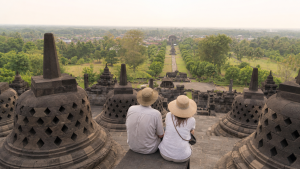
UNESCO administers several global conventions, programmes, and lists that protect cultural, natural, and intangible heritage. For Prelims revision, the most important are the World Heritage Convention, the 2003 Convention on Intangible Cultural Heritage, and the Man and the Biosphere (MAB) Programme.
These frameworks help identify sites, practices, and landscapes of outstanding value, while also creating international mechanisms for conservation, recognition, and monitoring.
The World Heritage Convention and Committee
The 1972 Convention Concerning the Protection of the World Cultural and Natural Heritage governs the identification and preservation of cultural and natural properties of outstanding universal value.
- World Heritage Committee: It administers the convention and meets annually to review nominations and the state of conservation of listed properties.
- 48th session: The 48th session was held in Busan, Republic of Korea, from July 19 to 29, 2026, the first time the country hosted the committee.
- New inscriptions: In July 2026, the committee inscribed 25 new sites: 19 cultural, 5 natural, and 1 mixed.
- First-time listings: South Sudan, Comoros, and São Tomé and Príncipe received their first World Heritage inscriptions in 2026.
- India’s 45th site: The Ancient Buddhist Site of Sarnath in Uttar Pradesh was inscribed in July 2026, taking India’s total World Heritage Sites to 45.
- World Heritage in Danger: Six new sites were added in July 2026, taking the total to 58.
Important: The World Heritage Committee reviews nominations, monitors conservation, and updates the List of World Heritage in Danger.
- Emergency listings: Boma-Badingilo Migratory Landscape in South Sudan, Mount Amel Castles in Lebanon, and Sebastia in Palestine.
- Standard additions: Ancient City of Tauric Chersonese and its Chora in Ukraine, Tyre in Lebanon, and Historic Inner City of Paramaribo in Suriname.
Intangible Cultural Heritage and the 2003 Convention
The 2003 Convention for the Safeguarding of the Intangible Cultural Heritage protects oral traditions, performing arts, social practices, festive events, knowledge concerning nature, and traditional craftsmanship.
- General Assembly of States Parties: This is the sovereign body of the convention.
- 11th session: It was held in Paris from June 17 to 18, 2026, with 185 States Parties.
- Intergovernmental Committee: Comprising 24 Member States, it implements the convention.
- India-hosted session: India hosted the 20th session in New Delhi from December 8 to 13, 2025, marking the 20th anniversary of India’s ratification of the convention.
- India’s 16th element: Deepavali was inscribed in December 2025 as India’s 16th element on the Representative List of the Intangible Cultural Heritage of Humanity.
- 21st session: The 21st session of the Intergovernmental Committee (21.COM) is scheduled in Xiamen, China, from November 30 to December 5, 2026.
Man and the Biosphere (MAB) Programme
Launched in 1971, the Man and the Biosphere (MAB) Programme is an intergovernmental scientific initiative that seeks a scientific basis for improving the relationship between people and their environments.
- World Network of Biosphere Reserves (WNBR): This network supports cooperative research, conservation, and sustainable development.
- Expansion in 2026: On World Environment Day (June 5, 2026), 14 new biosphere reserves were added, taking the WNBR to 797 sites across 145 countries.
- First-time entrants: Montenegro, Timor-Leste, and Aruba joined the network as first-time member nations in June 2026.
- Aruba: It designated its entire territory as a biosphere reserve.
- Urban milestone: Québec City, Canada, became the network’s first predominantly urban biosphere reserve in June 2026.
- India’s latest site: The Cold Desert Biosphere Reserve in Himachal Pradesh was added to the UNESCO World Network of Biosphere Reserves in September 2025 as India’s 18th biosphere reserve in the network.
UNESCO Institutional Structure and Membership
UNESCO functions through three main bodies: the General Conference, the Executive Board, and the Secretariat headed by the Director-General.
- Headquarters: UNESCO was founded in 1945 and is headquartered in Paris, France.
- Director-General: Khaled El-Enany of Egypt assumed office as the 12th Director-General of UNESCO on November 15, 2025, succeeding Audrey Azoulay.
- First Arab leader: He is the first Arab to head the organization.
- United States: The United States officially announced its withdrawal from UNESCO in July 2025, effective December 31, 2026.
Key Prelims Takeaways
- UNESCO headquarters: Paris, France; founded in 1945.
- World Heritage Convention: 1972 Convention Concerning the Protection of the World Cultural and Natural Heritage.
- World Heritage Committee: Reviews nominations annually and monitors conservation status.
- India’s World Heritage count: 45, with Sarnath as the latest addition.
- Intangible Cultural Heritage: India has 16 elements after the inscription of Deepavali.
- MAB network: 797 biosphere reserves across 145 countries.
- India’s biosphere reserve count in WNBR: 18, including the Cold Desert Biosphere Reserve.
| Related | |
|---|---|