Major Urban Development Missions and Schemes
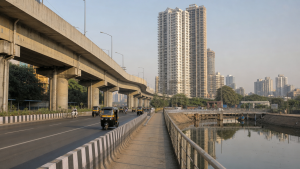
India’s urban development agenda is carried out through a set of missions and schemes covering housing, sanitation, water supply, mobility, and municipal finance. These programmes aim to improve basic services, expand affordable housing, and support urban livelihoods in a rapidly growing city population.
Institutional Framework and Governance Realignment
The administration of urban affairs was structurally changed in July 2026. In this reform, the portfolio for Government of India stationery and printing was transferred to the Ministry of Information and Broadcasting. The remaining functions of the former Ministry of Housing and Urban Affairs (MoHUA) were divided into two departments.
- Department of Capital Development: Handles matters relating to Delhi and the National Capital Region (NCR), including the Delhi Development Authority (DDA), Central Public Works Department (CPWD), and regional transport or metro bodies. D. Thara (IAS: 1995: GJ) serves as Secretary.
- Department of Urban Development: Covers national urban policy and flagship missions such as Swachh Bharat Mission-Urban (SBM-U), AMRUT, PMAY-U, and PM SVANidhi. Satendra Singh (IAS: 1995: JH) serves as Secretary.
Housing and Livelihood Interventions
Pradhan Mantri Awas Yojana – Urban (PMAY-U) 2.0 was approved in August 2024 to provide affordable housing assistance to 1 crore urban poor and middle-class families during FY 2024–25 to FY 2028–29. The scheme has a total investment of ₹10 lakh crore, including a central government subsidy of ₹2.30 lakh crore.
- Interest Subsidy Scheme (ISS): EWS, LIG, and MIG households with annual income up to ₹9 lakh receive a 4% annual interest subsidy on home loans up to ₹25 lakh. The maximum benefit is ₹1.80 lakh.
- Credit Risk Guarantee: The corpus of the Credit Risk Guarantee Fund Trust (CRGFT) was increased from ₹1,000 crore to ₹3,000 crore, and its management was transferred to the National Credit Guarantee Company.
- PM SVANidhi (Restructured): Restructured in August 2025, this micro-credit scheme now has a lending period up to March 31, 2030, with a revised budgetary outlay of ₹7,332 crore.
- PM SVANidhi loan limits: The first tranche is ₹15,000, the second tranche is ₹25,000, and the third tranche remains ₹50,000.
- UPI-linked RuPay card: Vendors who have repaid their second tranche loans can get a UPI-linked RuPay Credit Card with a limit of up to ₹30,000.
Sanitation and Water Infrastructure
Urban sanitation and water supply are addressed mainly through Swachh Bharat Mission-Urban (SBM-U) 2.0 and the Atal Mission for Rejuvenation and Urban Transformation (AMRUT) 2.0.
- SBM-U 2.0: Launched on October 1, 2021, for five years up to October 2026, with a total outlay of about ₹1.41 lakh crore.
- Waste processing progress: Scientific processing of urban municipal solid waste increased to 81% in 2026 from 16% in 2014.
- Legacy waste remediation: By May 2026, 65% of the 26 crore metric tons of legacy waste across 2,482 dumpsites had been bioremediated and reclaimed.
- AMRUT 2.0: Operational from FY 2021–22 to FY 2025–26, with a total indicative outlay of ₹2,99,000 crore, including a central outlay of ₹76,760 crore.
- AMRUT focus: Aims to ensure water security and tap connections in urban local bodies.
Urban Mobility and Financing Innovations
Urban transport and project finance are being reshaped through electric mobility support and challenge-based funding models. These initiatives are designed to combine infrastructure expansion with market participation and green transitions.
- PM-eBus Sewa: Launched in August 2023 to deploy 10,000 electric buses on a Public-Private Partnership (PPP) model.
- Bus type and support: The scheme provides standard 12-metre buses with central operational assistance of ₹24 per kilometre.
- Urban Challenge Fund (UCF): Operational guidelines for this ₹1 lakh crore central assistance fund were launched on April 15, 2026.
- Financing model: The fund shifts urban financing from traditional grant subsidies to challenge-based market financing.
- Project approvals: By late July 2026, projects worth over ₹31,000 crore had been approved.
- VGF structure: Viability gap funding covers up to 50% of project cost, split equally between the Centre and states, while at least 50% of the balance must come from private or market lenders.
Key Prelims Takeaways
- PMAY-U 2.0: Covers FY 2024–25 to FY 2028–29 with a total investment of ₹10 lakh crore and a central subsidy of ₹2.30 lakh crore.
- ISS under PMAY-U: Offers 4% annual interest subsidy on home loans up to ₹25 lakh for EWS/LIG/MIG families with income up to ₹9 lakh.
- CRGFT corpus: Increased from ₹1,000 crore to ₹3,000 crore; management transferred to the National Credit Guarantee Company.
- PM SVANidhi: First tranche ₹15,000, second tranche ₹25,000, and third tranche ₹50,000.
- PM SVANidhi card: UPI-linked RuPay Credit Card of up to ₹30,000 for vendors who repay their second tranche loan.
- SBM-U 2.0: Runs from October 2021 to October 2026 with an outlay of about ₹1.41 lakh crore.
- AMRUT 2.0: Has an indicative outlay of ₹2,99,000 crore, including a central outlay of ₹76,760 crore.
| Related | |
|---|---|