Key Indian Consular and Passport Services
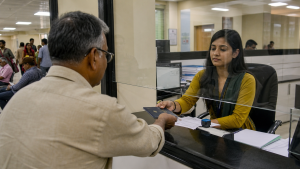
Indian consular and passport services are an important part of citizen welfare, foreign policy and national security. They are governed mainly by the Passports Act, 1967 and are now increasingly delivered through secure digital platforms for faster processing and grievance redressal.
Legal Framework and Passport Types
The issuance of passport documents is regulated by the Passports Act, 1967, which lays down the legal basis for travel permissions and passport administration. The system is handled by the Consular, Passport and Visa (CPV) Division of the Ministry of External Affairs (MEA).
- Ordinary Passport: Navy blue cover, issued to regular citizens for personal travel.
- Official Passport: White cover, issued to government officials representing India abroad.
- Diplomatic Passport: Maroon cover, issued to diplomats and certain authorised officials.
- Passport Seva Divas: Observed on June 24 to mark the enactment of the Passports Act, 1967.
- Chief Passport Officer: The national passport network is overseen by the Joint Secretary (PSP) and Chief Passport Officer.
Passport Seva Programme and Global Network
The MEA has upgraded passport delivery through Passport Seva Programme Version 2.0 (PSP V2.0). The system has been expanded across passport offices, Passport Seva Kendras (PSKs) and Post Office Passport Seva Kendras (POPSKs) to widen access and improve service delivery.
- Domestic rollout: PSP V2.0 has been implemented across all 37 Passport Offices in India, along with 93 PSKs and 450 POPSKs, creating a network of 543 stations.
- International rollout: The Global Passport Seva Programme (GPSP V2.0) has also been extended to Indian Missions and Posts abroad.
- Coverage abroad: The overseas network covers 208 Embassies and Consulates.
- Digital features: PSP V2.0 includes AI-powered chat and voice bots, a redesigned mobile application, and payment options through UPI and QR codes.
E-Passports and ICAO Compliance
Newly issued Indian passports under the upgraded system are electronic e-passports with an embedded RFID microchip. The chip stores encrypted biometric and personal data and is designed in line with standards set by the International Civil Aviation Organization (ICAO).
Exam fact: Legacy physical passports remain valid until their expiry, even as e-passports are introduced.
- Technology used: RFID-based microchip embedded in the passport.
- Data stored: Encrypted biometric and personal information.
- Issuance count: A total of 1,73,16,144 e-passports have been issued in India and abroad up to July 30, 2026.
Date of Birth Proof and Fee Revision
Two recent rule changes are important for prelims: one relating to date of birth verification and another relating to passport fee structure. Both are significant for applicants and for understanding the updated passport regime.
- Birth certificate rule: Under the Passports (Amendment) Rules, 2025 notified through G.S.R. 156(E) on February 24, 2025, a birth certificate issued under the Registration of Births and Deaths Act, 1969 is the only acceptable proof of date of birth for applicants born on or after October 1, 2023.
- Older applicants: For those born before October 1, 2023, alternate documents remain valid, including school leaving certificates, PAN cards, driving licences, voter ID cards and life insurance policy bonds.
- Fee revision: Under the Passports (Amendment) Rules, 2026 notified through G.S.R. 516(E) on June 20, 2026, passport fees in India were revised with effect from July 1, 2026.
- First revision since 2012: This was the first fee revision since 2012.
- Concession: A 10% fee discount is available on fresh passport applications, excluding reissues, for minors up to 8 years of age and senior citizens above 60 years of age.
| Passport Category | Service Type | Revised Fee (INR) |
| Standard 36-page Ordinary | Normal Fresh / Reissue | 2,500 |
| Standard 36-page Ordinary | Tatkaal | 5,000 |
Consular Grievance Redressal and Accessibility
The MEA has also strengthened citizen-facing grievance and accessibility systems. These initiatives are relevant because they show how passport and consular services are being made more responsive and inclusive.
- MADAD V2.0: The online consular grievance redressal portal has been upgraded to allow document uploads up to 5 MB, provide real-time SMS updates and integrate the Bhashini translation interface.
- Bhopal initiative: In April 2026, the Regional Passport Office in Bhopal became the first in India to introduce Braille-script booklets and QR-code-enabled sign-language instructional videos for differently-abled applicants.
- Verification award: The Andhra Pradesh Police received the MEA’s Institutional Performance Award for State Police in June 2026 for outstanding verification performance during 2025–26.
Key Prelims Takeaways
- Parent law: The Passports Act, 1967 is the principal legislation governing Indian passport issuance.
- Document types: Indian travel documents are broadly classified into ordinary, official and diplomatic passports.
- Digital shift: PSP V2.0 and GPSP V2.0 have expanded passport services in India and abroad.
- E-passports: New passports contain an RFID microchip and comply with ICAO standards.
- Date of birth proof: For applicants born on or after October 1, 2023, a birth certificate is the only accepted proof of date of birth.
- Fee update: Passport fees were revised from July 1, 2026, under G.S.R. 516(E).
- Grievance support: MADAD V2.0 now offers larger uploads, SMS updates and Bhashini integration.
| Related | |
|---|---|