Important Harappan and Harappan-Related Sites in India
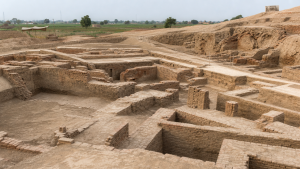
The Harappan or Indus Valley Civilization was the earliest urban culture of the Indian subcontinent and its Indian sites remain crucial for Prelims revision. Spread across the northwest and western parts of India, these settlements show mature town planning, drainage systems, trade links, craft specialization and varied regional adaptations.
In India, Harappan and related Chalcolithic sites are found mainly in Gujarat, Rajasthan, Haryana, Punjab, Uttar Pradesh and Maharashtra. Their archaeological record helps in identifying regional clusters, riverine settings and distinctive urban features.
Geographical Distribution of Harappan Sites
Indian Harappan sites are usually grouped by river basins and regional clusters:
- Gujarat cluster: Major urban and coastal sites such as Dholavira, Lothal, Surkotada, Rangpur and Rojdi.
- Rann of Kutch and Saurashtra: Important for stone-built towns, coastal trade and water management systems.
- Haryana and Punjab cluster: Large settlements in the Saraswati-Ghaggar basin, including Rakhigarhi, Banawali, Bhirrana and Mitathal.
- Sutlej valley: Sites such as Rupnagar (Ropar) and Bara, marking the northern limits of the core Harappan zone.
- Rajasthan cluster: Kalibangan in the dried Ghaggar-Hakra bed is one of the most important urban centers.
- Uttar Pradesh extension: Eastern sites such as Alamgirpur, Hulas, Mandi and Sanauli represent the easternmost spread.
- Maharashtra extension: Daimabad in the Godavari basin marks the southernmost limit of the late Harappan cultural zone.
Major Harappan Sites and Their Features
- Dholavira (Gujarat): Located on Khadir Bet in the Rann of Kutch, it is known for its unique three-part division into the Citadel, Middle Town and Lower Town.
- Dholavira: Its water management system included large stone reservoirs and stormwater drains, along with the famous Dholavira Signboard and an open stadium.
- Lothal (Gujarat): Situated near the Gulf of Khambhat on the Bhogavo River, it functioned as an important port town and manufacturing center.
- Lothal: Key finds include the brick basin identified as a tidal dockyard, terracotta ship models, a Persian Gulf button seal, joint burials, fire altars, and evidence of bead, ivory and copper craft production.
- Rakhigarhi (Haryana): In the Ghaggar-Hakra plain of Hisar district, it is the largest Harappan site in the Indian subcontinent, covering over 350 hectares.
- Rakhigarhi: Excavations by the Archaeological Survey of India and Deccan College revealed a continuous sequence from Pre-Harappan to Late Harappan phases, with planned streets, craft zones, ritual altars and burials.
- Kalibangan (Rajasthan): Located in Hanumangarh district along the dried bed of the Ghaggar river, it has both Pre-Harappan and Mature Harappan phases.
- Kalibangan: It yielded the earliest documented ploughed field, showing a grid of furrows, and is also known for clay fire altars and the use of mud-bricks rather than baked bricks in domestic structures.
- Banawali (Haryana): In Fatehabad district, Banawali shows Pre-Harappan, Mature Harappan and Post-Harappan occupations.
- Banawali: Unlike many Harappan cities, it does not follow a strict grid plan and instead shows radial streets, along with barley grains, a terracotta plow model, lapis lazuli beads and a touchstone with gold streaks.
- Surkotada (Gujarat): A fortified site in Kutch with a citadel and residential complex built with stone rubble and mud-bricks.
- Surkotada: It is notable for horse bones in the upper layers and pot burials covered by stone cairns.
- Rupnagar / Ropar (Punjab): Situated on the Sutlej River, it was the first Harappan site excavated in independent India by Y.D. Sharma in 1953.
- Rupnagar / Ropar: Excavations revealed six cultural phases and the well-known burial of a dog below its human master.
- Alamgirpur (Uttar Pradesh): Located on the Hindon River in Meerut district, it marks the easternmost boundary of the Harappan civilization.
- Alamgirpur: The site belongs to the Late Harappan phase and yielded painted pottery, cloth impressions on baked clay troughs and terracotta beads.
What These Sites Reveal
- Urban planning: Sites such as Dholavira, Rakhigarhi and Kalibangan show planned layouts, streets and sector-based settlement patterns.
- Water management: Dholavira is especially important for reservoirs, drains and conservation methods adapted to arid conditions.
- Trade and craft: Lothal, Dholavira and Rakhigarhi show links with craft production, exchange networks and specialized industries.
- Agriculture: Kalibangan and Banawali provide evidence of farming practices, including ploughed fields and cereal cultivation.
- Burial customs: Rakhigarhi, Surkotada, Lothal and Rupnagar provide evidence of varied funerary practices.
- Regional diversity: The Indian Harappan world was not uniform; coastal, riverine, desert-edge and upland sites adapted differently to local geography.
Site-wise Quick Reference
| Site | State | River / Feature | Key Points |
| Dholavira | Gujarat | Khadir Bet, Rann of Kutch | Three-tier city, reservoirs, signboard, stadium |
| Lothal | Gujarat | Bhogavo River | Dockyard, bead factory, Persian Gulf seal |
| Rakhigarhi | Haryana | Ghaggar-Hakra plain | Largest site, continuous cultural sequence, burials |
| Kalibangan | Rajasthan | Ghaggar River | Ploughed field, fire altars, mud-brick houses |
| Banawali | Haryana | Saraswati / Rangoi River | Radial streets, plow model, barley grains |
| Surkotada | Gujarat | Kutch region | Fortified settlement, horse bones, cairn burials |
| Rupnagar (Ropar) | Punjab | Sutlej River | First excavated in independent India, dog burial |
| Alamgirpur | Uttar Pradesh | Hindon River | Easternmost site, Late Harappan remains |
Key Prelims Takeaways
- Dholavira is known for a three-part city plan and advanced water storage system.
- Lothal is the key Harappan port site and is associated with a dockyard.
- Rakhigarhi is the largest Harappan site in India.
- Kalibangan is famous for the earliest documented ploughed field and fire altars.
- Banawali is important for radial street planning and evidence of agriculture.
- Surkotada is notable for horse bones and fortified construction.
- Alamgirpur marks the easternmost extension of the Harappan civilization.
Current General Studies comprises current-affairs-based, General Studies-rich study material on policies, laws, institutions, economy, science, environment, governance, international relations, and other varied but important topics for UPSC and State PSC Prelims examinations.
Fortnightly PDF compilations: Available here
Originally written on
May 16, 2026
and last modified on
September 6, 2026.
| Related | |
|---|---|